
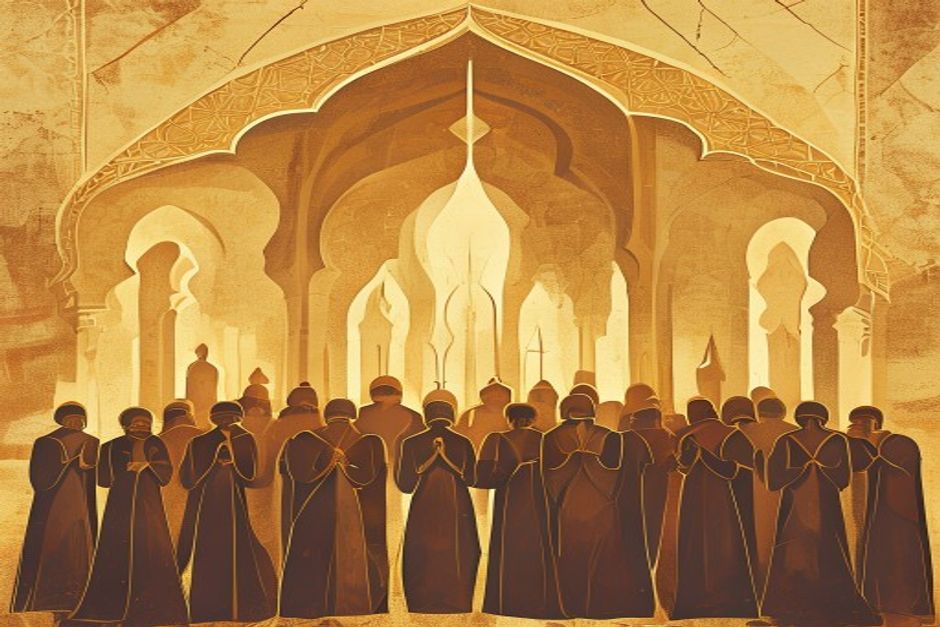
The Significance of Order: Connecting Namaz Rows and Military Formations
The arrangement of rows during namaz (prayer) and the structure of military formations share a striking resemblance. This connection is deeply rooted in Islamic teachings, emphasizing discipline, unity, and strength – qualities valued both spiritually and strategically.
Unity in Formation: Tawhid and Order in Prayer & Warfare
The Quran highlights this profound link:
“Allah loves those who strive for His cause in ranks [i.e., formations].” (Surah As-Saff, 49:4)
Our Prophet Muhammad (peace be upon him) placed great importance on the order and discipline of both prayer rows and military lines. This meticulous arrangement instills confidence among allies while striking fear into enemies.
A European ambassador, witnessing the Ottoman army performing Friday prayers in the Hungarian plains, was astounded by their reverence and organization. He remarked:
“Fifty thousand men line up in regular rows, at the call of the Imam, they stand still and become a single body. Then, with another call, fifty thousand people simultaneously prostrate before Allah. How can Christian armies possibly withstand such an immense force?” (Source: Ahmet Ersöz, Education in Years of Earthquakes, Istanbul 1993, p. 70)
Beyond Appearance: The Deeper Meaning
The alignment and cohesion observed in both settings reflect a deeper principle – the unity of purpose under divine guidance or strategic leadership. Just as disciplined prayer strengthens one’s connection with Allah, organized military formations contribute to collective strength and defense.