
Hadith
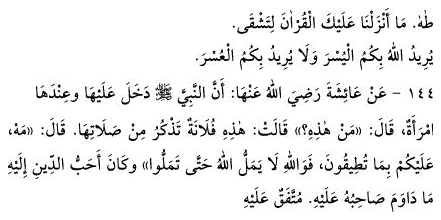
“Tâhâ. We have not sent down this Quran to cause you distress.” Surah Tâhâ (20), 1-2 Surah Tâhâ was revealed in Mecca. According to a well-known narration, it was revealed shortly before the acceptance of Islam by Omar ibn al-Khattab. Omar’s conversion to Islam occurred when he read the first verses of this surah. Mecca is the place where the first revelation came to the Prophet and where Islam first emerged. The Messenger of Allah began his mission of inviting people to the true religion here. However, in the early years, he carried out this invitation secretly. When he began to openly preach the message at the command of Allah Almighty, the Mushriks (polytheists) of Mecca, especially the ruling and wealthy capitalist class, strongly opposed the new religion. They inflicted unimaginable tortures on those who accepted Islam, including the Prophet himself. Due to these pressures and oppressions, only a few people accepted the new religion. The Messenger of Allah was saddened not only by the torture suffered by the Muslims but also by people’s failure to accept the truth. It was in this context that these verses were revealed as comfort to the Messenger of Allah. Almighty Allah reminded his Prophet that the purpose of the Quran’s descent was not to weary him, ruin him, or cause him distress, and He announced the bright future of the religion. The Prophet’s duty was to convey the Quranic verses and chapters received to the people, explain the truth to them, and invite them to righteousness. Anything beyond that belongs to Allah, the Lord of the worlds. For it is not in anyone’s power to make someone a believer; people can only be means to guidance. This verse is also a comfort from Allah to those who carry out the mission of spreading Islam on earth.
Buhârî, İlim II;
Narrator
Muslim, Jihād 5) was his guiding principle. He constantly reminded this to those he sent for the purpose of propagation.
What We Learn
- 1Due to the danger of getting tired, giving up, stopping and abandoning over time, excessive non-obligatory worship is not welcomed.
- 2As in every matter, moderation and acting within limits have been encouraged in acts of worship as well.
- 3The most rewarding acts of worship are those that are performed continuously, even if they are few.
- 4There are beautiful qualities such as remembering Allah at all times, being aware of His oversight, and organizing life accordingly in the continuity of worship.