
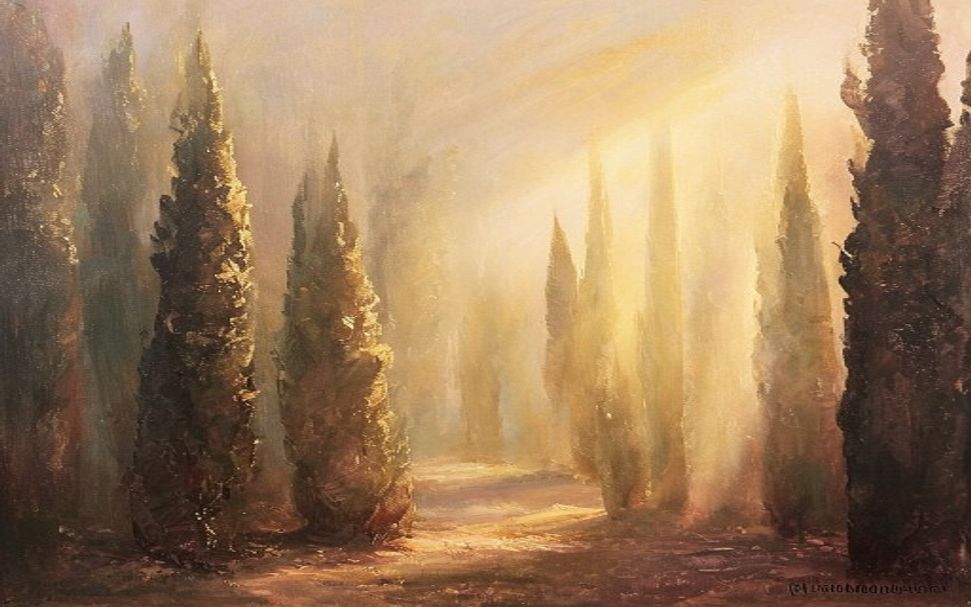
The Ascent of the Self: From Garden to Sphere
This profound ghazal from Rumi’s Divan-i Kebir strikingly expresses the essence of humanity and its relationship with the universe. The poet addresses the self, initially depicted as a garden—that is, the inner world; however, this garden possesses such immense potential that it actually contains hundreds of thousands of gardens. This metaphor symbolizes the boundless creative capacity within human beings and the beauty awaiting discovery. Yet, Rumi emphasizes that the raw state of this self must be refined; just as a sphere is shaped, imperfections must be chiseled away and one must abstain from entanglement. This is an invitation for humanity to develop, mature, and purify itself.
The Transformative Effect of Love: Liberation from Prison
One of the most important themes in the ghazal is the transformative power of love. Rumi describes the garden of existence as a prison without presence, stating that death symbolizes liberation from this prison. This expresses a desire to escape the limitations and constraints of worldly life while also demonstrating that spiritual resurrection through love is possible. Love is a force that completes the self, elevating it to a higher level of consciousness. According to Rumi, love is not merely an emotion but a journey; in this journey, one discovers oneself, renews themselves, and integrates with the universe.
The Metaphor of Kingship: Integration with Divine Essence
The metaphor of kingship appears as an important element of Rumi’s Sufi understanding in the ghazal. The king represents divine essence and absolute authority, but also symbolizes the potential within the human being. The person who integrates with love acts with a sense of devotion to the king; obeys his commands and transcends the boundaries of their own self. This devotion is not merely obedience, but an expression of the freedom that comes with love. Rumi emphasizes that one must realize and integrate with the divine power within themselves, because true freedom comes through surrender, stating, “you are the king who holds your cloak.”