

ABLUTION SECTION · 124 – ABRITION IN TIMES OF NEED






Umayr, the freedman of Ibn Abbas, related: I heard Ibn Abbas saying, "Abdullah ibn Yasir, who was in the service of Maymunah, the wife of the Messenger of Allah (peace and blessings be upon him), and I came to the company of Abu al-Juyaym, and we entered the home of Ibn al-Harith ibn Simmat al-Ansari." Abu al-Juyaym narrated:
The Messenger of Allah (peace and blessings be upon him) was coming from Bir Jamil. A man encountered him and greeted him. The Messenger of Allah (peace and blessings be upon him) did not return the greeting. Then he came to a wall, rubbed his face and arms upon it, and returned the greeting.










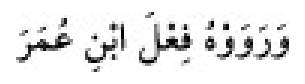
According to the narration of Nafi (may Allah be pleased with him), he said:
I went with Ibn Umar on a need to Ibn Abbas. Ibn Umar fulfilled his need. Among the hadiths he narrated that day was this one: The Messenger of Allah (peace and blessings upon him) encountered a man in a street. The Messenger of Allah (peace and blessings upon him) had just come from relieving himself, whether it be major or minor ablution. He greeted the Messenger of Allah (peace and blessings upon him), but the Messenger of Allah (peace and blessings upon him) did not return the greeting. Almost to the point that the man was disappearing from the street. He struck the wall with his hands and wiped his face with them. Then he struck again and wiped his arms, and returned the man’s greeting, saying: “Nothing prevented me from returning your greeting, but I was in a state of ritual impurity. That is why I did not return it.”
Abu Dawud said:
I heard Ahmad bin Hanbal say: Muhammad ibn Sabit narrated an objectionable hadith concerning tayammum. Ibn Dasah says that Abu Dawud said: In the hadith that Muhammad (ibn Sabit) narrates from the Messenger of Allah (peace and blessings upon him), it was not acted upon striking the hands on the ground. The memorizers narrate it as being from the action of Ibn Umar.




From Ibn 'Umar (may Allah be pleased with him), it is narrated that he said:
The Messenger of Allah (peace and blessings upon him) was returning from relieving himself, and a man encountered him near the well of Jamil. The man greeted the Messenger of Allah (peace and blessings upon him). The Messenger of Allah (peace and blessings upon him) did not return his greeting, but came to a wall, placed his hands upon it, wiped over his face and arms, and then returned his greeting.
[Explanation: These honorable hadiths indicate that tayammum may be performed within a city where water is available in times of necessity, and if earth is unavailable, performing tayammum by striking the walls is permissible. A person who is in a state of ritual impurity can give and receive greetings. The Messenger of Allah (peace and blessings upon him) returned the greeting of this man after performing tayammum, and stated that returning a greeting without purification is not appropriate, and taught that it is better to be in a state of ritual purity for greetings and other remembrances.]