
The Prayer Section · 123 – Remaining Silent for a While After Beginning Prayer





Hasan (may Allah be pleased with him) narrated: Samura (may Allah be pleased with him) said:
I learned of two instances of pausing in the prayer. One is until the Imam begins to recite [the Quran] after taking the initial Takbir, and the other is after completing the recitation of Al-Fatiha and the chapter, at the time he will bow down (rukū’).
Hasan says: ‘Umran ibn al-Husayn did not believe in Samura’s report regarding this. He wrote a letter to Ubayyah, who was present in Medina, concerning this narration. Ubayyah confirmed Samura's statement.
Abu Dawud said: Humayd narrated the hadith as: “One of the pauses is after completing the recitation.” [482]
EXPLANATION:
The pause (sektah) mentioned in this hadith refers to ceasing voice and breath after the initial Takbir, separating it from the beginning of the recitation. It also refers to pausing voice and breath after Al-Fatiha and the chapter.
Essentially, sektah is holding the breath and stopping the sound.
In the Hanafi and Maliki schools of jurisprudence, these pauses are disliked (makruh).
According to al-Shafi’i and Ahmad ibn Hanbal, pausing in prayer is recommended (mustahabb) in three places:
1. Between the initial Takbir and Al-Fatiha.
2. Between Al-Fatiha and the chapter.
3. After completing the chapter, at the time one will bow down (rukū’). (Ma’alim al-Sunan, vol. 1, p. 376)


Semure bin Cundub (may Allah be pleased with him) narrated: The Messenger of Allah (peace and blessings upon him) would pause (in prayer) twice: once at the time of the initial takbir, and once when he concluded the recitation.
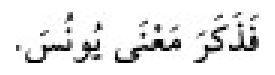
The narrator, Yunus, mentioned the meaning of a hadith.





779 – From Hasan (may Allah be pleased with him):
Semura ibn 'Ubayd and Imran ibn Husayn engaged in discussion. Semura ibn 'Ubayd (may Allah be pleased with him) said that the Messenger of Allah (peace and blessings upon him) had taught him two pauses (in prayer), one when the takbir is made, and the other when one ceases reciting (the verse) “and those who are led astray from the path of wrath and error,” which is the last verse of Surat al-Fatiha.
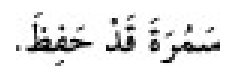
Semura had memorized it in this way. Imran ibn Husayn did not accept it. They wrote a letter to Ubay ibn Kab regarding this matter. He, in his reply or in the return of the letter, said:
“Indeed, Semura has memorized it correctly.”
EXPLANATION
Ubay ibn Kab was asked about the pauses in prayer. It was written that Semura had learned from the Messenger of Allah (peace and blessings upon him) two pauses, one after the initial takbir, and the other when Surat al-Fatiha is completed. Ubay ibn Kab responded:
“Semura has memorized it correctly.” He affirmed Semura’s account.




Samura (may Allah be pleased with him) said: "I memorized two verses from the Messenger of Allah, peace and blessings be upon him."
In another narration, Abd al-'Ala said: “We asked Said Katada, where are those two verses? ”
Katada replied: “When one enters prayer and when one ceases recitation.” Then Katada added: "It is after 'those not angered with.'" [483]





Abu Hurayrah, may Allah be pleased with him, said:
The Messenger of Allah, peace and blessings be upon him, when he takes the takbir for prayer, –may my mother and father be sacrificed for Him– do you not see the silence between the takbir and the recitation? I said to him, “Tell me what you say.”
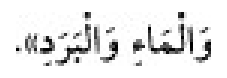
The Messenger of Allah, peace and blessings be upon him, replied, "I say: ‘O Allah, just as You have distanced the East from the West, distance my sins from me. O Allah, just as a white garment is cleansed of dirt, cleanse me of my errors. O Allah, wash me with snow, water, and hail.’” [484]