
SECTION ON PURITY · 121 – THE PERIOD OF WOMEN IN POSTPARTUM BLEEDING



Umm Salamah (may Allah be pleased with her) narrated: During the time of the Messenger of Allah (peace and blessings upon him), women who had just given birth would wait forty days or forty nights after childbirth. (They would abandon prayer and fasting.) We would apply *vers* to our faces, she said.
[229] She meant that it was applied because of *kelf* (freckles).
EXPLANATION: Women who have just given birth experience freckling on their faces, and they would use fragrant *vers* to remove this. *Kelf* refers to the spots and blemishes on the face. *Nifas* in language means giving birth. In terminology, it refers to the blood that comes after childbirth. According to Imam al-A’zam and Ahmad ibn Hanbal, the minimum duration of *nifas* is one month, and its maximum duration is forty days. According to Imam ash-Shafi'i and Imam Malik, there is no lower limit for *nifas*, but its upper limit is sixty days. However, a narration exists indicating that Imam Malik retracted this view. If a woman’s bleeding ceases three days after childbirth, her *nifas* is considered over. A woman in a state of *nifas* cannot perform the tawaf of the Ka'bah. After her *nifas* ends, she performs ritual purification and makes up any missed fasts but does not make up missed prayers. If the blood of a woman in *nifas* continues for forty days, she purifies herself and resumes her worship. If it does not cease after forty days, she again purifies herself and resumes her worship, because according to Imam al-A’zam and Imam Ahmad, the final period of *nifas* is forty days; any bleeding that comes after forty days is considered an excused (ozur) discharge. But according to Imam ash-Shafi'i, a woman remains in a state of *nifas* until it exceeds forty days and reaches sixty, even if the bleeding continues. After sixty days, it is considered an excused discharge. She performs ritual purification on the sixtieth day and may then perform her worship even if the bleeding persists. However, there is consensus that if a woman’s bleeding ceases within one hour of giving birth, she is released from *nifas*, performs ritual purification, and resumes her worship. Narrations exist stating that according to Imam al-A’zam, the minimum duration of *nifas* is twenty-five days, and according to Imam Abu Yusuf, it is eleven days. However, this period is taken into account only if a woman gives birth and her purification is linked to a divorce. According to what is recorded in Durr al-Muhtar, there is no minimum duration for *nifas*. (Badr al-Din’s Explanation, vol. 2, p. 388)




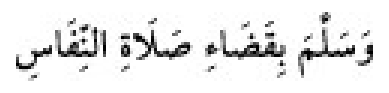

‘Ümmü Seleme (may Allah be pleased with her) said: I entered upon her having performed the Hajj, and said, “O mother of the believers, Semure ibn ‘Ubayd is ordering the women who experienced post-partum bleeding to make up their missed prayers.” Thereupon ‘Ümmü Seleme said, "They do not make them up." The Messenger of Allah (peace and blessings be upon him) did not order a woman among his wives who sat for forty days to make up the prayers she had missed during her postpartum period.
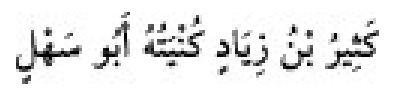
Muhammad ibn Hatim says that the woman’s name was Müsse, and her kunya was ‘Ümmü Besse. Abu Dawud also said: Kesir ibn Ziyad's kunya is Abu Saḥl.