
SECTION ON PRAYER · 6 – THE TIME OF THE MAGHRIB PRAYER


416 – It is narrated from Anas ibn Mālik (may Allah be pleased with him) as follows: We would perform the Maghrib prayer with the Messenger of God (peace and blessings be upon him), and then we would shoot arrows, and one of us could see where his arrow landed. [290]
EXPLANATION
Nabil: This refers to the arrow that the Arabs would carry. This noble hadith indicates that the Maghrib prayer should be performed immediately after sunset, before darkness falls.


417 – From Salama ibn al-Akwaʿ (may Allah be pleased with him): The Messenger of God (peace and blessings be upon him) would lead the Maghrib prayer at the moment when the upper edge of the sun disappeared and set. [291] Hacip: It means 'eyebrow.' Here, it refers to the upper edge of the sun.




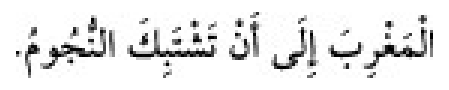
418 – From Mersad ibn ʿAbdullah (may Allah be pleased with him): Abū Ayyūb (may Allah be pleased with him) came to us as a warrior. At that time, ʿUqba ibn ʿĀmir was the governor in Egypt. ʿUqba had not performed the Maghrib prayer at its proper time and was performing it then. Abū Ayyūb stood up to him and said, “O ʿUqba, why did you delay the prayer until this time?” ʿUqba replied, “We were occupied (we had matters to attend to).” Abū Ayyūb said to him, “Did you not hear the Messenger of God (peace and blessings be upon him) say: ‘My community will remain upon goodness or upon the sunnah as long as they do not delay the Maghrib prayer until the stars appear and become intermingled’?”
EXPLANATION
Fiṭra: It means creation, sunnah, and Islam. Here, it means the sunnah. Ishtibāk al-nujūm: It means the stars appearing and the bright and dim ones becoming intermingled. This state of the stars occurs at the last time for the Maghrib prayer. Performing Maghrib at its earliest time is recommended (mustahabb). According to Imām al-Aʿẓam, it is disliked (makrūh) to delay Maghrib until the stars shine. (Bazl al-Majhūd, vol. 3, p. 213)