
ABLUTION DUE TO SLEEP



From ‘Abdullah ibn ‘Umar, may Allah be pleased with him: The Messenger of Allah, peace and blessings be upon him, was detained after the Isha prayer one night. We slept in the mosque and awoke, then slept again and awoke again, then slept once more. Afterwards, he came out to us and said, “There is no one waiting for the prayer except you.”




Anas ibn Malik (may Allah be pleased with him) narrated:
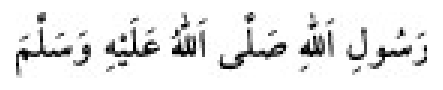
The companions of the Messenger of Allah (peace and blessings upon him) would wait for the exact time of nightfall, their heads inclined in sleep, then they would rise and pray without performing ablution.
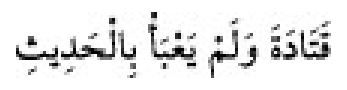
Abu Dawud said: Shu’bah, in his narration from Katada, added: We used to sleep in the time of the Messenger of Allah (peace and blessings upon him) and incline our heads.
Ibn Abi Ubayd narrated this hadith from Katada with a different wording.


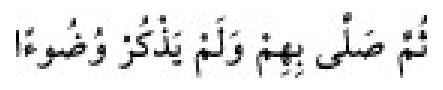
Anas ibn Malik, may Allah be pleased with him, narrated: The call to the Isha’ prayer was made. A man stood up and said, “O Messenger of Allah! I had a need.” The Messenger of Allah, peace and blessings be upon him, rose and spoke quietly with him while some of the congregation slept or dozed off. Then the Messenger of Allah, peace and blessings be upon him, led them in the prayer. In the narration of Sabit al-Banani, ablution was not mentioned.













It is related from Ibn Abbas, may Allah be pleased with him, that:
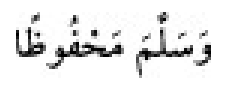
The Messenger of Allah, peace and blessings be upon him, would sleep while prostrating [in prayer], until his breathing could be heard, then he would rise and perform the prayer without ablution. Anes said: “I said to the Messenger of Allah, peace and blessings be upon him, ‘You slept and performed the prayer without ablution.’ The Messenger of Allah, peace and blessings be upon him, said, ‘Ablution is required for those who sleep lying down.’”
Usman and Hennad added, "Because their joints rest."
Abu Dawud said: “The statement, ‘Ablution is required for those who sleep lying down,’ is an anomalous hadith.” No one else related it. However, Yazid (Abu Khalid) Dalani narrated from Katada, but they did not mention anything of this sentence.
Ibn Abbas said: "The heart of the Messenger of Allah, peace and blessings be upon him, was protected from sleep."
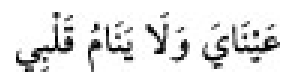
Aisha, may Allah be pleased with her, said: “The Messenger of Allah, peace and blessings be upon him, said, ‘My eyes sleep, but my heart does not.’”
Shu’ba said: Katada heard four hadiths from Abu Aliya, namely:
1. The hadith of Yunus bin Matta,
2. The hadith concerning prayer from Ibn Umar,
3. The hadith that “Judges are three,”
4. The hadith which begins, "Trustworthy individuals related this hadith to me; among them and the most trustworthy is Omar."
EXPLANATION
Abu Dawud said: I told Yazid al-Dallani’s hadith to Ahmad bin Hanbal. He rebuked me for its weakness and said, “What has become of Yazid al-Dallani that he mixes with the companions of Katada?” And he did not give value to the hadith.
1. The Hadith of Yunus bin Matta:
“It does not befit any soul to say that I am better than Yunus, son of Matta, peace be upon him.”
2. The Hadith Concerning Prayer from Ibn Umar:
The Messenger of Allah, peace and blessings be upon him, forbade performing prayer until the sun rose after the Fajr (dawn) prayer, and until the sun set after the Asr (afternoon) prayer.
3. The Hadith that “Judges are three”: One is in Paradise, two are in Hell. The one who is in Paradise is a man who knew the truth and judged with it. A man who knew the truth but acted unjustly in judgment is in Hell. A man who judged people with ignorance is also in Hell.


Ali ibn Abi Talib (may Allah be pleased with him) narrated:
The Messenger of Allah (peace and blessings upon him) said: “The eyes are a gateway [to the body]. Whoever sleeps should perform ablution.”
**Notes:**
*Seh*: This means anus. It is the term for the anal opening in modern terminology.
*Wika*: This refers to a tie used to secure the mouths of containers like leather bags and cisterns. It is also a term applicable to the muscles that open and close the anus.
Scholars have differed regarding whether sleep invalidates ablution, with them dividing into nine groups on this matter.
1. They said: Sleep never invalidates ablution in any circumstance, citing the hadith narrated by Hudhaifa (may Allah be pleased with him).
2. They said: Sleep always invalidates ablution in every circumstance. The narration from Saffan ibn Assal is: “The Messenger of Allah (peace and blessings upon him) commanded us not to remove our trousers for three days and nights when we were on a journey, except due to the impurity of major ritual impurity. But do not remove them because of major or minor ablution, or sleep.”
3. They said: Prolonged sleep invalidates it, while brief sleep does not. Sleep itself does not invalidate ablution, but it is a cause for its invalidation.
4. They said: If one sleeps during prayer and outside of prayer, in prostration and bowing, according to the established practice, then the ablution is not invalidated. However, if one lies down or leans against something while sleeping, it is invalidated. This is the view of Imam al-Shafi’i.
5. They said: Sleeping while in a state of bowing or prostration invalidates the ablution. This is the view of Ahmad ibn Hanbal.
6. They said: Sleep invalidates the ablution. However, sleeping while performing bowing or prostration does not invalidate it.
7. They said: Only sleeping while in a state of prostration invalidates the ablution.
8. They said: Sleeping during prayer does not invalidate it, but sleeping outside of prayer does.
9. They said: If one sleeps with the buttocks firmly pressed against the ground, then the ablution is not invalidated, whether inside or outside of prayer. This is the view of Imam al-Azam and al-Shafi’i. (Avnul Mabud, vol. 1, p. 83)
Sleep is a moment of heedlessness. When one closes their eyes, the body rests. The muscles that are a restraint on the anus relax, creating the possibility of flatulence.
The Messenger of Allah (peace and blessings upon him)'s sleep not invalidating his ablution may be because even though his eyes were closed, his heart did not sleep. Or perhaps he slept while sitting upright rather than lying down.
The companions’ standing for prayer without renewing their ablution after sleeping may have been due to them sleeping in a seated position or because they had no certainty that flatulence had occurred, which would invalidate the ablution.