
Prayer Section · 117 – Starting Prayer


Wail ibn Hujr, may Allah be pleased with him, narrated:
I came to the Messenger of Allah, peace and blessings be upon him, during a winter season. I saw his companions raising their hands from within their garments while beginning the prayer.


















Muhammed ibn Amr ibn Ata said that I heard Abu Humayd as-Sa’idi say, among a group of the Prophet's companions including Abu Qatada, "I know the prayer of the Messenger of Allah better than anyone else." Those present said: “May God bear witness! You do not follow the Messenger of Allah, peace and blessings be upon him, more than we do, nor was your conversation with him before us.” He replied, “Why do you say that?” They said, "Tell us."
He said: "When the Messenger of Allah, peace and blessings be upon him, would stand for prayer, he would raise his hands to the level of his shoulders. Then he would say *takbir*, and recite until he was still in each posture. Then he would say *takbir* [for rukū’]. He would raise his hands to the level of his shoulders. Then he would bend down into *rukū’*, placing both palms on his knees. He would remain upright in *rukū’*, not lowering his head, nor raising it from his waist. Then he would raise his head and say, ‘*Semiallahu Limen Hamideh*,’ raising his hands to the level of his shoulders. He would stand straight. Then he would say *Allahu Akbar* and prostrate. He would keep his hands open by his sides. Then he would raise his head, bend his left foot and sit upon it, performing the prostration with his toes spread out.
He would say *Allahu Akbar*, raise his head, straighten his left leg, and sit upon it until everything was in its place. He did likewise in the remaining *rak’ahs*. When he rose from two *rak’ahs*, he would say *takbir* as at the beginning of the prayer and raise his hands to the level of his shoulders. He would also raise his hands in the remaining *rak’ahs* of the prayer. And when he reached the final prostration where he would give the greeting, he would move his left foot to his right side and sit in a state of *tawarruk*.
The companions said: “You have spoken truthfully. The Messenger of Allah, peace and blessings be upon him, used to pray exactly like this.” [463]
*Explanation:*
*A’rız*: Used to mean "relate," "declare," or "present."
*Yüknüü*: Means "to raise."
*Yüsni*: Means “to bend” or “break.”
*Yehvi*: Means "to descend."
*Teverruk*: Is sitting with the feet drawn up, placing them on the ground.
This honorable hadith distinguishes between the first sitting and the last sitting. In the first sitting, the left foot is straightened and sat upon it. In the last sitting, the left foot is moved to the right side and sat upon the cushions.
Shafi’i and Ahmad ibn Hanbal took this hadith and distinguished between the two sittings.
Imam Malik says that in both sittings one sits on the cushions.
According to the Hanafi school of thought, in both sittings the right foot is kept upright and the left foot is laid down upon it.







Muḥammad ibn ʻAmr al-ʼAmirī, may Allah be pleased with him, relates:
I was present in an assembly with the Companions of the Messenger of Allah, peace and blessings be upon him, while they were discussing the details of his prayer. Abū Humaid mentioned part of the preceding narration and said: When he reached the bowing posture, he placed both hands on his knees, opening the spaces between his fingers, and without raising his head from his chest, he bent his waist (flexing it to the right and left) and did not expose his cheek. When he sat for the first two rakʿahs, he straightened his right foot and sat upon his left foot. When he reached the fourth rakʿah, he placed his left sitting place on the ground and drew both feet from one side.
EXPLANATION:
*Ḥasara:* Means “he bent.”
*Wa lā al-ṣafaha bi ḥaddihī:* This means "he did not expose his cheek to one side."


From Muhammad ibn Amr ibn Ata’.
It was narrated that he recounted the same hadith as the one preceding it, saying: He would place his hands on the ground neither fully extended nor completely folded when he prostrated, and he would direct the tips of his fingers towards the qibla.










Abbas ibn Sa’id, was in an assembly where his father, who was among the companions, was present. Abu Hurayrah, Abu Humayd, and Abu Usayd were also in that assembly. The narrator, Isa, added some additions to this report (number 730) and omitted some parts of it.
In this narration, it is said: Then he raised his head from the bowing posture and said, “Sami Allahu liman hamidah.” He said, “Allahumma Rabbana lakal-hamd.” He raised his hands. Then he said, "Allahu Akbar." While prostrating, he stood with both palms on his knees and the soles of his feet, and then performed the prostration. Then he took a single utterance of Allahu Akbar, sat upon his seat, and straightened one leg. Then he took another single utterance of Allahu Akbar and prostrated. Then he took a single utterance of Allahu Akbar and rose. He did not perform any ostentation. Then, relating the hadith of direction, he said: After two rak’ahs, he sat. And when he intended to rise, he rose with one single utterance of Allahu Akbar. Then he performed the last two rak’ahs as well. He did not mention any ostentation in the Tashahhud.












It is related on the authority of Abbas bin Sehl, may Allah be pleased with him, that he said:
Abu Humayd, Abu Usayd, Sa’d bin Sa’d, and Muhammad bin Maslama gathered together and discussed the prayer of the Messenger of Allah, peace and blessings be upon him. Abu Humayd said, "I am among those who know best about the prayer of the Messenger of Allah, peace and blessings be upon him," and he mentioned part of a narration that had passed, saying: “The Messenger of Allah, peace and blessings be upon him, performed rukū’ placing his hands on his knees with palms open. He bent his hands as if they were a bow, distancing them from the sides. He pressed his nose and forehead to the ground, moving his hands away from his sides and placing his palms in line with his shoulders. Then he raised his head until it was in its place, and rose [from the second prostration], then he placed his left foot flat and turned the tip of his right foot towards the qibla. He placed his right palm on his right knee and his left palm on his left knee, and indicated with his finger [during the Shahada].”
Abu Dawud said: “Atabe bin Hakim narrated from Abdullah bin Isa, who narrated from Abbas bin Isa, who narrated from Abbas bin Sehl, without mentioning ‘vetr.’ He mentioned something similar to the narration of Fuleih.” Hasan bin Hur mentioned that the sitting in the hadith narrated by Fuleih and Atabe was like this.
EXPLANATION:
*Vettera Yedeyhi*: This means he bent his hands as if they were a bow. “Vetr” is actually placing an arrow on a bow.
When the palms of the hands are placed on the knees in rukū’ and the elbows are not broken to adhere to the sides, that is the state of "vetr."





Abbas ibn Sahil al-Saidi, may Allah be pleased with him, narrated from Abu Humayd: The Messenger of Allah, peace and blessings be upon him, would open the space between his thighs when he prostrated, without resting anything on his abdomen.






Muḥammad ibn Jaḥdah, from his father Wa'il ibn Jabal, who narrated it from the Messenger of Allah (ﷺ), said:
The Messenger of Allah (ﷺ) would lower his knees before his palms when he prostrated, and he would place his forehead between his two palms, and he would keep his armpits open.
Ḥajjāj said: Ḥammām reported:
Shāfik narrated to me from Kulayb ibn ‘Ubayd, whose father narrated to me a hadith similar to this one from the Messenger of Allah (ﷺ).
One of them (Shāfik and Asim) narrated in their report: “The strong narration is that of Muḥammad ibn Jaḥdah.” The Messenger of Allah (ﷺ) would rise up straight, raising his knees first, and resting upon his thighs.


Abdülcebbar, his father Wāil, may Allah be pleased with him, related:
I saw the Messenger of Allah, peace and blessings be upon him, raising his index fingers to the lobes of his ears while saying the takbir in prayer. [464]



Abu Hurayrah, may Allah be pleased with him, said:
The Messenger of Allah, peace and blessings upon him, would raise his hands to the level of his shoulders when he took the takbir for prayer; and when he bowed in rukūʿ, when he rose from rukūʿ to prostrate, and when he finished two rakʿahs and stood up – he would do so exactly as described.





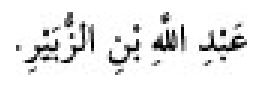
Meymun al-Makki (may Allah be pleased with him) said:
He led them in prayer, and he saw that when he stood up for the prayer, bowed down, and prostrated, he would make signs with his palms. And when he rose from prostration, he would stand up and raise his hands. I went to Ibn Abbas and said, “I saw Ibn Zubeir performing a prayer in a manner I have never seen before.” So I described those gestures to him. Then Ibn Abbas said:
“If you want to look at the prayer of the Messenger of Allah (peace and blessings be upon him), then follow the prayer of Abdullah ibn Zubeir.”






Nadr bin Kesir reported:
Abdullah bin Tawus performed the prayer with me in Hayf mosque. When he made the first prostration, he would raise his head from prostration and place his hands before his face. I disliked this. I mentioned it to Wuhaid bin Khalid, and Wuhaid said to him:
“Are you doing something that no one else does?” Ibn Tawus replied:
“I saw my father doing it like this, and my father said: ‘I saw Ibn Abbas doing it like this.’”
Wuhaid then asked: “Did the Messenger of Allah (peace and blessings be upon him) do it like this?” He responded: “I do not know.”












From Ibn Umar, may Allah be pleased with him:
He would say the takbir when entering prayer and raise his hands. When he bowed down (in ruku) he would say, “Allah hears [those who praise Him],” and when he rose from the second rak’ah, he would raise his hands (with each takbir), and attribute this to the Messenger of Allah, peace and blessings be upon him, as a *marfu* report. [466]
Abu Dawud said: The statement of Ibn Umar is sound, but the hadith is not *marfu*.
Abu Dawud said: Bakiyyah narrated the beginning of the hadith from Ubaydullah and attributed it to the Messenger of Allah, peace and blessings be upon him, as a *marfu* report.
Sufyan narrated this hadith from Ubaydullah, attributing it to Ibn Umar as *mawqoof*.
Sufyan said in his narration: He would raise his hands to his chest when rising from the second rak’ah. This is what is sound.
Abu Dawud said: The hadith was narrated *mawqoof* by Layth bin Sa'd, Malik, Ayyub and Ibn Jurayj.
Hammad bin Salama alone transmitted from Ayyub, attributing it to the Messenger of Allah, peace and blessings be upon him, as a *marfu* report.
Ayyub and Malik did not mention raising his hands when rising from prostration. Layth mentioned this in his hadith.
Ibn Jurayj said in his narration: I asked Nafi’: Did Ibn Umar raise the first takbir higher than all the other takbirs?
He replied, “No, he made them equal.” I said to him, "Show me [how high].” He pointed to his chest or below his chest.
EXPLANATION
A *marfu* hadith is one that is reported directly from the Messenger of Allah, peace and blessings be upon him, with the phrase, “The Messenger of Allah, peace and blessings be upon him, said…” Ibn Umar would relate a hadith as *marfu* by stating that he himself witnessed the Messenger of Allah, peace and blessings be upon him, performing the action.



From Naafi (may Allah be pleased with him):
Abdullah ibn Umar would raise his hands to the level of his shoulders when he began prayer. And when he raised his head from rukūʿ, he would raise his hands a little lower than at the initial takbīr.
Abu Dawood said: “As far as I know, no one except Malik lowered his hands any lower than this.”
EXPLANATION
This narration distinguishes between the takbīr taken when beginning prayer and the takbīr taken when rising from rukūʿ. It is described that in the initial takbīr, the hands are raised to shoulder level, and when rising from rukūʿ, they are raised a little below the shoulders. Abu Dawood states that this distinction is observed by no one except Malik.