
SECTION ON PURIFICATION · 125 – THE TAYAMMUM OF A PERSON IN A STATE OF MAJOR RITUAL IMPURITY (JANĀBA)








332 – From Abū Dharr (may Allah be pleased with him): Some sheep had been gathered in the presence of the Messenger of God (peace and blessings be upon him). The Messenger of God (peace and blessings be upon him) said, “O Abū Dharr, take these out to the desert.” So I went out to Rabdha, and there I became junub (in a state of major ritual impurity). I waited for five or six days. Then I came to the Messenger of God (peace and blessings be upon him). The Messenger of God (peace and blessings be upon him) said, “Are you Abū Dharr?” I did not respond.
He said, “Abū Dharr, may your mother lose you, may your mother die.” He asked for water from a black slave girl for me. The slave girl brought a bowl containing water, covered me with a garment, and I used a camel as a screen and performed ghusl (ritual bath), and it was as if a mountain had been lifted from me. The Messenger of God (peace and blessings be upon him) said, “Clean earth is the ablution water of the believer, even if he does not find water for ten years. When he finds water, he should wash his limbs with it. Ablution with water is better.”
In Musaddad’s narration, it is said: “the sheep were from charity.”
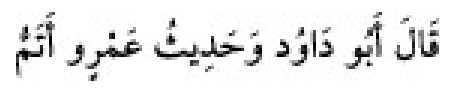
Abū Dāwūd said: The hadith of ʿAmr is more complete. [238]
EXPLANATION
Rabdha: A village three miles from Medina. It is near Dhāt ʿIrq.
Sakilatka Ummuka: This is an expression frequently used among the Arabs. It is not a supplication (dua). It means, “May your mother lose her child.” “Ummuka wayl” is also not used as a supplication but as an expression. For the Messenger of God (peace and blessings be upon him) greatly avoided cursing.
This noble hadith indicates that with one tayammum (dry ablution), several prayer times may be performed. This is also the view of Imām al-Aʿẓam (Abū Ḥanīfa). It also indicates that if a person who has performed tayammum finds water, his ablution is invalidated.















333 – It is narrated from a man of Banū ʿĀmir who said: When I became Muslim, my religion made me reflect and strive. I came to Abū Dharr. Abū Dharr said: When I came to Medina, I did not find it agreeable (in terms of my health).
The Messenger of God (peace and blessings be upon him) commanded me to go to where the flocks of sheep and camels were, and said, “Drink from their milk.” (Ḥammād says: I think he also said, “from their urine.”)
Abū Dharr said: I was far from water, and my family was with me. I would become junub (in a state of major ritual impurity) and would pray without performing ghusl.
The Messenger of God (peace and blessings be upon him) was sitting in the shade of the mosque among a group of his Companions (ṣaḥāba) when I came to him at noon. The Messenger of God (peace and blessings be upon him) said, “Are you Abū Dharr?”
“Yes, it is I. I am ruined, O Messenger of God,” I said.
He said, “What has ruined you?” I replied, “I am far from water, and since my wife is with me, I become junub and pray without performing ghusl.”
The Messenger of God (peace and blessings be upon him) asked for water for me. A black slave girl brought water in a bowl, and because it was not full, the water was moving. I concealed myself behind the camel, performed ghusl, and then returned.
The Messenger of God (peace and blessings be upon him) said: “O Abū Dharr, even if you do not find water for ten years, clean earth is the ablution water of the believer. When you find water, wash your body with it.”
Abū Dāwūd said: This hadith was narrated by Ḥammād ibn Zayd from Ayyūb. He did not mention (drinking) the urine of camels.
Abū Dāwūd said: This hadith is not authentic. There is no other hadith about the urine of camels except that of Anas. The people of Basra are alone in narrating the hadith of Anas (others did not narrate it).
EXPLANATION
Zūt: If the number of camels is less than ten, this name is given. Its plural is Azwād.
Reht: It is also called a group of men less than ten in number, among whom there is no woman.
Ijtawaytu: I did not find it agreeable. It became difficult for me to stay there. It means I became ill.
Us: Means a bowl.
Yataḥazzazu: Means it moves.
In this hadith, the narrator expresses doubt about whether the Prophet (peace and blessings be upon him) told Abū Dharr to drink from the urine of camels. If so, this was a recommendation specific to Abū Dharr for therapeutic purposes. Nevertheless, its ruling is abrogated. (Bazl al-Majhūd, vol. 3, p. 56)
[202] Muslim, Kitāb al-Ḥayḍ, b. 3, no. 302, p. 246, vol. 1; Tirmidhī, Abwāb al-Ṭahāra, no. 2981; Nasāʾī, Ṭahāra, b. 92, no. 289, p. 152, vol. 1; Ibn Mājah, Kitāb al-Ṭahāra, b. 130, no. 651, p. 213, vol. 1
[203] Muslim, Kitāb al-Ḥayḍ, b. 3, no. 300, p. 246, vol. 1; Nasāʾī, Kitāb al-Ṭahāra, b. 88, no. 280, p. 147, vol. 1; Ibn Mājah, Kitāb al-Ṭahāra, b. 125, no. 643, p. 211, vol. 1
[204] Bukhārī, Kitāb al-Ḥayḍ, b. 4, p. 77, vol. 1; Muslim, Kitāb al-Ḥayḍ, b. 3, no. 301, p. 246, vol. 1; Nasāʾī, Kitāb al-Ṭahāra, b. 86, no. 275, p. 147, vol. 1; Ibn Mājah, Kitāb al-Ṭahāra, b. 120, no. 634, p. 208, vol. 1
[205] Muslim, Kitāb al-Ṭahāra, b. 3, no. 298, p. 244, vol. 1; Tirmidhī, Kitāb al-Ṭahāra, b. 101, no. 134, p. 241, vol. 1; Nasāʾī, Kitāb al-Ṭahāra, b. 86, no. 272, p. 147, vol. 1; Ibn Mājah, Kitāb al-Ṭahāra, b. 12, no. 632, p. 207, vol. 1
[206] Bukhārī, Kitāb al-Ḥayḍ, b. 21, p. 83, vol. 1; Muslim, Kitāb al-Ḥayḍ, b. 15, no. 335, p. 265, vol. 1; Nasāʾī, Kitāb al-Ḥayḍ, no. 382, vol. 1; Tirmidhī, Abwāb al-Ṭahāra, b. 97, no. 130, p. 234, vol. 1; Ibn Mājah, Kitāb al-Ṭahāra, b. 119, no. 631, p. 207, vol. 1
[207] Muslim, Kitāb al-Ḥayḍ, b. 51, no. 335, p. 182, vol. 1; Nasāʾī, Kitāb al-Ḥayḍ, no. 382, vol. 1; Tirmidhī, Abwāb al-Ṭahāra, b. 97, no. 130, p. 234, vol. 1
[208] Tirmidhī, Kitāb al-Ṭahāra, b. 103, no. 136-137, pp. 244-245, vol. 1; Nasāʾī, Kitāb al-Ṭahāra, b. 93, no. 290, p. 153, vol. 1; Ibn Mājah, Kitāb al-Ṭahāra, b. 123, no. 640, p. 210, vol. 1
[209] Tirmidhī, Kitāb al-Ṭahāra, b. 103, no. 136-137, pp. 244-245, vol. 1
[210] Nasāʾī, Kitāb al-Ṭahāra, b. 9, no. 288, pp. 151-152, vol. 1
[211] Bukhārī, Kitāb al-Ḥayḍ, b. 6, p. 78, vol. 1; Muslim, Kitāb al-Ḥayḍ, b. 1, no. 293, p. 242, vol. 1; Tirmidhī, Abwāb al-Ṭahāra, b. 99, no. 132, p. 239, vol. 1; Nasāʾī, Kitāb al-Ṭahāra, b. 91, no. 826, p. 151, vol. 1; Ibn Mājah, Kitāb al-Ṭahāra, b. 121, no. 636, p. 208, vol. 1
[212] Nasāʾī, Kitāb al-Ṭahāra, b. 90, no. 285, p. 249, vol. 1
[213] Bukhārī, Kitāb al-Ḥayḍ, b. 6, p. 78, vol. 1; Nasāʾī, Kitāb al-Ṭahāra, no. 286, vol. 1; Muslim, Kitāb al-Ḥayḍ, b. 1, no. 293, p. 242, vol. 1; Ibn Mājah, Kitāb al-Ṭahāra, b. 121, no. 636, p. 208, vol. 1; Tirmidhī, Abwāb al-Ṭahāra, b. 99, p. 239, vol. 1
[214] Nasāʾī, Kitāb al-Ṭahāra, b. 52, no. 209, p. 116, vol. 1; Ibn Mājah, Kitāb al-Ṭahāra, b. 115, no. 263, p. 204, vol. 1
[215] Nasāʾī, Kitāb al-Ṭahāra, b. 52, no. 209, p. 116, vol. 1
[216] Muslim, Kitāb al-Ḥayḍ, b. 5, no. 334, p. 182, vol. 1; Nasāʾī, Kitāb al-Ṭahāra, b. 52, no. 207, p. 117, vol. 1
[217] Nasāʾī, Kitāb al-Ṭahāra, b. 52, no. 201, p. 116, vol. 1
[218] Bukhārī, Kitāb al-Ḥayḍ, Bāb al-Istihāḍa, b. 9, p. 79, vol. 1; Muslim, Ḥayḍ, b. 14, no. 333, p. 262, vol. 1; Tirmidhī, Abwāb al-Ṭahāra, b. 3, no. 125, p. 217, vol. 1; Nasāʾī, Kitāb al-Ṭahāra, b. 52, no. 201, p. 116, vol. 1; Ibn Mājah, Kitāb al-Ṭahāra, b. 116, no. 626, p. 205, vol. 1
[219] Bukhārī, Muslim, Nasāʾī, Ibn Mājah, Tirmidhī all narrated in the previous chapters and volumes.
[220] Bukhārī, Kitāb al-Ḥayḍ, b. 9, p. 79, vol. 1; Muslim, Kitāb al-Ḥayḍ, b. 14, no. 334, p. 263, vol. 1; Ibn Mājah, Kitāb al-Ṭahāra, b. 116, no. 626, p. 205, vol. 1
[221] Nasāʾī, Kitāb al-Ṭahāra, b. 52, no. 201, pp. 116, 117, 118, vol. 1
[222] Tirmidhī, Abwāb al-Ṭahāra, b. 95, no. 128, p. 221, vol. 1; Ibn Mājah, Kitāb al-Ṭahāra, b. 115-117, no. 622-627, pp. 203-205, vol. 1
[223] Nasāʾī, Kitāb al-Ṭahāra, b. 52, no. 357, pp. 116–122, vol. 1
[224] Ibn Mājah, Kitāb al-Ṭahāra, b. 116, no. 626, p. 205, vol. 1
[225] Nasāʾī, Kitāb al-Ḥayḍ, b. 52, no. 360, p. 121, vol. 1
[226] Tirmidhī, Abwāb al-Ṭahāra, b. 94, no. 126, p. 220, vol. 1; Ibn Mājah, Kitāb al-Ṭahāra, b. 115, no. 625, p. 204, vol. 1
[227] Nasāʾī, Kitāb al-Ḥayḍ, b. 52, no. 363, p. 122, vol. 1
[228] Bukhārī, Kitāb al-Ḥayḍ, b. 26, p. 84, vol. 1; Nasāʾī, Kitāb al-Ḥayḍ, b. 3, no. 368, p. 186, vol. 1; Ibn Mājah, Kitāb al-Ṭahāra, b. 127, no. 947, p. 212, vol. 1
[229] Tirmidhī, Abwāb al-Ṭahāra, b. 105, no. 139, p. 256, vol. 5; Ibn Mājah, Kitāb al-Ṭahāra, b. 128, no. 648, p. 213, vol. 1
[230] Bukhārī, Kitāb al-Ḥayḍ, b. 15, p. 81, vol. 1; Muslim, Kitāb al-Ḥayḍ, b. 13, no. 332, p. 260, vol. 1; Nasāʾī, Kitāb al-Ṭahāra, no. 252, vol. 1; Ibn Mājah, Kitāb al-Ṭahāra, b. 134, no. 642, p. 210, vol. 1
[231] Bukhārī, Kitāb al-Tayammum, b. 1, p. 86, vol. 1; Muslim, Kitāb al-Ḥayḍ, b. 28, no. 367, p. 279, vol. 1; Nasāʾī, Kitāb al-Ṭahāra, b. 105, no. 311, p. 163; Ibn Mājah, Kitāb al-Ṭahāra, b. 135, no. 565, p. 216, vol. 1
[232] Nasāʾī, Kitāb al-Ṭahāra, b. 107, no. 315, p. 167, vol. 1; Ibn Mājah, Kitāb al-Tayammum, b. 92, no. 571, p. 187, vol. 1
[233] Ibn Mājah, Kitāb al-Ṭahāra, b. 92, no. 571, p. 189, vol. 1
[234] Nasāʾī, Kitāb al-Ṭahāra, b. 105, no. 315, p. 104, vol. 1
[235] Bukhārī, Kitāb al-Tayammum, b. 3, p. 87, vol. 1; Muslim, Kitāb al-Ḥayḍ, b. 28, no. 368, p. 280, vol. 1; Nasāʾī, Kitāb al-Ṭahāra, b. 108, no. 321, p. 170, vol. 1
[236] Bukhārī, Kitāb al-Tayammum, vol. 1; Muslim, Kitāb al-Tayammum, b. 28, no. 368, p. 280, vol. 1; Nasāʾī, Kitāb al-Ṭahāra, b. 107, no. 321, p. 168, vol. 1; Tirmidhī, Abwāb al-Ṭahāra, b. 110, no. 144, p. 268; Ibn Mājah, Kitāb al-Ṭahāra, b. 91, no. 569, p. 188, vol. 1
[237] Bukhārī, Kitāb al-Ṭahāra, b. 2, p. 7, vol. 1; Nasāʾī, Kitāb al-Ṭahāra, no. 322, vol. 1; Muslim, Kitāb al-Ṭahāra, b. 28, no. 369, p. 281, vol. 1
[238] Tirmidhī, Kitāb al-Ṭahāra, b. 82, no. 124, p. 211, vol. 1; Nasāʾī, Kitāb al-Ṭahāra, b. 110, no. 323, p. 171, vol. 1
They encountered milk that had been gifted to the Messenger of God (peace and blessings be upon him). The Messenger of God (peace and blessings be upon him) sent one of his companions, who gave them some of the milk to drink, and thus they understood that he was not angry with them. [202]
While I was menstruating, I would bite the meat off a bone and then give it to the Messenger of God (peace and blessings be upon him). The Messenger of God (peace and blessings be upon him) would place his mouth where I had placed mine and bite off the meat. I would drink water and give him the cup, and he would place his mouth where I had placed mine when drinking. [203]
260 – It is narrated from ʿĀʾisha (may Allah be pleased with her): The Messenger of God (peace and blessings be upon him) would rest his head on my lap and recite (the Qur'an) while I was menstruating. [204]
The Messenger of God (peace and blessings be upon him) said to me, “Bring me the prayer mat from the mosque.” I said, “I am menstruating.” The Messenger of God (peace and blessings be upon him) said, “Your menstruation is not in your hand.” [205]
A woman asked ʿĀʾisha (may Allah be pleased with her): Does a menstruating woman make up the prayers she missed? ʿĀʾisha (may Allah be pleased with her) replied: “Are you from Harura? We used to menstruate in the presence of the Prophet (peace and blessings be upon him) and we were not commanded to make up the prayers.” [206]
The previous hadith was narrated. Abū Dāwūd said: Maʿmar added from Ayyūb: (We were commanded to make up the fast, but not the prayer.) [207]
Abū Dāwūd says: The authentic narration is as follows. In this narration, Ibn ʿAbbās said a dinar or half a dinar. However, often (Shuʿba) did not attribute the narration about half a dinar to the Messenger of God. [208]
Abū Dāwūd: Ibn Jurayj narrated from ʿAbd al-Karīm, who narrated from Muksim in the same way. [209]
267 – From Maymūna (may Allah be pleased with her): If one of the wives of the Messenger of God (peace and blessings be upon him) was menstruating, she would wear a shirt that covered her to her thighs or knees, and if that shirt covered her, he would benefit from her (i.e., have intimacy without intercourse). [210]
268 – From ʿĀʾisha (may Allah be pleased with her): She said: When one of us menstruated, the Messenger of God (peace and blessings be upon him) would command her to tie a waist-wrapper covering the area between the navel and the knees, and then he would lie with her. On one occasion, she said, “Her husband would benefit from her.” [211]
269 – ʿĀʾisha (may Allah be pleased with her) said: While I was menstruating and in contact with the Messenger of God (peace and blessings be upon him), we would lie under one cover. If anything from me touched the Messenger of God (peace and blessings be upon him), he would wash the affected area, and the washing would not exceed the affected spot. He would pray in it. If anything touched his garment, he would wash the affected area, and the washing would not exceed the affected spot, and he would pray in it. [212]
273 – From ʿĀʾisha (may Allah be pleased with her): The Messenger of God (peace and blessings be upon him) would command us at the beginning of our menstruation to wear our shirt, and he would have intimacy with us. Which of you can control her nafs (the lower self) as the Prophet controlled his? [213]
Umm Salama asked the Messenger of God (peace and blessings be upon him) for a legal ruling for that woman. The Messenger of God (peace and blessings be upon him) said: “Let her wait for as many days and nights as she used to menstruate each month before this illness came to her. During that period, she should refrain from prayer. When that period ends, she should perform ghusl, then tie a cloth to prevent the blood from soiling her clothes, and pray even if the excuse-bleeding continues.” [214]
In the narration of Layth, it is said: The Messenger of God (peace and blessings be upon him) said, “When the days of menstruation end and the time for prayer comes, she should perform ghusl, and so on.” [215]
Umm Salama’s garment container would be filled with blood. The Messenger of God (peace and blessings be upon him) said to her: “Wait for the duration of your usual menstruation, then perform ghusl.” [216]
280 – From ʿUrwa ibn Zubayr (may Allah be pleased with him): Fāṭima bint Abū Ḥubaysh told him: She complained to the Messenger of God (peace and blessings be upon him) about continuous bleeding and asked for a ruling. The Messenger of God said to her, “It is a vein (i.e., a medical condition), so when your days of menstruation come, do not pray. When your usual days end, perform ghusl and pray even if the excuse-bleeding continues between periods.” [217]
She said: “I am a woman who cannot get rid of excuse-bleeding. (Since the blood continues) should I stop praying?” The Messenger of God (peace and blessings be upon him) said: “It is a vein disorder. It is not menstruation. When your usual days come, stop praying. When your usual days end, wash the blood, purify yourself, and then pray.” [218]
“When menstruation begins, stop praying. When the duration of menstruation ends, wash off the blood, perform ghusl, and pray.” [219]
He commanded her (Umm Ḥabība bint Jaḥsh) to stop praying during her days of menstruation. This is a mistake from Ibn ʿUyayna. In the narration of Muḥammad ibn ʿAmr from al-Zuhrī, there is a meaning close to the addition in the hadith of al-Awzāʿī. [220]
Makhūl said: Menstruation is not hidden from women. Menstrual blood is black and thick. When this blackness goes away and yellowness and thinness appear, that is istiḥāḍa (excuse-bleeding). She should perform ghusl and pray. [221]
The Messenger of God (peace and blessings be upon him) said: “Shall I advise you to use cotton? Cotton will stop the blood.” I said: “It is too much, it will not be stopped by cotton.” The Messenger of God (peace and blessings be upon him) said: “Use a cloth.” I said: “It cannot be stopped with a cloth either, for I bleed too much.” The Messenger of God (peace and blessings be upon him) said: “I will advise you two things; if you do one, you do not need the other. If you can do both, that is up to you. This (excuse-bleeding) is one of the blows of Satan. Allah knows best, you menstruate for six or seven days. Then, after you have purified yourself, for twenty-three or twenty-four days and nights, pray and fast, and that will suffice you. Each month, do as women do during their menstruation and purification periods. (The second): If you are able, delay the ẓuhr prayer to the end of its time and hasten the ʿaṣr prayer at the beginning of its time, and perform ghusl for both. Pray ẓuhr and ʿaṣr together. Delay maghrib to the end of its time and hasten ʿishāʾ at the beginning of its time, and perform ghusl for both, praying maghrib and ʿishāʾ together. For fajr, perform ghusl and pray. If you are able, fast as well. Do so, for in my opinion, this is the better of the two options.” [222]
“Umm Ḥabība experienced istiḥāḍa (excuse-bleeding) for seven years.” The Messenger of God (peace and blessings be upon him) commanded her to perform ghusl. “Umm Ḥabība would perform ghusl at every prayer time.” [223]
He commanded her “to perform ghusl at every prayer time and to pray.” [224]
She said: “I do not narrate anything from anyone other than the Messenger of God (peace and blessings be upon him).” [225]
297 – From ʿAdī ibn Thābit (may Allah be pleased with him): From his father Ṣāliḥ, from his grandfather, it is narrated that the Messenger of God (peace and blessings be upon him) said: “Women with excuse-bleeding, during their days of menstruation, leave the prayer, then after their menstruation ends, perform ghusl and pray, and perform ablution at every prayer time.” [226]
“(After your menstruation ends) perform ghusl, then perform ablution for every prayer and pray.” [227]
She had pledged allegiance to the Messenger of God (peace and blessings be upon him). She said: “After purification, we did not consider the yellowish or cloudy discharge as anything (i.e., as menstruation).” [228]
311 – From Umm Salama (may Allah be pleased with her): She said: In the time of the Messenger of God (peace and blessings be upon him), women in postpartum bleeding would wait for forty days or forty nights (abstaining from prayer and fasting). We would apply (fragrant) vers (herb) to our faces. [229] She means it was applied because of freckles on the face.
O Messenger of God, how shall I purify myself with cotton? ʿĀʾisha said: I understood what the Messenger of God (peace and blessings be upon him) was alluding to. I said to Asmāʾ: “You will clean the trace of blood with cotton, using one after another.” [230]
Usayd said to ʿĀʾisha: “May Allah have mercy on you. If something befalls you that you dislike, Allah creates an ease in it for you and for the Muslims.” [231]
The Companions (ṣaḥāba) performed tayammum (dry ablution) with clean earth together with the Messenger of God (peace and blessings be upon him) for the morning prayer. They struck their palms on the earth once and wiped their faces. Then they turned and struck their hands on the earth again, and wiped their arms up to the shoulders and armpits. [232]
319 – From Ibn Wahb (may Allah be pleased with him): It was narrated like the previous hadith, saying: The Muslims rose and struck their palms on the earth, but did not scoop up any earth. He narrated similarly but did not mention the shoulders and armpits. [233]
In this hadith, none of them mentioned two strikes, except those whose names I have mentioned. [234]
Do you not know? ʿUmar was not convinced by ʿAmmār’s statement. [235]
“No, I do not prevent you. By Allah, we leave to you what you have narrated regarding tayammum.” [236]
The Prophet (peace and blessings be upon him) was coming from the direction of the Jamal well. A man met him and greeted him with salām. The Messenger of God (peace and blessings be upon him) did not return his greeting. He went to a wall, wiped his face and arms, and then returned his greeting. [237]
Abū Dāwūd said: The hadith of ʿAmr is more complete. [238]