
SECTION 44 OF MENASIKH – ENCOUNTERING AN OBSTACLE FOR A HAJJ OR 'UMRAH PILGRIM (IHSAAR)


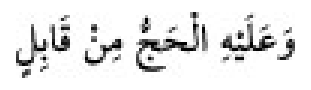

Ikrimah (may Allah be pleased with him) narrated: I heard Hajjaj ibn Amr al-Anṣārī say:
The Messenger of Allah (peace and blessings upon him) said: “One who has a limb broken or is rendered lame may leave the state of ihram. He must perform pilgrimage the following year.”
Ikrimah says: I asked Ibn Abbas and Abu Hurayrah about this matter, and they both said that Hajjaj spoke truthfully.


Haccaj ibn Amr (may Allah be pleased with him) narrates:
It is related that the Messenger of Allah (peace and blessings upon him) said, "Whoever has a bone broken, or a foot injured, or becomes ill…" And the narrator transmitted the meaning of the preceding hadith.
EXPLANATION
*Ihsar:* It is the state of a pilgrim who sets out with the intention of performing Hajj but is prevented from continuing his journey due to illness, loss of funds, or obstruction by an enemy.
In the sixth year of Hijrah, the Messenger of Allah (peace and blessings upon him) set out with 1400 companions with the intention of performing Hajj. Upon arriving at Hudaybiyyah, the Quraysh informed them that they would not permit them to enter Mecca. The Messenger of Allah (peace and blessings upon him) slaughtered sacrifices, shaved his head, and removed his ihram at Hudaybiyyah. Surah Al-Fath was revealed. The companions were somewhat slow in shaving their heads and removing their ihram. Then, they grouped themselves in sevens, slaughtering a camel or an ox, and returned home that year, according to the agreement of Hudaybiyyah, to perform their Umrah the following year.
The term "küsire" mentioned in this hadith refers to both the breaking of something and the loss of material resources and means.
If one of the aforementioned reasons befalls a pilgrim, and he has a sacrificial animal with him, is not subjected to the enemy's oppression, and can have the sacrificial animal sent from his location, then he sends it. Once he is certain that the sacrificial animal has reached Mecca, he shaves his head and removes his ihram. If there is an impediment to sending the sacrificial animal, he slaughters it where he is.
The views of the jurists regarding this hadith: According to Imam Abu Hanifah, Sufyan Thawri, Urwa, Ata, and Nafi', reasons such as illness and loss of funds are also causes for a pilgrim to turn back from Hajj, in addition to being prevented by an enemy. According to Malik, Shafi'i, and Ahmad ibn Hanbal, nothing other than being prevented by an enemy can be considered *ihsar*, and cannot divert the pilgrim from his journey. A pilgrim who experiences another reason on the road cannot send his sacrificial animal ahead, shave his head, and remove his ihram.
According to Imam Abu Hanifah, if *ihsar* occurs for a pilgrim, whether it is obligatory or voluntary Hajj, both Hajj and Umrah become obligatory upon him for the following year.
According to Malik, Shafi'i, and Ahmad ibn Hanbal: If it is voluntary, only the sacrificial animal of *ihsar* is required, and there is no obligation to make up the missed voluntary Hajj. (Ma’alim al-Sunan, vol. 2, p. 368)






Meymun ibn Mihran (may Allah be pleased with him) narrated:
That in the year when the people of Syria besieged Abdullah ibn Zubayr in Mecca, I set out for Umrah intending to perform it. Many from my tribe had sent sacrificial animals with me to be slaughtered within the sacred precincts. When we reached the people of Syria, they did not allow us to enter the sacred precincts, so I slaughtered my sacrificial animal where I was. Then I shaved and left the ihram, and then returned. When the next year (season) arrived, I set out for Umrah to make up for what I had missed. I came to Ibn Abbas and asked him how to proceed. Ibn Abbas (may Allah be pleased with him) said:
“Slaughter another animal in place of the one you slaughtered last year. Indeed, the Messenger of Allah (peace and blessings upon him) commanded his companions to slaughter sacrificial animals again during the make-up Umrah, in replacement of those they had slaughtered at Hudaibiyyah.”
EXPLANATION
Substitution: It is said that the sacrificial animal slaughtered during the siege should be replaced when performing the make-up pilgrimage.