

SHOPPING SECTION · 3 – AVOID SUSPICIOUS ITEMS





Nu’man ibn Bishr has narrated: I heard the Messenger of Allah ﷺ saying: “Indeed, halal is clear and indeed haram is clear. Between them are matters that are ambiguous.” The narrator would sometimes say, using the singular form instead of the plural, "there are some doubtful matters." “Let me give you an example regarding this matter. Allah ﷻ has created a preserve. What Allah ﷻ has forbidden is within that preserve. Whoever drives sheep into the preserve, he enters it; and whoever mixes doubtful things with what is permissible, he becomes bold in committing sin.”



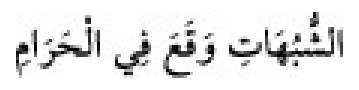
Nu’man bin Bishr (may Allah be pleased with him) narrated: I heard the Messenger of Allah (peace and blessings of Allah be upon him) say, relating the preceding hadith. And in this narration also, the Messenger of Allah (peace and blessings of Allah be upon him) said: “There are dealings between permissible and forbidden things which are doubtful; most people do not know them. Whoever protects himself from that which is doubtful, he has cleared his religion and his honor. But whoever falls into the doubtful things, he falls into what is forbidden.”


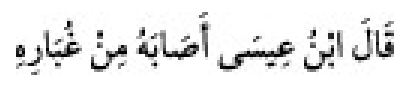
On the authority of Abu Huraira (radiyallahu anhu), it is narrated that the Messenger of Allah (sallallahu alayhi wa sallam) said: "There will come a time upon people when there remains not a single person who consumes usury, even if he does not consume it himself, but he is affected by its fumes."
Ibn Isha narrates, “He will be affected by the dust of usury.”









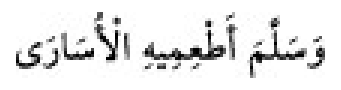
From a man of the Ansar, we were accompanying the Messenger of Allah, peace and blessings be upon him, to bury a deceased person. I saw the Messenger of Allah, peace and blessings be upon him, advising the gravedigger who was standing over the grave, “Widen the grave from the feet or from the head.” As we returned from the cemetery, the Messenger of Allah, peace and blessings be upon him, was met by a woman’s servant. When the time for the invitation arrived, food was brought. The Messenger of Allah, peace and blessings be upon him, extended his hand to the food, then the congregation extended their hands and ate. Afterwards, our fathers looked at the Messenger of Allah, peace and blessings be upon him, and he was turning a mouthful in his mouth without swallowing it. Then he said: “I find in this food the meat of a sheep taken without the permission of its owner.” A message was sent to the woman, and the woman said (upon arriving): "O Messenger of Allah, I sent a man to Baki district to buy me a sheep, but he could not find one. My neighbor had slaughtered a sheep, so I sent a man to him to sell it to me for its price. The neighbor could not be found, and I sent a message to his wife, who brought me the sheep her husband had taken.” The Messenger of Allah, peace and blessings be upon him, said: “Let it be given to the captives.”
EXPLANATION
If a woman offers food from the household without the permission of her husband, the man who earns it receives the full reward. The woman who gives it as charity receives half as much reward. This honorable hadith indicates that it is essential to obtain the permission of the head of the family when selling or giving away animals such as camels, cattle, and sheep, which have considerable capital.