

DIVORCE SECTION · 27 – LIAN

















2245 – According to what was narrated from Ibn Shihab al-Zuhri, from Sahl ibn Sa'd al-Sa'idi:
A man from Aclan, Uwaymir the son of Ashgar, came to Asim the son of Adiyy. He said to Asim: O Asim, if a man finds his wife with another man, does he kill her? Do you kill her? Or what should he do? O Asim, ask the Messenger of God (peace and blessings be upon him) about this for me, he said. So Asim asked the Messenger of God (peace and blessings be upon him). The Messenger of God (peace and blessings be upon him) did not like this question. He blamed the woman. What Asim heard from the Messenger of God (peace and blessings be upon him) weighed heavily on his mind. When Asim returned home, Uwaymir came to him and said, O Asim, what answer did the Messenger of God (peace and blessings be upon him) give you? Asim said: You did not bring me good; the Messenger of God (peace and blessings be upon him) did not welcome the question I asked him. Uwaymir said:
I will not give up until I ask this question to the Messenger of God (peace and blessings be upon him). He returned and came to the Messenger of God (peace and blessings be upon him), who was among the people. O Messenger of God (peace and blessings be upon him), if a man finds a man with his wife, does he kill her? Do you kill her? Or what should he do? he said. The Messenger of God (peace and blessings be upon him) said, "The Qur'an has been revealed concerning you and your wife. Go and bring your wife." Sahl says: I was also among the people with the Messenger of God (peace and blessings be upon him). The husband and wife invoked mutual curses (lian), and when the lian was completed, Uwaymir said: If I keep her in my house, I would be slandering her falsely. And without the Messenger of God (peace and blessings be upon him) saying anything to him, he divorced his wife with three pronouncements of divorce (talaq). Ibn Shihab says: This divorce became the custom among couples who performed lian. [202]
EXPLANATION
If a man sees his wife with another man and cannot produce witnesses, and the woman denies it, the man and woman perform mutual cursing (lian) in the presence of the court. The man says four times: "I bear witness by Allah, I saw my wife committing adultery." On the fifth time, he says: "If I am lying in what I say about my wife, may Allah's wrath be upon me." The woman swears four times that she did no such thing and that her husband is lying, and on the fifth time, she says: "If I have committed adultery and my husband is telling the truth, may Allah's curse be upon me." The judge then separates them.



2246 – It is narrated from Sahl (may Allah be pleased with him):
The Messenger of God (peace and blessings be upon him) said to Asim ibn Adiyy: "Keep the woman with you until she gives birth."
EXPLANATION
This noble hadith indicates that a pregnant woman is not subjected to the prescribed punishment (hadd) until she gives birth, and that lian can be applied to a pregnant woman.



2247 – It is narrated from Sahl ibn Sa'd al-Sa'idi (may Allah be pleased with him) that he said:
I was present at the mutual cursing (lian) of Asim and his wife when I was fifteen years old. Then he narrated the hadith. In his narration, he said: Then the woman left (the house) while pregnant. The child was called by reference to his mother (i.e., as the son of such-and-such woman).
EXPLANATION
This noble hadith indicates that when a woman who has committed adultery becomes pregnant, since the father is not certain, the child is called by reference to his mother.




2248 – Sahl ibn Sa'd (may Allah be pleased with him):
The Messenger of God (peace and blessings be upon him) said regarding a husband and wife who performed lian: "Watch the pregnant woman; if she gives birth to a child whose eyes are very black, whose whites are very white, and whose buttocks are large (and wide), then (since the man accused of adultery is like this) I will consider the husband (Uwaymir) truthful in his claim. But if the woman gives birth to a child who is yellowish, like a yellow insect (since Uwaymir himself is weak like this), I will consider Uwaymir's claim of adultery to be false." Sahl says: The woman gave birth to a child with those undesirable characteristics (it was understood the child was from adultery).
EXPLANATION
Vahara: A green animal the size of a lizard, called "snake midwife" in Anatolia. The same name is given to a short, reddish woman. In the chest, something that preoccupies a person is also called vahara.


2249 – The report mentioned in the previous hadiths was narrated from Sahl al-Sa'idi, and in this report, "the child was called by reference to his mother," he said.





2250 – In this report, it was narrated from Sahl al-Sa'idi, who said:
(Uwaymir) divorced his wife with three pronouncements of divorce (talaq) in the presence of the Messenger of God (peace and blessings be upon him). The Messenger of God (peace and blessings be upon him) accepted the occurrence of the divorce. What was done in the presence of the Messenger of God (peace and blessings be upon him) became the sunnah.
Sahl says: I witnessed this in the presence of the Messenger of God (peace and blessings be upon him). From then on, separation between those who performed lian, and their never being able to reunite, became the sunnah.
EXPLANATION
The implementation of the Messenger of God (peace and blessings be upon him) has two meanings:
1 – The implementation of the occurrence of three divorces.
2 – The implementation of permanent separation between them.
According to this view, if the man retracts and says, "I slandered my wife," he can never marry her again. This is the view of al-Shafi'i, Malik, al-Awza'i, al-Thawri, Ya'qub, Ahmad, and Ishaq. According to Abu Hanifa, if the man retracts, the lineage is established from him, and the child is attributed to him.






2251 – From Sahl ibn Sa'd (Musaddad said: Sahl said). I witnessed a husband and wife performing mutual cursing (lian) in the Age of Happiness (the Prophet's era), and I was fifteen years old at the time. When the husband and wife performed lian, the Messenger of God (peace and blessings be upon him) separated them. Musaddad's narration ends here; others said: When the Messenger of God (peace and blessings be upon him) separated the husband and wife who performed lian, Sahl was present. The man said: O Messenger of God (peace and blessings be upon him), if I keep my wife in my house, would I be falsely accusing her of adultery? Some narrators did not mention the phrase "upon that."
Abu Dawud says: None of the narrators, following Ibn Uyaynah, narrated that the Prophet (peace and blessings be upon him) separated the spouses who performed lian.



2252 – In this report, it is narrated from Sahl ibn Sa'd: The woman was pregnant. The man denied that the pregnancy was from him. The woman's son was called by reference to his mother. Then, in inheritance, the share that Allah, the Mighty and Majestic, decreed for the woman became the established sunnah, that the mother inherits from the child and the child from the mother (for a child born after lian).













2253 – It is narrated from Abdullah ibn Mas'ud (may Allah be pleased with him) that he said:
One Friday night we were in the mosque. A man from the Ansar entered the mosque and said: If a man finds his wife with another man and says that his wife did this, do you apply the punishment for slander to him? Or, if he kills that man, do you kill the woman's husband in retaliation? If he remains silent, should he remain silent out of anger? By Allah, I will certainly ask the Messenger of God (peace and blessings be upon him) about this. The next day, he went to the Messenger of God (peace and blessings be upon him) and asked him. He said: If a man finds his wife with a foreign man and says so, do you apply the punishment for slander to him? Or, if he kills that foreign man, do you kill the man in retaliation? Or, if he remains silent, should he remain silent out of anger? The Messenger of God (peace and blessings be upon him) said: "O my Lord, open the matter, make it clear," and prayed. Then the verse of mutual cursing (lian) was revealed: "And those who accuse their wives and have no witnesses except themselves..." (Qur'an, Surah al-Nur, 24:6). Among the people, that man was tested with this. His wife and he came to the Messenger of God (peace and blessings be upon him) and performed lian. When the man spoke, he bore witness to his truthfulness four times by Allah. On the fifth time, he said: "If I am among the liars, may Allah's curse be upon me." Abdullah narrates: The woman went to perform lian, and the Messenger of God (peace and blessings be upon him) said to her, "If you have done (meh), do not perform lian." The woman did not desist and performed lian. When the lian was completed and they were returning, the Messenger of God (peace and blessings be upon him) said: "It is hoped that this woman will give birth to a black and curly-haired child." The woman indeed gave birth to a black and curly-haired child. [203]
EXPLANATION
Allahumma iftah: O Allah, judge. Make Your judgment known. Meh: A warning meaning "do not do it." The verse of mutual cursing (mula'ana) is Surah al-Nur, verse 6.
















2254 – It is narrated from Ibn Abbas (may Allah be pleased with him):
Hilal ibn Umayyah said in the presence of the Messenger of God (peace and blessings be upon him) that his wife had committed adultery with Sharik ibn Simha. The Messenger of God (peace and blessings be upon him) said: "Either you bring witnesses or the punishment (hadd) will be applied to your back." Hilal said:
O Messenger of Allah, if one of us finds a man with his family, should he look for witnesses? The Messenger of God (peace and blessings be upon him) said: "Either you bring witnesses or the punishment will be applied to your back." Hilal said:
By Allah Who sent you as a true Prophet, I am certainly telling the truth. Surely Allah will reveal a ruling to save my back from punishment. The verse was revealed: "And those who accuse their wives of adultery and have no witnesses except themselves..." (Qur'an, Surah al-Nur, 24:6). The Messenger of God (peace and blessings be upon him) recited up to the verse: "if he is of the truthful," and when he finished the verse, he sent for them and they came. Hilal ibn Umayyah stood up and said, "I bear witness by Allah." The Prophet (peace and blessings be upon him) said: "Allah knows that one of you is lying. Is there anyone among you who will desist from lian and repent?" Then the woman stood up and bore witness by Allah four times, and when she came to the fifth oath, which is: "If my husband is telling the truth, may Allah's wrath be upon me," they said to her: If you are lying, this word brings great punishment.
Ibn Abbas says: The woman hesitated and stepped back, so much so that we thought she would retract her oath (and confess). The woman said: I will never disgrace my people. She completed the lian oaths. The Messenger of God (peace and blessings be upon him) said: "Watch the woman; if she gives birth to a child whose eyes are lined with kohl, whose thighs are large and wide, whose shins are fat, then that child is from Sharik ibn Simha." The woman gave birth to a child with these characteristics. The Messenger of God (peace and blessings be upon him) said: "If there were not a ruling in the Book of Allah (that no punishment is to be applied to those who perform lian), there would have been another ruling for me and this woman (i.e., I would have applied the punishment for adultery to her)." [204]
EXPLANATION
Tekelkeet: She hesitated. Sabit: Great. Nakasat: She turned back. Hadallece: Fat, plump shins.


2255 – It is narrated from Ibn Abbas (may Allah be pleased with him):
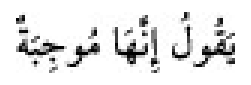
When the Messenger of God (peace and blessings be upon him) commanded a husband and wife who performed mutual cursing (lian) to do so, he commanded the man to put his hand on his mouth at the fifth time and said: "This word, which brings the curse upon oneself, brings about punishment." [205]






























2256 – It is narrated from Ibn Abbas (may Allah be pleased with him) that he said:
(One of the three whom Allah forgave) Hilal ibn Umayyah came. When he came home from his field in the evening, he found a man with his wife. He saw with his eyes and heard with his ears (what they said). Until morning, he did not tell anyone about the incident. Then in the morning, he went to the Messenger of God (peace and blessings be upon him) and said: O Messenger of Allah, I came home this evening and found a man with my wife. I saw with my own eyes and heard with my own ears (their words). The Messenger of God (peace and blessings be upon him) did not like the news brought by Umayyah and became angry with him. Then the verses were revealed: "And those who accuse their wives of adultery and have no witnesses except themselves..." (Qur'an, Surah al-Nur, 24:6-9). When the state of revelation left the Messenger of God (peace and blessings be upon him), he said to Hilal: "Rejoice, O Hilal, Allah, the Mighty and Majestic, has prepared relief and a way out for you." Hilal said:
Indeed, I was hoping for this from my Lord. The Messenger of God (peace and blessings be upon him) said: Send for the woman. The woman came. The Messenger of God (peace and blessings be upon him) recited these verses to both of them and admonished them. He informed them that the punishment of the Hereafter is more severe than the punishment of this world.
Hilal said: By Allah, I am truthful in what I said about my wife. The woman said: My husband is lying. The Messenger of God (peace and blessings be upon him) said: "Let them perform mutual cursing (lian) between them." Hilal was told: Bear witness. He bore witness four times to his truthfulness. When it came to the fifth, he was told: O Hilal, fear Allah; the punishment of this world is lighter than the punishment of the Hereafter. This word is such that it makes (Allah's punishment) obligatory upon you. Hilal said: By Allah, He will not punish me for this word. On the fifth, he said: "If I am among the liars, may Allah's curse be upon me." Then the woman was told: Bear witness. She bore witness four times that her husband was lying. When it came to the fifth, she was told: The punishment of this world is lighter than the punishment of the Hereafter. This word is such that it makes punishment obligatory upon you. She hesitated a little, then said: By Allah, I will not disgrace my people. On the fifth, she bore witness: "If my husband is telling the truth, may Allah's wrath be upon me."
The Messenger of God (peace and blessings be upon him) separated them and ruled that the child should not be attributed to the father, nor should the child or the mother be accused of adultery. Whoever calls the woman an adulteress or the child illegitimate will be punished. Since the husband and wife were separated without divorce, and the woman was not left behind by death, the Messenger of God (peace and blessings be upon him) also ruled that the husband is not obliged to provide maintenance or housing for the woman during her waiting period ('iddah). Regarding the child to be born, he said: "If the woman gives birth to a child who is yellowish, with light thighs, a narrow back, and thin shins, the child is Hilal's. If she gives birth to a dark, curly-haired, well-built, fat-shinned, big-buttocked child, the child is from the man she was accused with." The woman gave birth to a gray, curly-haired, camel-bodied, thick-shinned, big-buttocked child. The Messenger of God (peace and blessings be upon him) said: "If it were not for the oaths they made, I would have applied the punishment to that woman."
Ikrimah says: That child became a leader of the Mudar tribe. He was not called by his father's name.
EXPLANATION
This noble hadith is evidence that lian constitutes annulment of the marriage, not divorce. If it were divorce, the woman's residence and maintenance would be obligatory on her husband. This is also the view of al-Shafi'i. According to Imam al-A'zam (Abu Hanifa) and Muhammad ibn al-Hasan, lian is an irrevocable divorce (talaq ba'in). During the woman's waiting period, her maintenance and residence are the responsibility of the man.
Lemyazaz: That is, Hilal did not disturb that man. Did not upset him.
Usayhib: Grayish, yellowish color.
Uraysih: Light buttocks.
Uteybin: Back,
Hamshussaq: Thin shins
Evrak: Ash-colored
Cad: Curly-haired
Jamali: Camel-bodied, well-built.




2257 – It is narrated from Said ibn Jubayr (may Allah be pleased with him):
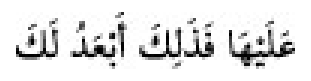
I heard Ibn Umar (may Allah be pleased with him) say: The Messenger of God (peace and blessings be upon him) said to a husband and wife who performed mutual cursing (lian): "One of you is lying. Your reckoning is with Allah. (To the man:) You have no way to approach your wife." (The man said:) O Messenger of Allah, what about the wealth I gave her? The Messenger of God (peace and blessings be upon him) said: "If you are truthful in what you said about her, your wealth is in exchange for making her lawful for you. If you falsely accused her of adultery, that wealth is very far from you." [206]




2258 – It is narrated from Said ibn Jubayr (may Allah be pleased with him) that he said:
I said to Ibn Umar: A man accused his wife of adultery. Ibn Umar said: The Messenger of God (peace and blessings be upon him) separated the spouses from the sons of Aclan (the husband and wife) and said to them: "Allah knows that one of you is lying. Is there anyone among you who will withdraw from his claim?" He repeated this three times. No one withdrew from their claim, and he separated them. [207]






2259 – It is narrated from Ibn Umar (may Allah be pleased with him):
In the Age of Happiness (the Prophet's era), a man performed lian with his wife. He denied that the child she gave birth to was from him. The Messenger of God (peace and blessings be upon him) separated them and gave the child to the mother.
Abu Dawud says: The words "He attributed the child to the mother" are unique to Malik's narration. Yunus, narrating from al-Zuhri, who narrated from Sahl ibn Sa'd, said in the hadith of lian: The man denied the woman's pregnancy was from him. The woman's child was called by reference to her. [208]