
SECTION OF THE RITES OF HAJJ · 23 – IFRAD HAJJ

1777 – It is narrated from ʿĀʾisha (may Allah be pleased with her) as follows: The Messenger of Allah
(peace and blessings be upon him) performed ifrad hajj. [546]















1778 – It is narrated from ʿĀʾisha (may Allah be pleased with her) that she said:
When the crescent of Dhu’l-Hijjah was about to appear, we set out together with the Messenger of Allah (peace and blessings be upon him). When we reached Dhul-Hulayfa, the Messenger of Allah (peace and blessings be upon him) said, “Those who wish to perform hajj should enter ihram and recite the talbiyah for hajj, and those who wish to perform ʿumrah should enter ihram and recite the talbiyah for ʿumrah.”
In the narration of Mūsā (ibn Salama) from Wuhayb among the narrators, the Messenger of Allah (peace and blessings be upon him) said, “If I had not sent my sacrificial animal, I would have entered ihram and recited the talbiyah for ʿumrah.”
In the narration from Ḥammād ibn Salama, he said, “But since I have my sacrificial animal with me, I will enter ihram and recite the talbiyah for hajj.” Then (the narrators who transmitted this hadith differently) agreed at this point. ʿĀʾisha said: I was among those who recited the talbiyah for ʿumrah. We had traveled a little when, at a place called Sharif, I began menstruating. While I was crying, the Messenger of Allah (peace and blessings be upon him) came to me and said, “What makes you cry?” I said, “I wished I had not set out for hajj this year.” The Messenger of Allah (peace and blessings be upon him) said, “Leave your ʿumrah, untie your hair and comb it.”
Among the narrators, Mūsā narrated, “Recite the talbiyah for hajj.” Sulaymān, however, narrated, “Do as the Muslims do in their hajj.”
When the day of return from Mecca arrived, the Messenger of Allah (peace and blessings be upon him) ordered her brother-in-law ʿAbd al-Raḥmān to take ʿĀʾisha to Tanʿīm. Mūsā added (the following in this narration): ʿĀʾisha entered ihram again and recited the talbiyah for ʿumrah in place of the ʿumrah she had left. She performed ṭawāf of the Kaʿba, and Allah accepted both her hajj and her ʿumrah. Hishām ibn ʿUrwa said: There was no sacrifice in any of these actions of ʿĀʾisha.
Abū Dāwūd says:
In the hadith of Ḥammād ibn Salama, Mūsā added the following: ʿĀʾisha (may Allah be pleased with her) became pure (from menstruation) on the night at Bathāʾ after returning from Minā. [547]
EXPLANATION
Muwaffina: Means when it was near. They set out five days before Dhu’l-Hijjah.
Laylat al-ṣadr, laylat al-bathāʾ, laylat al-ḥaṣaba all refer to the same night. It is the night when the Messenger of Allah (peace and blessings be upon him) descended at Bathāʾ between Mecca and Minā on the last day from Minā.
Muḥaṣṣab, Abṭaḥ, Muʿarras, Ḥayf Banī Kināna are all the same. It is a place name between Mecca and Minā.
Ibn al-Jawzī, may Allah have mercy on him, said: Authentic hadiths indicate that ʿĀʾisha performed qirān. First, she intended ʿumrah, but when she menstruated, the Messenger of Allah (peace and blessings be upon him) ordered her to intend hajj, thus she performed qirān. The Messenger of Allah’s statement to her, “One ṭawāf of the Kaʿba and saʿy between Ṣafā and Marwa suffices for both your hajj and your ʿumrah,” clearly shows this, and he rejected the opinion of those who said that ʿĀʾisha abandoned her ʿumrah completely and performed only hajj.
ʿĀʾisha’s performing another ʿumrah from Tanʿīm was commanded to please her heart. The statement “There is no sacrifice in any of these” is said to be an addition (mudraj) from the words of Hishām.





1779 – It is narrated from ʿĀʾisha (may Allah be pleased with her), the wife of the Messenger of Allah (peace and blessings be upon him), that she said:
In the year of the Farewell Hajj, we set out together with the Messenger of Allah (peace and blessings be upon him). Among us were those who entered ihram and recited the talbiyah for ʿumrah, those who entered ihram and recited the talbiyah for both hajj and ʿumrah, and those who entered ihram and recited the talbiyah for hajj alone. The Messenger of Allah (peace and blessings be upon him) intended only hajj. Those who entered ihram for hajj alone and those who combined hajj and ʿumrah did not exit ihram until the day of sacrifice. [548]
EXPLANATION
Those who intend ifrad hajj and qirān cannot exit ihram until the day of sacrifice. Those who perform qirān exit ihram after stoning, slaughtering their sacrifice, and shaving. Those who perform ifrad exit ihram after stoning the jamrah of ʿAqaba and shaving.

1780 – From Abū’l-Aswad, a narration similar to the previous hadith has been transmitted with the same chain. However, the narrator added the following: Those who entered ihram for ʿumrah exited ihram (before the festival).
EXPLANATION
Those who perform ʿumrah exit ihram after performing ṭawāf of the Kaʿba (and saʿy between Ṣafā and Marwa) and shaving. Before going to Minā on the day of Tarwiyah, they enter ihram again for hajj; from this second ihram, they cannot exit until they have stoned, slaughtered the sacrifice, and shaved.













1781 – It is narrated from ʿĀʾisha (may Allah be pleased with her), the family of the Messenger of Allah (peace and blessings be upon him), that she said:
In the year of the Farewell Hajj, we set out together with the Messenger of Allah (peace and blessings be upon him) and entered ihram with the intention of ʿumrah. Then the Messenger of Allah (peace and blessings be upon him) said, “Whoever has a hady (sacrificial animal) with him should intend both ʿumrah and hajj together. Then continue in ihram and finally exit from both ihrams at once.” I arrived in Mecca while I was menstruating, and I did not perform ṭawāf of the Kaʿba nor saʿy between Ṣafā and Marwa. I complained of this state to the Messenger of Allah (peace and blessings be upon him). The Messenger of Allah (peace and blessings be upon him) said to me:
“Untie and comb your hair, recite the talbiyah with the intention of hajj, and leave your ʿumrah.” I did so. After I had completed the hajj, the Messenger of Allah (peace and blessings be upon him) sent me (with my brother) ʿAbd al-Raḥmān ibn Abū Bakr to Tanʿīm. I performed ʿumrah, and the Messenger of Allah said to me, “This ʿumrah you have performed is in place of the ʿumrah you left.” Those who entered ihram with the intention of ʿumrah performed ṭawāf of the Kaʿba and saʿy between Ṣafā and Marwa. Then they exited ihram, and after returning from Minā, they performed another ṭawāf for hajj. But those who combined hajj and ʿumrah performed only one ṭawāf.
Abū Dāwūd says:
Ibrāhīm ibn Saʿd and Maʿmar narrated a similar version of this noble hadith from Ibn Shihāb. However, they did not mention the ṭawāf of those who performed only ʿumrah and those who combined hajj and ʿumrah.
EXPLANATION
This noble hadith is evidence that those who perform qirān hajj may suffice with a single ṭawāf. This is also the view of ʿAṭāʾ, Mujāhid, Ḥasan, Ṭāwūs, Mālik, al-Shāfiʿī, and Aḥmad ibn Ḥanbal. According to Imām Abū Ḥanīfa and Sufyān al-Thawrī, those who perform qirān hajj must perform two ṭawāfs, one for ʿumrah and one for hajj. (Bezl al-Majhūd, vol. 8, p. 388)










1782 – It is narrated from ʿĀʾisha (may Allah be pleased with her) that she said:
We recited the talbiyah with the intention of hajj. When we reached the place of Sharif, I began menstruating and was crying. The Messenger of Allah (peace and blessings be upon him) came to me and said, “O ʿĀʾisha, why are you crying?” I said, “I have begun menstruating. I wish I had not intended hajj.” The Messenger of Allah (peace and blessings be upon him) said, “Subḥānallāh, what you have encountered is something Allah the Exalted has decreed for the daughters of Adam (peace be upon him). Fulfill all the rites of hajj except for ṭawāf of the Kaʿba.” When we entered Mecca, the Messenger of Allah (peace and blessings be upon him) said, “Whoever wishes to perform ʿumrah may do so, except those who have a sacrificial animal with them.”
ʿĀʾisha (may Allah be pleased with her) says:
The Messenger of Allah (peace and blessings be upon him) sacrificed cattle on behalf of his wives on the day of sacrifice. When it was the night of Bathāʾ (the night of descent), ʿĀʾisha (may Allah be pleased with her) became pure. She said, “O Messenger of Allah, while you are sending my companions back having performed both hajj and ʿumrah, will I return with only hajj?” The Messenger of Allah (peace and blessings be upon him) ordered ʿAbd al-Raḥmān, the son of Abū Bakr, to take his sister ʿĀʾisha to Tanʿīm. There, ʿĀʾisha recited the talbiyah with the intention of ʿumrah. [549]
EXPLANATION
Sharif: The name of a place a few miles from Medina, between Mecca and Medina.




1783 – It is narrated from ʿĀʾisha (may Allah be pleased with her) that she said:
We set out together with the Messenger of Allah (peace and blessings be upon him) (for hajj), thinking that we would intend only hajj. When we arrived in Mecca, we performed ṭawāf of the Kaʿba.
The Messenger of Allah (peace and blessings be upon him) ordered those who had not previously sent a sacrificial animal to exit ihram, and those who had not sent a sacrificial animal exited ihram immediately. [550]
EXPLANATION
This noble hadith is narrated as "lā narā" (we did not see/think). We have translated accordingly. In this text, it can also mean that we set out intending only ifrad hajj.




1784 – It is narrated from ʿĀʾisha (may Allah be pleased with her):
The Messenger of Allah (peace and blessings be upon him) said, “If I had given my last command at the beginning, I would not have sent the sacrificial animals.”
Muḥammad ibn Yaḥyā said: I think ʿUthmān ibn ʿUmar said, “I also exited ihram together with those who performed their ʿumrah and exited ihram.” Muḥammad said, The Messenger of Allah (peace and blessings be upon him) wished that the worship of the people would be one and united (that is why he said so). [551]
EXPLANATION
Those who perform tamattuʿ hajj may exit ihram after performing their ʿumrah. However, those who bring their sacrificial animals with them cannot exit ihram after performing their ʿumrah until they have slaughtered their sacrificial animals. Thus, the Messenger of Allah (peace and blessings be upon him) wished for all the Companions (ṣaḥāba) to be united, and so he expressed the wish that he had given his last command earlier.













1785 – It is narrated from Jābir (may Allah be pleased with him) that he said:
We set out together with the Messenger of Allah (peace and blessings be upon him) reciting the talbiyah with the intention of ifrad hajj. ʿĀʾisha (may Allah be pleased with her) set out only for ʿumrah. When she reached Sharif, ʿĀʾisha (may Allah be pleased with her) began menstruating. When we arrived in Mecca, we performed ṭawāf of the Kaʿba and saʿy between Ṣafā and Marwa. The Messenger of Allah (peace and blessings be upon him) ordered those among us who did not have a sacrificial animal to exit ihram. Jābir continued: We asked, “Is everything lawful?” The Messenger of Allah (peace and blessings be upon him) said, “Everything is lawful.” We then joined our wives, used perfume, wore our clothes, and there were only four nights left until the day of ʿArafa. On the day of Tarwiyah, we began the talbiyah (with ihram).
When the Messenger of Allah (peace and blessings be upon him) entered upon ʿĀʾisha, he found her crying. He asked, “What is your state?” ʿĀʾisha (may Allah be pleased with her) said, “I have begun menstruating; everyone else has exited ihram, but I have not. I have not performed ṭawāf of the Kaʿba, and now everyone is going for hajj.” The Messenger of Allah (peace and blessings be upon him) said:
“This is something Allah has decreed for the daughters of Adam. Perform ghusl and recite the talbiyah for hajj.”
ʿĀʾisha (may Allah be pleased with her) did as she was commanded, stood at the places of standing (ʿArafāt, etc.), and when she became pure, she performed ṭawāf of the Kaʿba and saʿy between Ṣafā and Marwa. Then the Messenger of Allah (peace and blessings be upon him) said, “You have exited from both the ihram of hajj and ʿumrah.” ʿĀʾisha (may Allah be pleased with her) said:
“O Messenger of Allah, I feel some sorrow in my heart because I did not perform ṭawāf of the Kaʿba when I performed hajj.” The Messenger of Allah (peace and blessings be upon him) said, “O ʿAbd al-Raḥmān, take ʿĀʾisha and let her perform ʿumrah from Tanʿīm.” That night was the night of descent at Muḥaṣṣab. [552]



1786 – The Prophet (peace and blessings be upon him) came to ʿĀʾisha. After narrating part of the previous hadith, the narrator added to the sentence “intend hajj” the words: “Perform hajj, and do everything the pilgrims do except for ṭawāf and prayer.”
EXPLANATION
Menstruating women perform all the rites of hajj except for ṭawāf. They do not perform ṭawāf or prayer.







1787 – From ʿAṭāʾ ibn Abī Rabāḥ (may Allah be pleased with him), Jābir ibn ʿAbdullāh informed me:
We recited the talbiyah with the Messenger of Allah (peace and blessings be upon him) with the intention of a pure hajj to which nothing else was added. Four days of Dhu’l-Hijjah had passed when we arrived in Mecca, performed ṭawāf and saʿy. Then the Messenger of Allah (peace and blessings be upon him) ordered us to exit ihram and said, “If I did not have my sacrificial animal with me, I would also exit ihram.” Then Suraqah, the son of Mālik, stood up and said, “O Messenger of Allah, is this tamattuʿ hajj only for this year, or is it for all time?”
The Messenger of Allah (peace and blessings be upon him) said, “Indeed, it is for all time.”
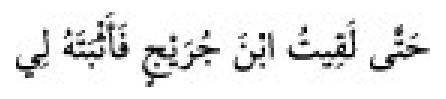
Al-Awzāʿī says: I heard ʿAṭāʾ ibn Abī Rabāḥ narrate this hadith, but I could not memorize it. I met Ibn Jurayj, and he reminded me of it (so I memorized it well). [553]
EXPLANATION
This noble hadith is clear evidence that ʿumrah can be performed during the months of hajj. It also clearly states that the dissolution of ʿumrah and tamattuʿ can be performed until the Day of Judgment.





1788 – It is narrated from Jābir (may Allah be pleased with him) that he said:
The Messenger of Allah (peace and blessings be upon him) and his companions arrived in Mecca on the fourth of Dhu’l-Hijjah. When they performed ṭawāf of the Kaʿba and saʿy at Ṣafā and Marwa, the Messenger of Allah (peace and blessings be upon him) said to them, “Let those who do not have a sacrificial animal make this (saʿy and ṭawāf) an ʿumrah.”
When the day before ʿArafa arrived, they entered ihram for hajj, and when the day of sacrifice came, they came to the Kaʿba and performed ṭawāf, but did not perform saʿy between Ṣafā and Marwa that day.
EXPLANATION
Tarwiyah: The day before the eve of the Festival of Sacrifice (ʿĪd al-Aḍḥā).








1789 – It is narrated from Jābir ibn ʿAbdullāh (may Allah be pleased with him):
The Messenger of Allah (peace and blessings be upon him) and his companions intended and recited the talbiyah for hajj. None of them had a sacrificial animal with them that day except the Messenger of Allah (peace and blessings be upon him) and Ṭalḥa, who had their sacrificial animals with them. ʿAlī (may Allah be pleased with him) had a sacrificial animal that had come from Yemen. ʿAlī (may Allah be pleased with him) said:
“I intended and recited the talbiyah for whatever the Messenger of Allah (peace and blessings be upon him) intended and recited the talbiyah for.” However, the Messenger of Allah (peace and blessings be upon him) had ordered his companions to perform ṭawāf (and saʿy), then to shorten their hair, and for those who did not have a sacrificial animal to exit ihram, thus making their hajj a tamattuʿ (combining ʿumrah and hajj with a break in between).
The Companions said:
“Are we to go to Minā while we have just separated from our wives?” This statement reached the Messenger of Allah (peace and blessings be upon him). The Messenger of Allah (peace and blessings be upon him) said: “If I had known beforehand what I encountered later regarding the rites of hajj, I would not have sent the sacrificial animal. If I did not have my sacrificial animal with me, I would have exited ihram as well.” [554]
EXPLANATION
This noble hadith indicates that if a person enters ihram without specifying a type of hajj, it is valid. It is also evidence for the permissibility of entering ihram conditionally. When the Companions were to go up to Minā, some of those who had just put on ihram had had sexual relations with their wives the night before. When they were told in the morning to put on ihram and go to Minā, they said, “Are we to go to Minā before our sexual fluids have dried?” The Messenger of Allah (peace and blessings be upon him) said, “If I had known beforehand what I encountered later, I would not have sent the sacrificial animal.”




1790 – It is narrated from Ibn ʿAbbās (may Allah be pleased with him):
The Messenger of Allah (peace and blessings be upon him) said, “This is ʿumrah. We have performed it as tamattuʿ. Those who do not have a sacrificial animal with them may do all that is lawful. ʿUmrah has been included in hajj until the Day of Judgment.”
Abū Dāwūd says:
This hadith is munkar (unacceptable), because these are the words of Ibn ʿAbbās. [555]





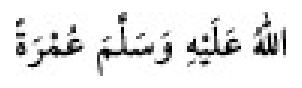
1791 – It is narrated from Ibn ʿAbbās (may Allah be pleased with him):
The Messenger of Allah (peace and blessings be upon him) said:
“If a person enters ihram with the intention of hajj and recites the talbiyah, then comes to Mecca, performs ṭawāf of the Kaʿba, performs saʿy between Ṣafā and Marwa, and then exits ihram, this is hajj al-ʿumrah.”
Abū Dāwūd says:
Ibn Jurayj narrated from a man, who narrated from ʿAṭāʾ, that the Companions of the Messenger of Allah (peace and blessings be upon him) entered Mecca reciting the talbiyah, having intended only ifrad hajj. The Messenger of Allah (peace and blessings be upon him) changed their hajj to ʿumrah.




1792 – It is narrated from Ibn ʿAbbās (may Allah be pleased with him) that he said:
The Prophet (peace and blessings be upon him) entered ihram for hajj and recited the talbiyah. He performed ṭawāf of the Kaʿba and saʿy between Ṣafā and Marwa. Another narrator, Ibn Shawkar, said in his narration that he did not shorten his hair, and then both narrators agreed on this: The Messenger of Allah (peace and blessings be upon him) did not exit ihram because he had his sacrificial animal with him. He ordered those who had not brought a sacrificial animal to perform ṭawāf, saʿy, and then shorten their hair and exit ihram. In the hadith narrated by Ibn Manīʿ, the phrase “shave and then exit ihram” was added.




1793 – It is narrated from Saʿīd ibn al-Musayyab (may Allah be pleased with him):
A man from the Companions of the Messenger of Allah (peace and blessings be upon him) came to ʿUmar ibn al-Khaṭṭāb (may Allah be pleased with him) and testified in his presence: I heard the Messenger of Allah (peace and blessings be upon him), in the illness that led to his death, prohibit performing ʿumrah before hajj.
EXPLANATION
The Messenger of Allah (peace and blessings be upon him) performed ʿumrah before hajj twice. There is consensus among the scholars that it is permissible to perform ʿumrah before hajj. No one has opposed this. There is also disagreement as to whether Ibn al-Musayyab actually heard this from ʿUmar ibn al-Khaṭṭāb. (Ḥaṭṭābī’s Commentary)





1794 – Muʿāwiya ibn Abū Sufyān said to the Companions of the Prophet (peace and blessings be upon him): “Do you know that the Messenger of Allah (peace and blessings be upon him) forbade riding on a saddle made of tiger skin together with such and such?”
They said, “Yes.” Muʿāwiya said:
“Do you also know that the Messenger of Allah (peace and blessings be upon him) forbade combining hajj and ʿumrah?” The Companions said:
“But we did not know this.” Muʿāwiya (may Allah be pleased with him) said:
“This was among the other prohibitions, but you have forgotten it.” [556]
EXPLANATION
Ḥaṭṭābī says: There is consensus among the ummah on the permissibility of qirān hajj. If the Messenger of Allah (peace and blessings be upon him) had forbidden it, how could there be consensus on something he forbade? The noble Companions did not agree with Muʿāwiya’s narration and did not permit this statement of his, he says.