

Chapter 15: Targeting Sacrificial Animals



From Ibn ‘Abbas, may Allah be pleased with him:
The Messenger of Allah, peace and blessings be upon him, performed the noon prayer at Zülhuleyfe.
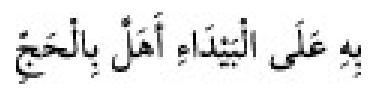
Then he had a sacrificial camel brought, and marked its right hump and caused blood to flow from it, and placed two shoes upon its neck. Afterwards, he brought his camel and mounted it, and as the camel reached level ground, he began to recite the talbiyah for Hajj. [532]
**Explanation:**
*Ishara:* Marking the sacrificial camel by pricking a spot on one side of its hump with a pin or similar object to cause bleeding, in order to indicate that it is for sacrifice and protect it from thieves and highwaymen.
Imam al-A’zam does not favor *ishara*. Imam Muhammad, Abu Yusuf, ash-Shafi’i, and Malik are proponents of it.
*Kilada:* It is called *kilada* to tie a rope with a shoe or something like that around the neck of sacrificial animals. *Kilada* is tied on the animal to indicate that it is for sacrifice.



It was also transmitted from Shu’ba concerning the aforementioned hadith of Abu al-Walid. However, the narrator of this hadith used the phrase, "He wiped (with his hand)." Abu Dawud says: Hammam transmitted this hadith and stated, “He poured forth the blood of the sacrificial camel with his fingertip.” Again, Abu Dawud said that this hadith is among those narrated only by the people of Basra.


It is related from Miswar ibn Mahrama and Mervan, may Allah be pleased with them both, that they said:
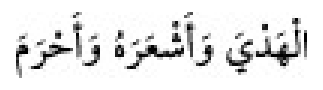
In the year of the Hudaybiyya treaty, the Messenger of Allah, peace and blessings be upon him, set out (from Medina). When he reached Dhu al-Hulayfa, he placed a necklace around his sacrificial animal’s neck, then marked it and put on *ihram*.

Aisha (may Allah be pleased with her) related:
The Messenger of Allah (peace and blessings upon him) sent a sheep as a sacrifice, wearing a mark around its neck [to the Sacred House].
EXPLANATION
It is not permissible, according to the Hanafi and Maliki schools of law, to place a marker (kilada) around the necks of sheep so that it may be known they are for sacrifice. It is permissible according to the Shafi’i and Ahmad ibn Hanbal schools. (Bezl-ul-Mashhud, vol. 8, p. 346)