
SECTION OF RITES OF HAJJ · 9 – THE SECTION ON MĪQĀTS


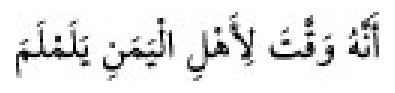
1737 – From Ibn ʿUmar (may Allah be pleased with him):
The Messenger of God (peace and blessings be upon him) designated Dhū’l-Ḥulayfa for the people of Medina,
Juhfa for the people of Syria, Qarn for the people of Najd, and according to what has reached me, Yalamlam for the people of Yemen as the mīqāt (the boundary for entering the state of iḥrām for Hajj or ʿUmra). [525]
EXPLANATION
Mīqāt (mīqāt: the designated boundary for entering iḥrām for Hajj or ʿUmra) refers to the places that serve as boundaries for pilgrims to don the iḥrām (the sacred state and garments for pilgrimage).
Those who reach the mīqāt with the intention of Hajj or ʿUmra cannot enter beyond the mīqāt without iḥrām. Even those who are outside the mīqāts and intend to go to Mecca for trade must still enter iḥrām at the mīqāt, and upon arriving in Mecca, they first perform the ṭawāf (circumambulation) of the Kaʿba, thus preserving the sanctity and honor of the Kaʿba.
Those passing through from Medina enter iḥrām at Dhū’l-Ḥulayfa, those coming directly from Syria at Juhfa, the people of Najd at Qarn, the people of Yemen at Yalamlam, and the Iraqis at Dhātu ʿIrq.
It should not be thought that all these peoples are obliged to enter from their own mīqāt; for example, if Syrians, Iraqis, and Yemenis all gather in Medina and then proceed to the Kaʿba, they all enter iḥrām from Dhū’l-Ḥulayfa, the mīqāt of Medina. The people of Mecca, however, enter iḥrām within Mecca itself. But if the people of Mecca are to perform ʿUmra, then they go outside to one of the boundaries of the ḥaram (the sacred precinct), enter iḥrām from there, and then perform ʿUmra.
This is because the Messenger of God (peace and blessings be upon him) said to his brother-in-law, ʿAbd al-Raḥmān: “Take ʿĀʾisha to Tanʿīm, which is the nearest boundary of the ḥaram, so that she may enter iḥrām from there.” ʿĀʾisha entered iḥrām at Tanʿīm.





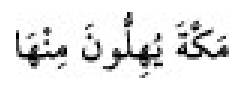
1738 – ʿAmr ibn Dīnār from Ṭāwūs, and he from Ibn ʿAbbās; ʿAbdullāh ibn Ṭāwūs also narrated from Ṭāwūs that the Messenger of God designated the mīqāt, and they narrated the meaning of the previous hadith. One of them said the mīqāt for the people of Yemen is Yalamlam, the other said Alamlām. According to the wording of these two narrators, the Messenger of God (peace and blessings be upon him) said, “These mīqāts are for those who come to them with the intention of Hajj or ʿUmra, even if they are not from the people of those lands.” In the narration of Ibn Ṭāwūs, these people enter iḥrām from wherever they are. As for the people of Mecca, they begin the talbiya (the pilgrimage chant) from Mecca. [526]
EXPLANATION
It appears that Yalamlam is also used as Alamlām. Although it is stated that those within the mīqāt should begin their iḥrām from these mīqāts, in the narration of Ibn Ṭāwūs it is clarified that they will enter iḥrām from wherever they are.
The Ḥanafī imams have also stated that those within the mīqāt will enter iḥrām from their location, and that they may even delay iḥrām until the end of the ḥill (the area outside the ḥaram) and the beginning of the ḥaram. Similarly, the people of Mecca may delay iḥrām from within Mecca up to the end of the ḥaram and the beginning of the ḥill.


1739 – From ʿĀʾisha (may Allah be pleased with her): The Messenger of God (peace and blessings be upon him) designated Dhātu ʿIrq as the mīqāt for the Iraqis.

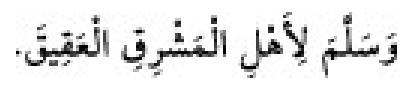
1740 – From Ibn ʿAbbās (may Allah be pleased with him):
The Messenger of God (peace and blessings be upon him) designated ʿAqīq as the mīqāt for the people of the east.
EXPLANATION
Al-Tirmidhī also narrated this hadith. Al-Tirmidhī says the hadith is ḥasan (good). Al-Mundhirī says there is Yazīd ibn Abī Ziyād in its chain, so it is weak.





1741 – From Umm Salama (may Allah be pleased with her), the wife of the Messenger of God (peace and blessings be upon him):
I heard the Messenger of God (peace and blessings be upon him) say: “Whoever begins the talbiya (pilgrimage chant) from al-Masjid al-Aqṣā with the intention of Hajj or ʿUmra and continues until al-Masjid al-Ḥarām, his past and future (unintentional) sins will be forgiven, or Paradise will become obligatory for him.” ʿAbdullāh (ibn Yuhannis), one of the narrators, was unsure which glad tiding was given.
Abū Dāwūd said: May Allah have mercy on Wakīʿ. He entered iḥrām from Bayt al-Maqdis (Jerusalem), meaning he remained in iḥrām until Mecca.



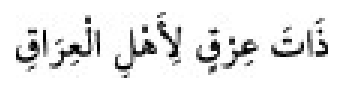
1742 – From Ḥāriṯ ibn ʿAmr al-Sahmī (may Allah be pleased with him): I came to the Messenger of God (peace and blessings be upon him) while he was at Minā or ʿArafāt. The people were surrounding him. The Bedouins would come, and when they saw his face, they would say: “This is a blessed face.” The Messenger of God (peace and blessings be upon him) designated Dhātu ʿIrq as the mīqāt for the people of Iraq.


1743 – From ʿĀʾisha (may Allah be pleased with her):
Asmāʾ bint ʿUmays gave birth to Muḥammad ibn Abī Bakr under a tree (at Dhū’l-Ḥulayfa), and Abū Bakr requested that Asmāʾ be washed and that she make the talbiya (enter the state of iḥrām).
EXPLANATION
Asmāʾ bint ʿUmays was one of the wives of Abū Bakr al-Ṣiddīq.
Shajara means tree. It is the name of a tree at Dhū’l-Ḥulayfa. It is narrated that later, because many trees grew there, it remained as the name for the mīqāt of the people of Medina.
According to a narration of Muslim, Asmāʾ gave birth to her child at Dhū’l-Ḥulayfa. Thus, the tree refers to Dhū’l-Ḥulayfa. In another narration of Muslim, it is said she gave birth at Bayḍāʾ. Bayḍāʾ and Dhū’l-Ḥulayfa are close to each other.





1744 – From Ibn ʿAbbās (may Allah be pleased with him):
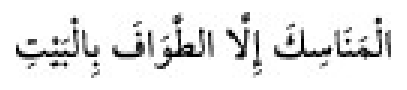
Women who are menstruating or in postnatal bleeding, when they reach the mīqāt, perform ghusl (ritual bath) and don their iḥrām. They perform all the rites (manāsik) of Hajj except for the ṭawāf of the Kaʿba.
In the hadith narrated by Abū Maʿmar:
He said, “Until she becomes pure.” Ibn ʿĪsā did not mention ʿIkrima and Mujāhid. In the narration from ʿAṭāʾ and Ibn ʿAbbās by Ibn ʿĪsā, he did not say “all of them.” He said, “She performs the rites, except for the ṭawāf of the Kaʿba.”
EXPLANATION
This hadith is also narrated by al-Tirmidhī. Women who are menstruating or in postnatal bleeding, upon reaching the mīqāt, perform ghusl and enter iḥrām. They perform all the rites of Hajj except for the ṭawāf, which they delay. However, if a woman has come for Hajj from a distant place such as Turkey and, while performing the rites of Hajj, gives birth, and if her companions are to return and her husband or other maḥram cannot stay until her postnatal bleeding ends due to health or financial reasons, then such a woman, in order to perform the obligatory ṭawāf and become a pilgrim, performs ghusl.
She ties something to her lower body, seeks forgiveness from Allah, and performs her ṭawāf. Because she performed ṭawāf in a state of impurity, she sacrifices a camel or a cow. If she intended Hajj al-Qirān, she sacrifices two camels or two cows. Then she returns to her homeland.
According to al-Shāfiʿī, just as prayer is not valid without purity, neither is ṭawāf, and the sacrifice does not suffice for this obligation; repetition is required. But if she can become pure by waiting a few days in Mecca, then she does not perform ṭawāf and waits until she is pure. (Maʿālim al-Sunan, vol. 2, p. 286)