
Volume 3 – Page 80 – Umre Gate

It is narrated from Ibn Umar, may Allah be pleased with him, that he said: The Messenger of Allah, peace and blessings be upon him, performed Umrah before performing Hajj.





1987 – It is narrated from Ibn Abbas, may Allah be pleased with him, that he said:
“I swear by Allah, that the Messenger of Allah, peace and blessings be upon him, commanded Aishah, may Allah be pleased with her, to perform Umrah in Dhul-Hijjah only so that she might discard the belief of the people of ignorance. The people of Quraysh would say: ‘When the wool on the camel’s back grows abundant (referring to the healing of a saddle sore), and the month of Safar arrives, then Umrah is permissible for the one performing Umrah.’”
They considered Umrah forbidden until Dhul-Hijjah and Muharram arrived.
**Notes from the original text's explanation:**
* **Afa:** Means "abundance" or “increased.” It is used with the same meaning in verse 95 of Surah Araf.
* **Weber:** Means wool; here it signifies time (Zabidi’s commentary). Meaning, when the wool on the camel's back grows abundant.
* **Bera’a:** Means "it healed" or “became good.”
* **Deber:** Refers to a sore on the backs of camels.
* **Safar:** The name of an Arabic month that follows Muharram.
* **Inslah:** Means "to be stripped" or "shed."








From Abu Bakr ibn Abdurrahman, may Allah be pleased with him: A messenger from Marwan reported to me concerning Ummu Ma’kil. Ummu Ma’kil said: Abu Ma’kil went for Hajj with the Messenger of Allah, peace and blessings be upon him. When he returned, Ummu Ma’kil said, “I have come to know that Hajj is obligatory upon me.” The husband and wife both walked to the Messenger of Allah, peace and blessings be upon him. Ummu Ma’kil said, "Hajj is obligatory upon me. My husband, Ma'kil, has a young camel (with which I can perform Hajj)."
Abu Ma’kil said, “My wife speaks truthfully, but I have dedicated that camel for the path of Allah.” The Messenger of Allah, peace and blessings be upon him, said, "Give the camel to your wife, so she may perform her Hajj upon it, and she is then upon the path of Allah." He gave her the young camel.
Ummu Ma’kil said: “O Messenger of Allah, I am an elderly, ailing woman. Is there an action that can substitute for my Hajj?” The Messenger of Allah, peace and blessings be upon him, said, "An Umrah performed during Ramadan is equivalent to a Hajj." [42]
**EXPLANATION:**
This honorable hadith indicates that the Umrah performed within the month of Ramadan has the reward of a Hajj. It does not mean that Umrah replaces obligatory Hajj.









1989 – It is narrated from Ümmü Makil, the grandmother of Yusuf bin Abdullah bin Selâm, may Allah be pleased with her, that she said:
The Messenger of Allah, peace and blessings be upon him, during his Farewell Hajj, we had a female camel. Abu Ma’kil had dedicated it to the path of righteousness. A sickness afflicted us. Abu Ma’kil died. The Messenger of Allah, peace and blessings be upon him, set out (for Hajj). After returning from Hajj, he came to my presence and said, “O Ümmü Makil, what prevented you from performing Hajj with us?” I replied, "We had prepared for Hajj. Abu Ma’kil died, and we had a female camel upon which we performed Hajj; Abu Ma’kil bequeathed it for its use (on the path of righteousness)." The Messenger of Allah, peace and blessings be upon him, said, “Is not Hajj a way to Allah? Would it not have been permissible for you to ride her and perform Hajj?” We missed this Hajj with us, but perform ‘Umrah during Ramadan; that is like Hajj.”
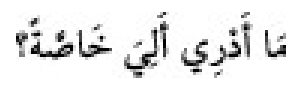
Ümmü Makil said: "Hajj is Hajj, and 'Umrah is 'Umrah. But the truth of it was told to me by the Messenger of Allah, peace and blessings be upon him. I do not know if this affliction is only for me."











It is narrated from Ibn Abbas (may Allah be pleased with him) that he said:
The Messenger of Allah (peace and blessings be upon him) intended to go for the Farewell Pilgrimage, when a woman said to her husband, "Carry me along with the Messenger of Allah (peace and blessings be upon him) for Hajj." Her husband said, “I do not have a camel to carry you on for Hajj.” The woman said, “Carry me on so-and-so male camel.”
Her husband said, “It is reserved for the path of Allah.” Then he came to the Messenger of Allah (peace and blessings be upon him) and said, "My wife sends you greetings. She asked that you carry her with you for Hajj. She said, 'Carry me along with the Messenger of Allah (peace and blessings be upon him) for Hajj.' I told her that I do not have a camel to carry her on. My wife then said, ‘Carry me on so-and-so male camel.’ I said, ‘It is reserved for the path of Allah.’” The Messenger of Allah (peace and blessings be upon him) said, “If you carry your wife on it, that will also be in the path of Allah.”
The man said, "My wife asked me to ask you about an action equivalent to Hajj." The Messenger of Allah (peace and blessings be upon him) said, “Send my greetings to your wife, and tell her that Allah’s mercy and blessings are upon her, and inform her that Umrah in Ramadan is equal to Hajj.” [43]


Aisha (may Allah be pleased with her) related:
The Messenger of Allah (peace and blessings upon him) performed two Umrahs, one in the month of Dhul-Hijjah and one in Shawwal.
EXPLANATION
Ibn al-Qayyim states: "The Messenger of Allah (peace and blessings upon him) did not perform an Umrah in Shawwal. The Hudaibiyyah Umrah was in Dhul-Hijjah. The people of Mecca did not allow [it to be performed], so it was compensated for in the following year, also in Dhul-Hijjah. After Mecca was conquered and the Banu Saqif and Banu Howazin tribes were defeated, they returned to Mecca and performed an Umrah at Jiranah. This too was in Dhul-Hijjah. The beginning of the Umrah which he intended with his Hajj during the Farewell Pilgrimage also began in Dhul-Hijjah.” (Margin note of Abu Dawud) He says, "The Messenger of Allah (peace and blessings upon him) performed four Umrahs, all of them in Dhul-Hijjah."
The narration that the Messenger of Allah (peace and blessings upon him) performed an Umrah in Shawwal is due to the expedition to Hudaibiyyah having commenced in Shawwal. (Kastalani) The Umrah at Jiranah was performed in Dhul-Hijjah. The expedition to Hunayn began in Shawwal. (Kastalani)




It is narrated from Mujahid (may Allah be pleased with him) that he said:
The Messenger of Allah (peace and blessings upon him) was asked how many times he performed ‘umrah. Ibn Umar replied, “Two times.” Aisha (may Allah be pleased with her) then said, "Ibn Umar knows well that the Messenger of Allah (peace and blessings upon him) performed three ‘umrahs besides the ‘umrah he performed during his Farewell Hajj."



It is narrated from Ibn ‘Abbas, may Allah be pleased with him, that the Messenger of Allah, peace and blessings be upon him, performed four ‘umrahs: The ‘Umrah of Hudaybiyyah, the second was the ‘umrah he decided to perform the following year at Hudaybiyyah (deferred), the third was the one from Jiranah, and the fourth was the ‘umrah he performed with the Farewell Hajj.






Anas (may Allah be pleased with him) related:
“Indeed, the Messenger of Allah ﷺ performed four Umrahs; all except the Umrah of Farewell were in the month of Dhul-Hijjah.”
[46]
Abu Dawud states:
From here onwards, I learned these words reliably from Hudba. I heard them from Abu al-Walid, but did not retain them properly. He said: The Umrah of Hudaybiyyah, the Umrah from Hudaybiyyah, the Umratu’l-Qada (postponed Umrah) performed in Dhul-Hijjah when he distributed the spoils of Hunayn, the Umrah from Jiranah, and the Umrah performed along with the Farewell Hajj.