
Volume 4 – Page 21 – The Gate of Pure Vision


Amir al-Sha'bi (may Allah be pleased with him) narrated:
The Messenger of Allah (peace and blessings upon him) had a share called the ‘pure share.’ He would take it before the distribution of spoils of war, whether it was a slave, a female slave, or a horse.
COMMENTARY:
This ‘pure share’ which belonged exclusively to the Messenger of Allah (peace and blessings upon him) was taken apart from the general distribution of spoils of war. Because this was specific to the Messenger of Allah (peace and blessings upon him), this right was not given to the caliphs after him.



According to the narration of Ibn ‘Awn, may Allah be pleased with him, he said:
I asked Muhammad ibn Sirin about *sahm* and *safi*. Ibn Sirin said: Even if one did not participate in fighting, a share was allocated to the Prophet, peace and blessings be upon him, alongside the Muslims. And *Safi* would be given first of all from the huma (an item such as a slave or female servant, or a horse or sword that could be chosen).
COMMENTARY:
This honorable hadith contradicts the previous one. Because in that hadith it is stated that *safi* is taken from the entire spoils of war before the fifth is taken, while in this hadith it states that *safi* is taken from within the fifth. According to our school of thought, the Prophet, peace and blessings be upon him, possessed three shares in the spoils of war. *Safi* is like a *sahm*, given to a warrior, which is one-fifth of one-fifth. (Bezl al-Majhud)



According to a narration from Katada, may Allah be pleased with him, he said:
The Messenger of Allah, peace and blessings be upon him, when he went out on military expeditions, had a pure share (of spoils). He would take it from wherever he wished. This was the share called Safiya. When he did not go out on an expedition, a share was allocated to her, but she was not given the option to choose what she liked.

Aisha (may Allah be pleased with her) narrated:
Safiyya (may Allah be pleased with her) was a pure dowry given to the Messenger of Allah (peace and blessings upon him).



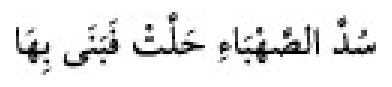
Anas ibn Malik (may Allah be pleased with him) narrated: We arrived at Khaybar. When Allah granted us success in the conquest of its fortress, news was brought to the Messenger of Allah (peace and blessings upon him) about the beauty of Safiyya, daughter of Huyayy. She was a recent arrival. Her husband had died. The Messenger of Allah (peace and blessings upon him) chose her for himself and went with her. When we reached Saddus Sahba, Safiyya became clean from menstruation. Then the Messenger of Allah (peace and blessings upon him) consummated his marriage with her.
Note: Safiyya (may Allah be pleased with her)’s former husband was Kinana ibn Rabi’ ibn Abi Hakik. He was killed in the battle of Khaybar.


Anas ibn Malik (may Allah be pleased with him) narrated: Safiyya (may Allah be pleased with her) was allotted to Dihyah al-Kalbi, then she became the Prophet (peace and blessings of Allah be upon him)’s.




Anas ibn Malik (may Allah be pleased with him) narrated: A beautiful slave girl fell to Dihya's share. The Messenger of Allah (peace and blessings upon him) purchased her for seven camels. Then He entrusted her to Umm Sulaym so that she might adorn her and prepare her for marriage. Hammad said: I think Sabit, who transmitted this hadith to me, said: Safiyyah, daughter of Huyayy, was observing ‘iddah at Umm Sulaym’s house.






Anas (may Allah be pleased with him) narrated:
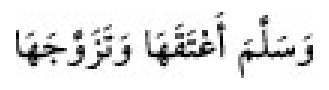
(At Khaybar) the captives were gathered. Dihya came and said, "O Messenger of Allah, give me a female slave from among the captives." The Messenger of Allah (peace and blessings upon him) said, “Go and take one.” So he took Safiyyah, daughter of Huyayy. A person came to the Messenger of Allah (peace and blessings upon him) and said, "O Prophet of Allah, you gave a female slave to Dihya." In the narration of Yaqub, it is mentioned that Safiyyah, daughter of Huyayy, the chief of the Banu Nadir and Qurayza, was given (and then, in agreement), ‘Safiyyah is only worthy of you.’ The Messenger of Allah (peace and blessings upon him) said, “Call Dihya and the female slave.” When he looked at Safiyyah, he said to Dihya, "Take another female slave besides Safiyyah." Then he manumitted her and married her. [6]








Yezid ibn Abdullah, may Allah be pleased with him, narrated:
We were at Mirbad. A man came to us with disheveled hair, holding a piece of red leather (used for writing). We said to him, "You resemble someone from the desert people," and he replied, “Yes.” We said, “Give us that piece of leather you have,” and he gave it to us. We read [what was written on] the leather: “(This is) from the Messenger of Allah, Muhammad, to the sons of Zuhayr ibn Ukayr: If you testify that there is no deity except Allah, and that Muhammad is the servant and Messenger of Allah, and you perform your prayers, pay your obligatory charities, and give the fifth (khumus) of booty, the share due to the Messenger of Allah, and the pure share (safi), then you are safe by the protection of Allah and His Messenger.” We said to him, “Who wrote this for you?” He replied, "The Messenger of Allah ordered it to be written."