SECTION ON SACRIFICE · 21 – THE ʿAQĪQA SACRIFICE



2834 – It is narrated from Umm Kurz al-Kaʿbiyya (may Allah be pleased with her):
She said:
I heard the Messenger of God (peace and blessings be upon him) say: “For a boy, two sheep of equal value are to be sacrificed, and for a girl, one sheep is to be sacrificed.”
Abū Dāwūd said: “Mukāfiʾatāni” means two that are equal or close to each other in value.
EXPLANATION
ʿAqīqa: This is the name given to the hair of a newborn child. The sacrifice made on behalf of this child is also called ʿaqīqa. According to us (the Ḥanafīs), the ʿaqīqa sacrifice is recommended (mustaḥabb). According to the other three madhhabs, it is sunnah. According to the Ẓāhirīs, it is obligatory (wājib). The ʿaqīqa sacrifice can be performed from the day the child is born until they reach puberty. It is most virtuous to perform it on the seventh day. On the seventh day, the child is named, their hair is shaved, and gold or silver equal to the weight of the hair is given in charity. On that day, the ʿaqīqa sacrifice is also performed. For both boys and girls, one sheep is sufficient. However, based on this hadith, the Shāfiʿīs and Aḥmad ibn Ḥanbal considered it sunnah to sacrifice two sheep for a boy. (Bezl al-Majhūd, Maʿālim al-Sunna)
Umm Kurz al-Kaʿbiyya al-Khuzāʿiyya belonged to the Khuzāʿa tribe. She was among the Companions (ṣaḥāba). She narrated from the Messenger of God (peace and blessings be upon him). From her, ʿAṭāʾ, Ṭāwūs, Mujāhid, Sibābil, Thābit, and ʿUrwa ibn Zubayr narrated. (Tahdhīb al-Tahdhīb, vol. 2, p. 447)



2835 – It is narrated from Umm Kurz (may Allah be pleased with her):
I heard the Messenger of God (peace and blessings be upon him) say, “Leave the bird in its nest,” and also, “Sacrifice two sheep for a boy and one sheep for a girl. It does not matter to you whether the sheep are male or female.”
EXPLANATION
Leaving the bird in its nest means this: In the Age of Ignorance, when they were about to undertake something, they would release a bird from its nest. If it flew to the right, they would proceed; if it flew to the left, they would desist. This hadith was said to abolish this false belief.



2836 – It is narrated from Umm Kurz:
The Messenger of God (peace and blessings be upon him) said: “For a boy, two sheep of equal value are to be sacrificed, and for a girl, one sheep.”
Abū Dāwūd said: This is the authentic hadith. The hadith of Sufyān is mistaken. [557]









2837 – It is narrated from Samura (may Allah be pleased with him):
The Messenger of God (peace and blessings be upon him) said: “Every child is held in pledge for his ʿaqīqa. On the seventh day, a (ʿaqīqa) sacrifice is made on behalf of the child, his head is shaved, and (his hair is dyed with the blood of the sacrifice).” When Qatāda was asked how the child’s hair is dyed with blood, he used to say: When the ʿaqīqa sacrifice is made, a tuft of wool is taken from it, dipped in the blood vessel, and the bloodied thread is placed on the child’s head. Then the child’s head is washed and shaved.
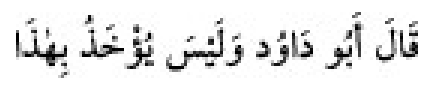
Abū Dāwūd said: The phrase “his hair is dyed with blood” (wa yudammā) is merely a mistake of Hammām.
Abū Dāwūd said: There is disagreement with Hammām in this statement. It is merely a mistake of Hammām. Other narrators only said, “the child is named.” Hammām, however, said “yudammā,” meaning “the hair is dyed with blood.”
Abū Dāwūd said: Hammām’s narration cannot be accepted.
The phrase “he is named” (yusammā) is more authentic than the phrase “his hair is dyed with blood” (yudammā) as narrated by Hammām.





2838 – It is narrated from Samura ibn Jundub (may Allah be pleased with him):
The Messenger of God (peace and blessings be upon him) said: “Every child is held in pledge for his ʿaqīqa. On the seventh day after birth, a sacrifice is made for him, his head is shaved, and he is named.”
Abū Dāwūd said: The narration “he is named” is more authentic. Indeed, Salām ibn Abī Muṭīʿ narrated this phrase from Qatāda, and Iyās ibn Dāghfal and Ashʿath Ḥasan narrated “wa yusammā.” Also, Ashʿath Ḥasan narrated from the Messenger of God (peace and blessings be upon him) “wa yusammā,” meaning “the child is named.” [558]


2839 – It is narrated from Salmān ibn ʿAmr al-Zabī (may Allah be pleased with him):
The Messenger of God (peace and blessings be upon him) said: “With every newborn child, an ʿaqīqa sacrifice is to be made. Shed the blood of the sacrifice for him and remove harm from the child.” [559]

2840 – It is narrated from Ḥasan (may Allah be pleased with him) that he used to say:
“Removing harm from the child means shaving his head.”


2841 – It is narrated from Ibn ʿAbbās (may Allah be pleased with him):
The Messenger of God (peace and blessings be upon him) sacrificed a ram as ʿaqīqa for each of Ḥasan and Ḥusayn. [560]





2842 – It is narrated from ʿAmr ibn Shuʿayb, through his father, I think from his grandfather, who said:
The Messenger of God (peace and blessings be upon him) was asked about the ʿaqīqa, and he seemed to dislike the word, saying, “Allah does not like disobedience to parents (which is the literal meaning of the word).”
He continued, saying:
“Whoever has a child born to him and wishes to offer a sacrifice for the child, let him sacrifice two sheep of the same age for a boy and one sheep for a girl.”
He was asked about the farʿ sacrifice, and he said: “The farʿ is a right. Leave it until it becomes fleshy or reaches two or three years of age, then give it to a widow or use it to mount someone in the path of Allah (i.e., in battle); that is better than slaughtering it. For if you slaughter it now, its meat will stick to its wool, your bowl will be left without milk, and your she-camel will be left confused and sent to the camel herd without its calf.” [561]
EXPLANATION
Shughzubban: Means until it becomes fleshy and strong. The correct form of the word is zuhrubban. As mentioned above, the first offspring of an animal, called farʿ, used to be slaughtered and its meat distributed. It is advised that, rather than slaughtering such a newborn animal as a custom, it is better to raise it and give it to a widow or a poor person. Also, since the root of the word ʿaqīqa contains the meaning of violating a right, the Messenger of God (peace and blessings be upon him) said, “Allah does not love ʿuqūq (disobedience).” Instead of that word, he recommended the words nasīka and dhabīḥa, which mean sacrifice.



2843 – It is narrated from Abū Burayda (may Allah be pleased with him):
In the Age of Ignorance, whenever one of us had a child born, we would slaughter a sheep and dye its head with blood. When Allah sent Islam, we would slaughter a sheep, shave the child’s head, and perfume it with saffron.
EXPLANATION
The majority of jurists considered it disliked (makrūh) to dye the child’s head with the blood of the ʿaqīqa sacrifice. This practice continued among the Arabs before Islam.
[522] Tirmidhī, Book of Sacrifices, Chapter on al-ʿUṭayra, no. 1518; Ibn Mājah, Book of Sacrifices, Chapter on Sacrifices are Obligatory, no. 3125; Nasāʾī, Book of Farʿ and ʿUṭayra, no. 4227
[523] Nasāʾī, Book of Sacrifices, Chapter on One Who Cannot Find an Animal for Sacrifice, no. 4370
[524] Tirmidhī, Book of Sacrifices, Chapter on Sacrifice on Behalf of the Deceased, no. 1495
[525] Muslim, Book of Sacrifices, Chapter on Prohibition for One Who Enters the First Ten Days of Dhul-Ḥijja, no. 1977; Tirmidhī, Book of Sacrifices, no. 1523; Nasāʾī, Book of Sacrifices, no. 4367
[526] Muslim, Book of Sacrifices, Chapter on Recommendation of Sacrifice and Slaughtering, no. 1963
[527] Bukhārī, Book of Pilgrimage, Chapter on Slaughtering Camels, no. 210/5
[528] Muslim, Book of Sacrifices, Chapter on Recommendation of Sacrifice, no. 1966; Tirmidhī, Book of Sacrifices, Chapter on Sacrificing Two Rams, no. 1494; Nasāʾī, Book of Sacrifices, Chapter on Placing the Foot on the Side of the Sacrifice, no. 219/7; Ibn Mājah, Book of Sacrifices, Chapter on the Sacrifices of the Messenger of God (peace and blessings be upon him), no. 3120
[529] Ibn Mājah, Book of Sacrifices, Chapter on the Sacrifices of the Messenger of God (peace and blessings be upon him), no. 3121
[530] Tirmidhī, Book of Sacrifices, no. 1496; Nasāʾī, Book of Sacrifices, no. 321/7; Ibn Mājah, Book of Sacrifices, Chapter on What is Recommended from the Sacrifices, no. 3128
[531] Muslim, Book of Sacrifices, Chapter on the Age of the Sacrificial Animal, no. 1963; Nasāʾī, Book of Sacrifices, Chapter on the Mature and Young Animal, no. 4383; Ibn Mājah, Chapter on What is Sufficient from the Sacrifices, no. 3141
[532] Aḥmad ibn Ḥanbal, no. 4/449; Bukhārī, Book of Sacrifices, Chapter on the Prophet’s Sacrifice of Two Rams; Muslim, Book of Sacrifice, Chapter on the Age of the Sacrificial Animal, no. 1965; Tirmidhī, no. 1500; Nasāʾī, Book of Sacrifices, no. 218/7; Ibn Mājah, Book of Sacrifices, Chapter on What is Sufficient from the Sacrifices, no. 3138
[533] Ibn Mājah, Book of Sacrifices, Chapter on What is Sufficient from the Sacrifices, no. 3140; Nasāʾī, Book of Sacrifices, Chapter on the Mature and Young Animal, no. 4389
[534] Bukhārī, Book of Sacrifices, Chapter on the Statement of the Prophet (peace and blessings be upon him); Muslim, Book of Sacrifices, Chapter on Its Time, no. 1961; Tirmidhī, Book of Sacrifices, Chapter on Slaughtering after the Prayer, no. 1508; Dārimī, Book of Sacrifices, Chapter on Slaughtering before the Prayer, no. 80/2; Nasāʾī, Book of Sacrifices, Chapter on the Imam’s Slaughter, no. 4400
[535] Tirmidhī, Book of Sacrifices, Chapter on What is Not Permissible from the Sacrifices, no. 1497; Nasāʾī, Book of Sacrifices, Chapter on What is Prohibited from the Sacrifices, no. 4374; Muwaṭṭaʾ, Book of Sacrifices, Chapter on What is Disliked from the Sacrifices
[536] Tirmidhī, Book of Sacrifices, Chapter on What is Disliked from the Sacrifices, no. 1498; Nasāʾī, Book of Sacrifices, Chapter on the Rag Which is Burned, no. 4382; Ibn Mājah, Book of Sacrifices, Chapter on What is Disliked to Sacrifice With, no. 3142, Musnad, no. 851
[537] Nasāʾī, Book of Sacrifices, Chapter on the Defective, no. 4382; Tirmidhī, Book of Sacrifices, Chapter on Sacrificing with a Split Ear, no. 1504; Ibn Mājah, Book of Sacrifices, Chapter on What is Disliked to Sacrifice With, no. 3145
[538] Nasāʾī, Book of Sacrifices, Chapter on What is Sufficient from Cattle, no. 4398; Muslim, Book of Pilgrimage, Chapter on Sharing in the Hady, no. 1318; Muwaṭṭaʾ, Book of Sacrifices, Chapter on Partnership in Sacrifices, no. 9; Tirmidhī, Book of Pilgrimage, Chapter on Partnership in the Camel, no. 904
[539] Tirmidhī, Book of Sacrifices, no. 1521
[540] Bukhārī, Book of Pilgrimage, Chapter on Slaughtering at the Place of the Prophet (peace and blessings be upon him), no. 209/2; Ibn Mājah, Book of Sacrifices, Chapter on Slaughtering at the Musallā, no. 3161; Nasāʾī, Book of Sacrifices, Chapter on the Imam’s Slaughter, no. 1590
[541] Muslim, Book of Sacrifices, Chapter on Clarification of What Was Prohibited, no. 1971; Nasāʾī, Book of Sacrifices, Chapter on Storing from the Sacrifices, no. 4436
[542] Ibn Mājah, Book of Sacrifices, Chapter on Storing the Meat of the Sacrifices, no. 3160
[543] Muslim, Book of Sacrifices, Chapter on Clarification of What Was Prohibited, no. 1975
[544] Muslim, Book of Hunting, Chapter on Command to Do Well in Slaughtering, no. 1955; Tirmidhī, Book of Blood Money, Chapter on Prohibition of Mutilation, no. 1409; Ibn Mājah, Book of Slaughtered Animals, Chapter on If You Slaughter, Do Well, no. 3170; Nasāʾī, Book of Sacrifices, Chapter on Good Slaughtering, no. 4419; Dārimī, Book of Sacrifices, Chapter on Good Slaughtering, no. 1967
[545] Bukhārī, Book of Slaughtered Animals; Muslim, Book of Hunting, Chapter on Prohibition of Tying Up Animals, no. 1956; Ibn Mājah, Book of Slaughtered Animals, Chapter on Prohibition of Tying Up Animals, no. 3186; Nasāʾī, Book of Sacrifices, Chapter on Prohibition of Mutilation, no. 4444
[546] Ibn Mājah, Book of Slaughtered Animals, Chapter on Saying the Name of Allah at the Time of Slaughter, no. 3173
[547] Tirmidhī, Book of Tafsīr, (Sūrat al-Anʿām), no. 3071
[548] Bukhārī, Book of Partnership, Chapter on Division of Sheep; Muslim, Book of Sacrifices, Chapter on Permissibility of Slaughtering with Anything that Causes Blood to Flow, no. 1968; Tirmidhī, Book of Sacrifices, Chapter on Slaughtering with a Flint, no. 2891; Nasāʾī, Book of Sacrifices, Chapter on Prohibition of Slaughtering with a Nail, no. 4408; Ibn Mājah, Book of Slaughtered Animals, Chapter on the Zakat of Animals, no. 3183; Dārimī, Book of Sacrifices, Musnad, 463-464/3
[549] Nasāʾī, Book of Sacrifices, Chapter on Permissibility of Slaughtering with a Flint, no. 4405; Ibn Mājah, Book of Hunting, Chapter on the Hare, no. 3244
[550] Nasāʾī, Book of Sacrifices, Chapter on Permissibility of Slaughtering with Wood, no. 4406; Ibn Mājah, Book of Slaughtered Animals, Chapter on What is Used for Slaughter, no. 3177
[551] Tirmidhī, Book of Foods, Chapter on Zakat in the Creation, no. 1481; Nasāʾī, Book of Sacrifices, Chapter on Mention of the Animal that Fell into a Well, no. 4413
[552] Tirmidhī, Book of Foods, Chapter on the Zakat of the Fetus, no. 1476; Ibn Mājah, Book of Slaughtered Animals, Chapter on the Zakat of the Fetus, no. 3199
[553] Jāmiʿ al-Uṣūl, no. 2583
[554] Bukhārī, Book of Hunting, Chapter on the Slaughter of the Bedouin and Their Like, Book of Sales, Chapter on Those Who Do Not Consider Whispering, and Book of Tawḥīd, Chapter on Asking in the Name of Allah, the Mighty and Majestic. Muwaṭṭaʾ, Book of Slaughtered Animals, Chapter on Saying the Name of Allah at the Time of Slaughter; Nasāʾī, Book of Sacrifices, Chapter on the Slaughter of One Who is Not Known, no. 4441; Ibn Mājah, Book of Slaughtered Animals, Chapter on Saying the Name of Allah at the Time of Slaughter, no. 3174
[555] Nasāʾī, Book of Farʿ, no. 4233; Ibn Mājah, Book of Slaughtered Animals, no. 3167
[556] Muslim, Book of Sacrifices, Chapter on Farʿ and ʿAtīra, no. 1976; Nasāʾī, Book of Farʿ and ʿAtīra, no. 4227; Bukhārī, Book of ʿAqīqa, Chapter on Farʿ and ʿAtīra; Tirmidhī, Book of Sacrifices, Chapter on Farʿ and ʿAtīra, no. 1512; Ibn Mājah, Book of Slaughtered Animals, Chapter on Farʿ and ʿAtīra, no. 3168
[557] Tirmidhī, Book of Sacrifices, Chapter on the Adhān in the Ear of the Newborn, no. 1516; Ibn Mājah, Book of Slaughtered Animals, Chapter on ʿAqīqa, no. 3162; Nasāʾī, Book of ʿAqīqa, Chapter on ʿAqīqa for a Boy, no. 4221
[558] Tirmidhī, Book of Sacrifices, Chapter on What Has Been Reported Regarding ʿAqīqa, no. 1522; Ibn Mājah, Book of Slaughtered Animals, Chapter on ʿAqīqa, no. 3165; Nasāʾī, Book of ʿAqīqa, Chapter on ʿAqīqa for a Girl, no. 4225
[559] Bukhārī, Book of ʿAqīqa, Chapter on Removing Harm from the Child in ʿAqīqa; Tirmidhī, Book of Sacrifices, Chapter on the Adhān in the Ear of the Newborn, no. 1515; Nasāʾī, Book of ʿAqīqa, Chapter on ʿAqīqa for a Boy, no. 4219; Ibn Mājah, Book of Slaughtered Animals, Chapter on ʿAqīqa, no. 3164, Musnad, 2/17-18-214 5/12
[560] Nasāʾī, Book of ʿAqīqa, Chapter on How Many Should Be Sacrificed for a Girl, no. 4225
[561] Nasāʾī, Book of ʿAqīqa, no. 4217
The narrator said: The Messenger of God (peace and blessings be upon him) said: “O people, every year, every household must offer a sacrifice and an ʿatīra. Do you know what the ʿatīra is? It is what people call the Rajabiyya (the sacrifice offered in the first ten days of Rajab).” [522]
The Messenger of God (peace and blessings be upon him) said: “Do not slaughter, but rather cut a little from your hair and nails, shorten your mustache, and shave your pubic hair; this is your complete sacrifice in the sight of Allah, the Mighty and Majestic.” [523]
I saw ʿAlī (may Allah be pleased with him) sacrifice two rams. I asked him, ‘What is this? (Why do you slaughter two?)’ He replied, ‘The Messenger of God (peace and blessings be upon him) instructed me to offer a sacrifice on his behalf. Therefore, I am offering a sacrifice on behalf of the Messenger of God (peace and blessings be upon him).’ [524]
Imam Aʿẓam (Abū Ḥanīfa) permitted the one who will offer a sacrifice to shave and cut his nails. Among the Ḥanafīs, there are those who say this is recommended (mandūb). [525]
“O ʿĀʾisha, bring the knife,” he said. “Then sharpen it with a stone.” I brought the knife and sharpened it with a stone. He took the knife, held the ram, laid it down, and slaughtered it. While slaughtering, he said, “In the name of Allah. O Lord, accept from Muhammad, the family of Muhammad, and the community of Muhammad.” Then he offered the sacrifice. [526]
The Messenger of God (peace and blessings be upon him) personally slaughtered seven camels standing up with his own hand. In Medina, he sacrificed two rams with horns, predominantly white with some black. [527]
The Messenger of God (peace and blessings be upon him) sacrificed two rams with horns, predominantly white with some black. He would place his right knee on the right side of the animals and say, “In the name of Allah, Allah is the Greatest,” while slaughtering them. [528]
On the day of sacrifice, the Messenger of God (peace and blessings be upon him) slaughtered two rams with horns, predominantly white with some black, both castrated. When he laid them on their sides to slaughter, he said, “Indeed, I have turned my face toward Him who created the heavens and the earth, upright, and I am not of those who associate partners with Allah. Indeed, my prayer, my sacrifice, my life, and my death are for Allah, Lord of the worlds. He has no partner. I have been commanded of this, and I am of the Muslims. O Lord, from You, for You, on behalf of Muhammad and his community. In the name of Allah, Allah is the Greatest.” Then he slaughtered them. [529]
The Messenger of God (peace and blessings be upon him) sacrificed a ram with horns, not castrated (kept for breeding), with black eyes, black mouth, black legs, and the rest of its body white. [530]
The Messenger of God (peace and blessings be upon him) said: “Do not slaughter except an animal that has reached a certain age. If it is difficult to find such, then slaughter one from the flock that has completed six months.” [531]
Zayd said: I brought a young goat to the Messenger of God (peace and blessings be upon him) and said, “This is a small kid.” The Messenger of God (peace and blessings be upon him) said, “Slaughter it.” So I slaughtered it. [532]
We were with a man called Mujāshiʿ from the Banū Sulaym among the Companions of the Messenger of God (peace and blessings be upon him). Sheep became very expensive. The Prophet then ordered a crier, who announced: “Indeed, the Messenger of God (peace and blessings be upon him) said: (A kid and) a lamb that has lost its milk teeth (i.e., a young goat or sheep) is sufficient.” [533]
The Messenger of God (peace and blessings be upon him) said, “Yes, it is sufficient from you, but after you, it will never be sufficient for anyone else.” [534]
Abū Dāwūd interpreted the word “latunka” as meaning one without marrow. [535]
Zuhayr said: I asked Abī Isḥāq, “Did he mention one with a broken horn?” He said, “No.” I asked, “What is muqābala?” He said, “One whose ear is cut on one side.” I asked, “What is mudābira?” He said, “One whose ear is cut from the back.” I asked, “What is sharqāʾ?” He said, “One whose ear is split.” I asked, “What is ḥarqāʾ?” He said, “It is when the ear is split as a mark.” [536]
Abū Dāwūd said: The narrator Jurayj was from the Sedüst of Basra. No one narrated from him except Qatāda. [537]
In the Age of Bliss, we used to perform the tamattuʿ ḥajj. We would slaughter a cow for seven people (or a camel for seven people), sharing in it. [538]
I witnessed the Messenger of God (peace and blessings be upon him) at the musallā (prayer ground) during the sacrifice. When he finished his sermon, he descended from the pulpit. A ram was brought to him. The Messenger of God (peace and blessings be upon him) slaughtered it with his own hand and said, “In the name of Allah, Allah is the Greatest. This is on behalf of myself and those of my community who do not offer a sacrifice.” [539]
The Messenger of God (peace and blessings be upon him) would slaughter his sacrifice at the musallā (the place where he performed the Eid prayer). Ibn ʿUmar would do likewise. [540]
The Messenger of God (peace and blessings be upon him) said: “I only forbade you (from storing meat) because of the poor people who flocked to you. (This year) eat, distribute, and store as you wish.” [541]
The Messenger of God (peace and blessings be upon him) said: “We forbade you from eating the meat of the sacrifice after three days so that it would suffice for everyone. (Now, however,) Allah has given abundance, so distribute it. Keep some for yourselves (and give some in charity to the poor to earn reward). Beware! These are days of eating, drinking, and remembering Allah, the Mighty and Majestic.” [542]
Until I came to Medina, I continued to feed him from its meat. [543]
Narrators other than Muslim say: “When you kill, kill well. When you slaughter an animal, slaughter well (and make it easy). Let one of you sharpen his knife and let him comfort the animal he is to slaughter (do not cause it pain),” he said. [544]
We went to Anas (may Allah be pleased with him) and Ḥakam ibn Ayyūb. We saw some youths or children had set up a chicken as a target and were shooting at it. Anas (may Allah be pleased with him) said: The Messenger of God (peace and blessings be upon him) forbade using animals as targets. [545]
“The devils whisper to their disbelieving friends,” and say, “Do not eat what Allah has killed; eat only what you have slaughtered.” Thereupon, Allah the Mighty and Majestic revealed the verse: “And do not eat of that upon which the name of Allah has not been mentioned” (Qur’an, al-Anʿām 6:121). [546]
The Jews came to the Messenger of God (peace and blessings be upon him) and said, “Should we eat from what we ourselves have slaughtered and not eat from what Allah has killed?” Thereupon, Allah the Mighty and Majestic revealed the verse: “And do not eat of that upon which the name of Allah has not been mentioned” (Qur’an, al-Anʿām 6:121). [547]
The Messenger of God (peace and blessings be upon him) was behind the people. The people had put their pots on the fire (to cook something from the spoils). The Messenger of God (peace and blessings be upon him) came upon the pots and ordered that they be overturned. The spoils were then distributed among the Companions. One camel was considered equivalent to ten sheep. A camel from your people ran away. They had no horse to chase it. A man shot it with an arrow, and Allah prevented it from escaping. The Messenger of God (peace and blessings be upon him) said, “Indeed, these animals sometimes flee like wild animals. If any of them does so, do likewise (shoot it) and kill it.” [548]
I hunted two hares and slaughtered them with a flint. I asked the Messenger of God (peace and blessings be upon him) about the two hares, and he commanded me to eat their meat. [549]
The Messenger of God (peace and blessings be upon him) said, “Say ‘In the name of Allah’ and slaughter with whatever you wish, as long as it causes the blood to flow.” [550]
Abū Dāwūd said: This is only permissible for animals that have fallen from a height or become wild. [551]
O Messenger of God, we slaughter female camels, cows, and sheep, and sometimes find a fetus in the womb. Should we eat it or discard it? The Messenger of God (peace and blessings be upon him) said, “If you wish, eat it, for its slaughter is included in the slaughter of its mother.” [552]
The Messenger of God (peace and blessings be upon him) said, “The slaughter of the fetus is included in the slaughter of its mother.” [553]
The Companions said, “O Messenger of God, people who have just left the Age of Ignorance bring us meat from slaughtered animals, but we do not know whether they mentioned the name of Allah over them or not. Should we eat from it?” The Messenger of God (peace and blessings be upon him) said, “Say ‘In the name of Allah’ and eat.” [554]
Khalid said: I asked Abū Qilāba, “How many animals make up a free-ranging herd?” He said, “One hundred animals.” [555]
The Messenger of God (peace and blessings be upon him) said, “The ʿatīra and farʿ sacrifices are not obligatory in Islam.” [556]
Abū Dāwūd said: This is the authentic hadith. The hadith of Sufyān is mistaken. [557]
Abū Dāwūd said: The narration “he is named” is more authentic. Indeed, Salām ibn Abī Muṭīʿ narrated this phrase from Qatāda, and Iyās ibn Dāghfal and Ashʿath Ḥasan narrated “wa yusammā.” Also, Ashʿath Ḥasan narrated from the Messenger of God (peace and blessings be upon him) “wa yusammā,” meaning “the child is named.” [558]
The Messenger of God (peace and blessings be upon him) said: “With every newborn child, an ʿaqīqa sacrifice is to be made. Shed the blood of the sacrifice for him and remove harm from the child.” [559]
The Messenger of God (peace and blessings be upon him) sacrificed a ram as ʿaqīqa for each of Ḥasan and Ḥusayn. [560]
He was asked about the farʿ sacrifice, and he said: “The farʿ is a right. Leave it until it becomes fleshy or reaches two or three years of age, then give it to a widow or use it to mount someone in the path of Allah (i.e., in battle); that is better than slaughtering it. For if you slaughter it now, its meat will stick to its wool, your bowl will be left without milk, and your she-camel will be left confused and sent to the camel herd without its calf.” [561]