

SHOPPING SECTION · 23 – SELLING FRUIT BEFORE DETERMINING IT


Abdullah ibn Amr (may Allah be pleased with him) narrated:
The Messenger of Allah (peace and blessings upon him) forbade selling fruit before it is fully formed (while it is still in blossom on the tree). He forbade both the seller and the buyer. [198]
**Explanation:**
It is forbidden to sell fruit while it is still on the tree, before it has ripened, before its flaws are apparent, or before it becomes known whether it will fall off or remain. But it is not expected that all trees or all fruits should be fully formed. If a few fruits on a tree have begun to ripen and their suitability is evident, then they may be sold.
The most noble of creation forbade selling fruit while it is still in blossom to protect the property of the believers and to ensure tranquility for both parties until its suitability becomes apparent.
Merchants often purchase oranges from orchards while the fruit is still in bloom. The blossoms either fall off or frost damages them, and the buyer loses his money; thus, many people become bankrupt. This can always be seen in places where olives, apples, and hazelnuts are grown.



According to the narration of Ibn Umar (may Allah be pleased with him):
The Messenger of Allah (peace and blessings upon him) forbade buying and selling dates until they reddened, and wheat until it whitened and was free from affliction.


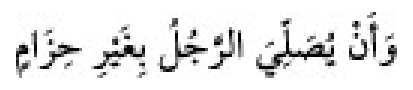
Abū Hurayrah, may Allah be pleased with him, narrated:
The Messenger of Allah, peace and blessings be upon him, forbade the sale of dates on the stalk until they are divided, and forbade selling captured spoils of war unless it has been distributed, and forbade standing for prayer without a belt around one’s waist to protect the lower garment.
[Annotation:]
It is permissible to sell wheat with its husk when the grain begins to harden. The same applies to rice. This is the opinion of Imām al-A‘zam. According to al-Shāfi‘ī, it is not permissible to sell wheat with its husk because the amount of the crop that will emerge is unknown. Selling captured spoils of war is forbidden because it is not known who will receive what portion until it is distributed. Those wearing garments would tie a belt around their waists to protect their private parts. Standing for prayer without fastening a belt may lead to exposure of the private parts, so standing for prayer without a belt was prohibited. Similarly, standing for prayer without covering the collar might be considered indecent, and therefore this was also prohibited.


Jabir ibn Abdullah (may Allah be pleased with him) related:
The Messenger of Allah (peace and blessings upon him) forbade the sale of fruits until they ripened. It was asked, “What does it mean for the fruit to ripen?” The Messenger of Allah (peace and blessings upon him) replied, "Until it reddens, yellows, and is eaten from.”


Anas (may Allah be pleased with him) narrated:
The Messenger of Allah (peace and blessings upon him) forbade selling grapes until they blacken, and wheat until it ripens and hardens.








Yunus (RA) narrated: I asked about selling the fruit on trees until its season becomes apparent, and I inquired from those who were knowledgeable about it. Abu Zinaad said: Urwa bin Zubayr reported from Sahl bin Abi Hasma, who reported from Zayd bin Sabit that people used to buy and sell fruits while they were still on the trees before their season became apparent. Then people would gather the fruit and when the time came to pay for it, the buyer would say: "The fruit has rotted, fell off prematurely and deteriorated, or was afflicted by a disease." Disagreements increased among them in the presence of the Messenger of Allah (ﷺ). So the Messenger of Allah (ﷺ) then spoke to them as if he were exchanging opinions with them, saying: “If these animosities and disagreements continue, do not buy or sell fruits until they ripen and reach their full maturity.” The reason for this prohibition was the increase in disputes and discord.


Jabir (may Allah be pleased with him) narrated:
The Messenger of Allah (peace and blessings upon him) forbade selling fruit from a tree until the signs of autumn appeared. He said, "Except for *arāyā*, fruit should not be sold in exchange for anything other than dinars or dirhams." [203]