
-VOLUME 3- · 99 – THE SANCTIFICATION OF MEDINA








2034 – It is narrated from ʿAlī (may Allah be pleased with him):
We did not write anything from the Messenger of God (peace and blessings be upon him) except the Qur'an and what is in this
sheet. The Messenger of God (peace and blessings be upon him) said: "The area between Thawr and ʿĪr mountains in Medina is sacred (ḥaram). Whoever introduces a religious innovation (bidʿa) here that is contrary to the religion, or shelters an innovator, upon him be the curse of Allah, the angels, and all people; neither his obligatory nor his supererogatory acts will be accepted. The protection (amān) of the Muslims is one. Even the lowest among them acts by it. Whoever conceals the right of a Muslim or breaks a covenant he has given, upon him be the curse of Allah, the angels, and all people; neither his obligatory nor his supererogatory acts will be accepted. Whoever takes a people as his walī (protector, friend) without the permission of his own masters, upon him be the curse of Allah, the angels, and all people; neither his obligatory nor his supererogatory acts will be accepted." [72]
EXPLANATION
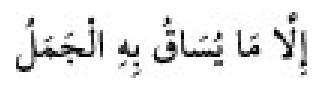
Ahmad ibn Hanbal narrated this hadith in his Musnad (no. 1037). ʿĪr and (Thawr) are the names of two mountains in Medina. Some scholars have said: We do not know of a Thawr mountain in Medina; Thawr mountain is in Mecca. They say the hadith should be between ʿĪr and Uhud. There is disagreement regarding the hunting of game and the cutting of trees in Medina. According to Mālik and al-Shāfiʿī, there is no penalty for hunting game in Medina. They took as evidence the hadith of Anas and the statement of the Messenger of God (peace and blessings be upon him): "What did the sparrow of Abū ʿUmayr, the son of Umm Sulaym from Abū Ṭalḥa, do?" For the sparrow is also a game animal. If it had entailed a penalty, its capture would have been warned against. However, Abū ʿUmayr lost his sparrow, was saddened by its escape, and the Messenger of God (peace and blessings be upon him) would joke with him about it whenever he saw him. Abū Hurayra, Zayd ibn Thābit, and Saʿd (may Allah be pleased with them) considered hunting game in Medina to be forbidden.
ʿAdl: Justice and obligatory (act).
Sarf: Supererogatory and seeking forgiveness (istighfār).
According to the narration of al-Nasāʾī, Ḥārith ibn Suwayd said: "One day, ʿAlī was asked by the Companions: 'O ʿAlī, there are things that the Messenger of God (peace and blessings be upon him) informed only you of and not others.' (May Allah honor his face) He replied: 'No, the Messenger of God (peace and blessings be upon him) did not inform me of anything specific. Of the Islamic rulings, the only thing I have written is the Noble Qur'an and what is in this sheet hidden in my sword,' and he recited the hadith in the text regarding the sanctity of Medina."
The protection (amān) of the Muslims is one. For example, if an army besieges an army of disbelievers (kuffār), and any one of the Muslims grants protection to one of the disbelievers, all the Muslims must honor this protection. Even if the one granting protection is the lowest-ranking slave among the Muslims, the ruling remains the same.




2035 – It is narrated from ʿAlī that the Prophet (peace and blessings be upon him) said regarding this (the sanctification of Medina): "The vegetation of Medina is not to be uprooted, its game is not to be chased and frightened, lost property is not to be picked up and claimed, except by someone who will announce it. It is not permissible for anyone to carry weapons there with the intention of killing, nor is it appropriate to cut down its trees, except for a person letting his camel graze."
EXPLANATION
Ahmad ibn Hanbal gave a lengthy explanation in his Musnad. Refer to hadiths no. 2017 and 2018.


2036 – It is narrated from ʿAdiyy ibn Zayd (may Allah be pleased with him):
The Messenger of God (peace and blessings be upon him) designated a sanctuary of one barīd (12 miles) from every side of Medina. Its trees are not to be shaken or pruned, except for what is carried on camelback (for necessary feeding purposes)."
EXPLANATION
Ḥabt: To shake a tree with a stick so that its leaves fall.






2037 – It is narrated from Sulaymān ibn Abū ʿAbdullāh (may Allah be pleased with him):
Saʿd ibn Abū Waqqāṣ (may Allah be pleased with him) caught someone hunting game in the area of Medina which the Messenger of God (peace and blessings be upon him) had protected and declared sacred. He immediately stripped him of his garment (took it). The hunter's masters came and asked for the garment to be returned.
Saʿd ibn Abū Waqqāṣ said to them: "The Messenger of God (peace and blessings be upon him) himself declared this sacred area, and said: 'Whoever catches someone hunting game in this sacred area, let him strip him (of his garment).' I cannot return to you something that the Messenger of God (peace and blessings be upon him) has honored me with. But if you wish, I will pay the price of the garment." [73]
EXPLANATION
As is clearly understood from the noble hadith, those who hunt game in the sacred precinct of Medina have their garments stripped from them. The garments belong to the one who catches the hunter. This was the view of the Companions. The earlier opinion of Imām al-Shāfiʿī was also like this. It is also narrated from Ahmad ibn Hanbal. Of course, this ruling is a punitive measure established to protect the sacred precinct of Medina.




2038 – It is narrated from the freed slave of Saʿd (may Allah be pleased with him):
Saʿd (ibn Abū Waqqāṣ) found some slaves from Medina cutting trees from Medina. He took their belongings and said (to the masters of the slaves): "I heard the Messenger of God (peace and blessings be upon him) prohibit cutting anything from the trees of Medina, and say: 'Whoever cuts anything from the trees of Medina, his garment belongs to the one who strips and takes it.'" [74]


2039 – It is narrated from Jābir ibn ʿAbdullāh (may Allah be pleased with him):
The Messenger of God (peace and blessings be upon him) said: "The trees of the sanctuary of the Messenger of God (peace and blessings be upon him) are not to be shaken with a stick nor are their branches to be pruned or cut, but they may be gently shaken."
EXPLANATION
In the sacred precinct of Medina, whoever hunts game or cuts its trees, all his garments except those covering his private parts are taken. Either they are given to the poor of Medina, according to one narration to the treasury, or according to another narration, to the one who catches him.
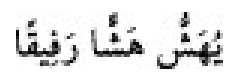
Hesh: To shake the leaves of a tree, to shake it so that its leaves fall. (al-Manhal Takmila, vol. 2, p. 246)

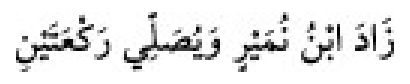
2040 – It is narrated from Ibn ʿUmar (may Allah be pleased with him):
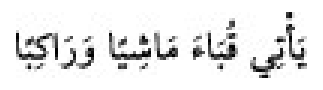
The Messenger of God (peace and blessings be upon him) used to come to Qubāʾ, both on foot and mounted. Ibn Numayr added: "He would perform two rakʿahs of prayer." [75]