

Volume 4 – Ruling on Collecting Jizya



It is narrated from Osman bin Abu Sulayman, may Allah be pleased with him:
The Messenger of Allah, peace and blessings be upon him, sent Khalid bin al-Walid to Dumatu’l-Jandal. Ukaydir was captured and brought before the Messenger of Allah, peace and blessings be upon him. The Messenger of Allah, peace and blessings be upon him, pardoned his blood and made an agreement with him that he would pay the Jizya.


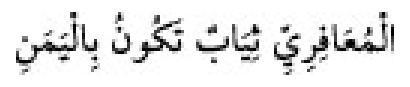
It is narrated from Mu'adh (may Allah be pleased with him) that:
The Messenger of Allah (peace and blessings upon him) instructed Mu'adh when he sent him as a governor to Yemen, to collect one dinar of jizya from every person who has attained puberty, or its equivalent in cloth called *muafir* found in Yemen. [19]
**Explanation:**
This honorable hadith is evidence that jizya is taken only from free men who have reached the age of puberty, and not from women or children. The Messenger of Allah (peace and blessings upon him) instructed Mu'adh when he sent him to Yemen, to fight against those who did not pay jizya but to refrain from harming those who paid it.
It is said that Imam Abu Hanifah stated that the jizya should be set for the wealthy according to their wealth at 48 dirhams, 24 dirhams, or 12 dirhams. According to Imam ash-Shafi'i, it is imposed only on free men who are wealthy. (Bezl al-Mashhud, vol. 3, p. 379)

Muadh (may Allah be pleased with him) narrated:
The Messenger of Allah (peace and blessings upon him) related it in the same manner as the preceding hadith.




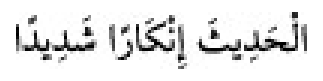

Ziyad ibn Hudeyr has narrated:
Ali (may Allah be pleased with him) said: "If I live long enough, I will wage war against the Christian Banu Taghlib, and take their children as captives. The Messenger of Allah (peace and blessings upon him) and I had written an agreement with them not to make their children Christians."
Abu Dawud said this hadith is *munkar* (anomalous). According to information reaching me from Ahmad ibn Hanbal, he considered it severely *munkar*.
Abu Ali said: Abu Dawud did not recite this hadith in his second recitation.
EXPLANATION:
The Messenger of Allah (peace and blessings upon him) made an agreement with the Christian Banu Taghlib. The agreement stipulated that they would pay double the zakat, refrain from making their children Christians, and not encourage any religion other than Islam. At one point, Umar considered collecting *jizya* from them, but this was not possible because they were scattered in various regions. Numan ibn Zura said to Umar: "O Commander of the Believers! The Banu Taghlib are Arabs. They will not welcome *jizya*, and then they have no money; they work with property and agriculture." Upon this, Umar made an agreement with them on the condition that they pay double the zakat and do not make their children Christians. Ali, seeing their breach of covenant, may have uttered these words.






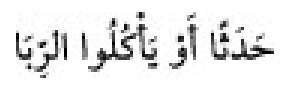
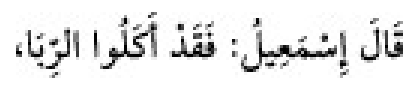
According to a narration from Ibn Abbas (may Allah be pleased with him), he said:
The Messenger of Allah (peace and blessings upon him) made an agreement with the people of Najran, paying half of it in Safar month and the remaining half in Rajab. If there is an attack and calamity in Yemen, they will give thirty suits of armor, thirty horses, thirty camels, and a guarantee for every kind of weapon used against them. The Muslims would be indebted to them until they returned those weapons to them. Their monasteries would not be destroyed, their bishops removed, and they would not be subjected to religious strife as long as they did not cause any disturbance and did not consume interest.
Ismail, one of the narrators, said: The people of Najran consumed interest.
EXPLANATION:
This agreement is in reality a jizya (poll tax). But the head of state may increase or decrease it if he wishes. Also, this honorable hadith expresses the obligation to compensate for entrusted items. The word "keyd" mentioned in the hadith signifies an attack and war, particularly attacks carried out with deceit.