

Marriage Chapter · 38 – The Situation of a Man Whose Wife Turns Out to Be Pregnant








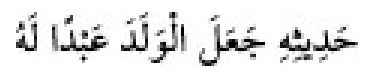
Basra bin Eksem has narrated: I married a virgin girl under her covering and consummated the marriage with her. Then, behold, she was pregnant from illicit relations. The Messenger of Allah (ﷺ) said to me: "The mahr is hers because you have consummated the marriage with her; and when the child is born, he is your slave."
Hasan narrated in his version: “Strike her with one hundred lashes.” Ibn Abi’s-Sarī narrated: “Strike her with one hundred lashes or apply the prescribed punishment (hadd).”
Abu Dawud says: In the narration of Yahya bin Abi Kathir: Basra bin Eksem married a woman (there is mention of this). And in the narration of all the narrators, there is the phrase: "He made the child his slave."
EXPLANATION:
This hadith is mursal. Considering its meaning, a free woman does not give birth to a slave. However, from it is understood that you will treat her like a slave – attending to her upbringing and growth.
What is understood from the hadith is: 1- That when consummation occurs, the woman becomes entitled to the mahr. 2- That the marriage of a pregnant woman is invalid.
Imam al-Awwal (Abu Hanifa) and Ash-Shafi’i say: The marriage of a woman who has committed zina is valid until her ‘iddah expires. Ash-Shafi’i says: Even if the woman is pregnant from zina, the marriage is valid. Abu Yusuf said: The marriage is not valid until the pregnant woman gives birth. (From *Mealim al-Sunan*)


It is related from Sa'id bin Musayyib, may Allah be pleased with him:
A man named Basra bin Eksem married a woman (and then the meaning of the preceding hadith was mentioned). He added, “In this narration, (the Messenger of Allah) separated them.” The hadith of Ibn Jurayj is more complete.