

Volume 4 – Page 24 – The Ruling Regarding the Lands of Khayber











It is narrated from Ibn Umar (may Allah be pleased with him) that:
The Messenger of Allah (peace and blessings be upon him) waged war against the people of Khaybar, overcame their date palms and land, and forced them to retreat into their forts. They made an agreement with the Messenger of Allah (peace and blessings be upon him) that they would give him as much wealth as his camels could carry, and that it belonged to him. They pledged not to conceal anything; if they concealed something, no treaty would be valid for them, nor would they have security. However, they hid a skin-bag belonging to Huyey bin Akhtab, which was filled with gold. Huyey bin Akhtab had died before Khaybar. He had taken it from Nadir when the Banu Nadir were expelled from Medina. It contained the adornments of the Banu Nadir.
The Messenger of Allah (peace and blessings be upon him) asked Sa’b, (who was Huyey's uncle), "Where is Huyey bin Akhtab’s skin-bag?" Sa’b said, “It was consumed by our families and wars.” But they could not keep it hidden any longer, so they found the skin-bag and brought it forth. Then Ibn Abu al-Huqayl killed him. Their women and children were also taken captive.
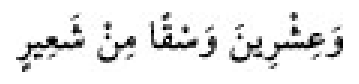
The Messenger of Allah (peace and blessings be upon him) wanted to expel them from Khaybar. But they said, “O Muhammad, leave us in this land so that we may work it, and half of the produce will be yours and half will be ours.” The Messenger of Allah (peace and blessings be upon him) accepted their offer, and he would give each of his wives eighty *wasaqs* of dates and twenty *wasaqs* of barley from this income.
Note:
*Misk*: means skin; it refers to a bag made of goat skin into which gold is placed.
*Wasq*: is sixty *sa’s*. A *sa'* is 1040 dirhams, so sixty *sa’s* is 62,400 dirhams (approximately 199,333 grams).



'Abdullah ibn 'Umar – may Allah be pleased with him – narrated:
My father, 'Umar – may Allah be pleased with him – said: The Messenger of Allah, peace and blessings be upon him, left the Jews of Khaybar on their land as laborers under the condition that they would be expelled if we wished to do so. He said, "Whoever has property in Khaybar, let him be wary of it." And he expelled them from Khaybar.










Narrated ‘Abdullah bin Umar:
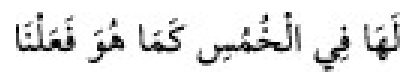
That when Khaybar was conquered, the Jews requested that they be allowed to remain in Khaybar as laborers, with half of their produce belonging to them. The Messenger of Allah (ﷺ) said to them, “I leave you on this condition as long as I desire.” And so they were left on that condition. A portion of the half of the income of Khaybar was divided into shares, and the Messenger of Allah (ﷺ) took one-fifth of it. The Messenger of Allah (ﷺ) used to give each of his wives a hundred *wasaq* of dates and twenty *wasaq* of barley. When Umar intended to expel the Jews, he sent word to the wives of the Messenger of Allah (ﷺ), saying, “Whoever among you would like me to give her an estimated orchard of one hundred *wasaq*, its tree, soil, and water shall be hers. And whoever desires that I grant her an estimated field of twenty *wasaq* as a share, We will do so. And whoever desires that we separate her share from the compost, We will do so.” [10]
**Note:** In a previous narration, it is reported that each of the wives of the Messenger of Allah (ﷺ) was given eighty *wasaq* of dates, while here it is narrated as one hundred *wasaq*. This quantity means approximately that. It is not exactly eighty or one hundred *wasaq*, but something between them. When the wives were given a choice, Aisha and Hafsa preferred the land and had their shares separated.
*Sühman:* The plural of *Sehm*. The word *Sehm* also has a plural form of *Ashum*.


Anas ibn Malik (may Allah be pleased with him) narrated:
The Messenger of Allah ﷺ declared war upon Khaybar and we conquered it by force of arms. A number of captives were taken.



Saḥl bin Abū Ḥasmah (may Allah be pleased with him) narrated:
The Messenger of Allah (peace and blessings upon him) divided Khaybar into two parts. One part for immediate needs and expenses, and the other part was distributed among the Muslims in eighteen shares.
[Note: The original name of Abū Ḥasmah is Abdullah.]




Bushayr ibn Yasar, may Allah be pleased with him, heard a group of the Companions of the Messenger of Allah, peace and blessings be upon him, saying: Recounting the previous hadith, they said, “Half of the revenue of Khaybar was for the Muslims and the share of the Messenger of Allah, peace and blessings be upon him.” And the remaining half they set aside for the Muslims, [to cover] sudden needs and expenses.





Büşeyr ibn Yasar, may Allah be pleased with him, reported from many of the companions of the Messenger of Allah, peace and blessings be upon him: That the Messenger of Allah, peace and blessings be upon him, when he gained victory over Khaybar, divided the revenue of Khaybar into thirty-six shares. Each share contained one hundred portions. Half of these (eighteen shares) belonged to the Messenger of Allah, peace and blessings be upon him, and the Muslims. The remaining half was allocated for visiting delegations, affairs, and the general needs of the people.





Busayr ibn Yasar, may Allah be pleased with him, narrated:
When Allah, the Exalted, granted Khaybar to the Prophet, peace and blessings be upon him, he divided it into thirty-six portions, each containing one hundred shares. He allocated half of it for resolving future events, dealing with envoys, and meeting needs that would come to him.
He designated Al-Watiha, Kutayba, and the lands subject to these two [locations] for this purpose. The other half he distributed amongst the Muslims, which included Ash-Shak and An-Nataat, along with the lands subject to these two [locations]. The Prophet’s share was linked to the portion pertaining to Ash-Shak and An-Nataat.
COMMENTARY:
Al-Watiha: A fortress in Khaybar.
Kutayba: A plot of land in Khaybar, or a fortress in Khaybar.
Ash-Shak: A fortress in Khaybar.
An-Nataat: The name of a water source that irrigates the date palms of Khaybar.








From Büşeyr from Yesar, may Allah be pleased with him, it is related:
Allah Almighty gave Khaybar as spoils of war to the Messenger of Allah, and divided it into thirty-six shares. He allocated half of these, which were eighteen shares, each containing one hundred sehams, to the Muslims. The Messenger of Allah, peace and blessings be upon him, was with the Muslims. The share of the Messenger of Allah, peace and blessings be upon him, was like the share of a soldier. The Messenger of Allah, peace and blessings be upon him, also allocated the other half as eighteen shares for the needs of the Muslims and for expenditures required by their affairs. This half set aside for needs included the fortress of Watiah, the land of Katiba, Salalim, and places similar to them. When the properties came into the hands of the Messenger of Allah, peace and blessings be upon him, and the Muslims, no one was found to manage their affairs and care for them. The Messenger of Allah, peace and blessings be upon him, summoned the Jews and appointed them to oversee them.




Mu'adh ibn 'Amr al-Ansari (may Allah be pleased with him) related:
The spoils of Khaybar were distributed amongst those who were at Hudaybiyyah. The Messenger of Allah (peace and blessings upon him) divided it into eighteen shares. There were fifteen hundred people present at Hudaybiyyah, including three hundred horsemen. He gave two shares to the horsemen and one share to the foot soldiers.
COMMENTARY:
The Messenger of Allah (peace and blessings upon him) divided the spoils taken from Khaybar in half. Half was distributed amongst the fifteen hundred soldiers present at Hudaybiyyah; giving two shares to the horsemen and one share to the foot soldiers. First, this half was divided into eighteen shares, with each share being allocated among a hundred people.





It was reported from the children of one of Zührī, Abdullah bin Abū Bakr, and Muḥammad bin Meslama that some fortresses in Khaybar could not be taken. The people of Khaybar had sought refuge within them. Then they requested from the Messenger of Allah, peace and blessings be upon him, that their blood be spared and that they be permitted to leave. The Messenger of Allah, peace and blessings be upon him, granted their request. The people of Fadak heard of the Messenger of Allah’s treatment of them and surrendered Fadak on those terms. Because no horses or camels were raced over it, it was designated exclusively for the Messenger of Allah, peace and blessings be upon him.






Sa'id ibn Musayyib (may Allah be pleased with him) narrated:
The Messenger of Allah (peace and blessings upon him) conquered part of Khaybar by force of arms.
Abu Dawud said: It is reported from Ibn Shihab that he said: Part of Khaybar was conquered by force of arms, and part by treaty.
Kutaybah stated that it was related to him that most of it was conquered by force of arms, but there were parts that were conquered through a settlement. I asked Malik about Kutaybah’s position, and he said: That is part of the land of Khaybar; there were forty thousand date palm trees upon it.


According to a narration from Ibn Shihab:
It has reached me that the Messenger of Allah, peace and blessings be upon him, conquered Khaybar by force of arms, and those who came down from their forts at the end of the fighting did so on the condition of being exiled.


According to the narration of Ibn Shihab (may Allah be pleased with him), he said: The Messenger of Allah (peace and blessings upon him) took one-fifth of the spoils of Khaybar, and distributed the remainder among those who were present at al-Hudaybiyyah, both those who had been in Khaybar and those who had not.


From his father, Zeyd ibn Eslam has transmitted:
Umar (may Allah be pleased with him) said, "If I were not concerned about those who embraced Islam later, I would distribute the revenue of every village I conquered as the Messenger of Allah, peace and blessings be upon him, distributed the lands of Khaybar.”