

SECTION ON ZAKAT · 4 – ZAKAT OF GRAZING ANIMALS





































Having received a letter from Sāmah ibn ‘Abdullāh ibn Anas, I relate:
He said that it was a letter which Abū Bakr sent to Anas for the collection of zakat, and it bore the seal of the Messenger of Allah ﷺ. It was written to him when Abū Bakr appointed him as a collector. The letter stated: “(It is) from Allah, the Exalted and Sublime, who commanded His Prophet ﷺ, and that which the Prophet ﷺ has made obligatory upon Muslims – this is the origin of zakat.” Whoever is obligated to pay it should give promptly. And whoever is asked for more than what is due, he should not give. For every five camels below twenty-five, one sheep is given. When they reach twenty-five, a female camel that has completed its first year is given. This continues until thirty-six. If there is no female, a male camel that has reached three years of age is given. When the number of camels reaches thirty-six, a female camel that has reached three years of age is given. This continues until forty-five. When they reach forty-six, a female camel that has reached four years of age is given. This continues until sixty. When they reach sixty-one, a five-year-old camel is given. From seventy-five to ninety, two female camels that have reached three years of age are given. From ninety-one to one hundred and twenty-one, two female camels that have reached four years of age are given. When the number of camels exceeds one hundred and twenty, for every forty camels, a three-year-old female camel is given; and for every fifty, a four-year-old camel is given. If the age appropriate for giving in the obligations of zakat is not found, then he should give a five-year-old camel if one is available; otherwise, if a four-year-old camel is available, he should give it along with two sheep or twenty dirhams. And if a four-year-old camel is due from someone and a three-year-old camel is available, then giving it suffices.
Abū Dāwūd said: From this point onward, I did not memorize the hadith exactly as I received it. If one does not have a four-year-old camel with him, he gives two sheep or twenty dirhams along with him. If someone is obligated to give a three-year-old camel and only a four-year-old camel is available, then that is acceptable.
Abū Dāwūd said: I did not memorize the beginning of this hadith well, but I memorized the rest well. The collector gives two sheep or twenty dirhams to the owner; if someone is obligated to give a three-year-old camel and it is not available with him, but only a two-year-old camel is available, he gives it and pays two sheep or twenty dirhams to the collector.
If someone is obligated to give a two-year-old camel and it is not available with him, but a three-year-old male camel is available, then that suffices in its place. It is acceptable; nothing further is due on him. If a three-year-old camel is not available, he gives a four-year-old one. If the owner does not want it, nothing else is given. For sheep that spend more than half the year grazing, for every forty to one hundred and twenty, one sheep is due; from one hundred and twenty to two hundred, two sheep are due; until three hundred, three sheep are due; and beyond three hundred, one sheep is due for every one hundred. The very old and blind are not taken in zakat. The rams of the flock are also not taken unless the owner desires it. Those that have separated out of fear of zakat are not combined, nor are those that were together separated. In a flock resulting from the mixing of two people, equal shares are applied to each person’s portion. If the number of a person's sheep does not reach forty, then zakat is not due on him; but if he wishes, he gives something. Zakat is also obligatory in silver according to the one-fortieth calculation (the nisab of silver is two hundred dirhams). If the silver is ninety dirhams, then zakat is not required; but if the owner desires, he gives it. [439]
GLOSSARY:
Binti Mahaz: A female camel that has completed its first year and entered its second year while pregnant.
Binti Lebūn: A female camel whose mother has given birth to her second offspring and suckled her, and she has completed two years and entered her third year.
Hikkah: A four-year-old female camel capable of becoming pregnant.
Jazā’a: Means a five-year-old camel.


















The Messenger of Allah ﷺ wrote a letter regarding zakat, and he did not release it to collectors until his death. He attached it to his sword. Abu Bakr followed suit until his death. Then Umar ibn al-Khattab followed suit. The letter contained the following: "For every five camels, one sheep; for ten camels, two sheep; for fifteen camels, three sheep; for twenty camels, four sheep; for every thirty-five camels, a female camel calf of two years old; if it exceeds thirty-five, a female camel calf of three years old; if it exceeds forty-five, a female camel of four years old; if it exceeds sixty, a female camel of five years old; if it exceeds seventy-five, two female calves of three years old; if it exceeds ninety, two female camels of four years old; for every one hundred and twenty camels, a female camel." And so on. "In sheep: for forty sheep, one sheep; thus until one hundred and twenty. For one hundred and twenty-one to two hundred, two sheep; for two hundred and one to three hundred, three sheep. If the sheep are more than that, then for every one hundred sheep, one sheep is given as zakat. There is no zakat unless it reaches a hundred. The intervals of those who separate out of fear of zakat are not combined. The intervals of those together are not separated. In herds that come about by mixing the flocks of two people, zakat is assessed according to their shares in proportion to their possessions. The old and defective animals are not taken in zakat."
Zuhri said: When the collector comes, he divides the herd into three parts: one-third being the weak ones, one-third being the average ones, and one-third being the best ones, and the collector takes the zakat from the average ones. Zuhri did not mention anything about the zakat of cattle.


Sufyan ibn Hussein transmitted this letter through the same chain of narration and with the same meaning.
There, he said, "(If one does not have a two-year-old camel, then give a three-year-old camel." The narrator did not mention the words of Zuhri.

















According to a narration from Ibn al-Shahab, may Allah be pleased with him, he said: The copy of the Messenger of Allah’s letter regarding zakat is as follows: “That letter was among the family of Umar ibn al-Khattab, may Allah be pleased with him.” Ibn al-Shahab, may Allah be pleased with him, says: Salim, a grandson of Umar, recited that letter to me and I memorized it exactly as it was. This is the letter from which Umar ibn Abd al-Aziz took a copy from Abdullah ibn Umar and Salim, a grandson of Umar, and he related the hadith. (The hadith continues) When the number of camels reaches one hundred and twenty-one, [the zakat due is] three female camels aged three years old. Until it reaches one hundred and twenty-nine [it remains so]. When it reaches one hundred and thirty, [the zakat due is] two female camels aged three years old and one female camel aged four years old. Until it reaches one hundred and thirty-nine [it remains so]. When it reaches one hundred and forty, [the zakat due is] two female camels aged four years old and one female camel aged three years old. Until it reaches one hundred and forty-nine [it remains so]. When it reaches one hundred and fifty, [the zakat due is] three female camels aged four years old. Until it reaches one hundred and fifty-nine [it remains so]. When it reaches one hundred and sixty, [the zakat due is] three female camels aged three years old. Until it reaches one hundred and sixty-nine [it remains so]. When it reaches one hundred and seventy, [the zakat due is] three female camels aged three years old and one female camel aged four years old. Until it reaches one hundred and seventy-nine [it remains so]. When it reaches one hundred and eighty, [the zakat due is] two female camels aged three years old and two female camels aged four years old. Until it reaches one hundred and eighty-nine [it remains so]. When it reaches one hundred and ninety, [the zakat due is] three female camels aged four years old and one female camel aged three years old. Until it reaches one hundred and ninety-nine [it remains so]. Whatever years are due [for zakat], they are taken.
(Regarding sheep that graze in Marad), it was mentioned like the hadith of Sufyan ibn Hussein. In zakat, neither the elderly nor blind sheep are taken, nor is a ram or male goat considered breeding stock, unless the zakat collector desires it.






Imam Malik said: "The meaning of the statement of 'Umar ibn al-Khattab, may Allah be pleased with him, 'that which is separate cannot be brought together, and that which is brought together cannot be separated' is as follows: Every person has forty sheep, and it is incumbent upon them to give one sheep in charity (zakat). But when the tax collector approaches them, they bring these sheep together so that zakat may not be required of all. If two people each have a hundred sheep, and one sheep must be given, and the tax collector sees that two hundred sheep have become mixed, then three sheep will be needed; therefore, everyone separates their sheep, and only one sheep is required for each. This is what I heard."



















Ali (may Allah be pleased with him) is reported to have said:
The narrator Zuhayr said: I believe that Ali narrated this hadith from the Messenger of Allah (peace and blessings be upon him), and he said: "Bring forth one-fourth of the tithe. Every forty dirhams has one dirham as zakat. But (since the nisab of silver is two hundred dirhams) zakat is not obligatory for you below two hundred dirhams. When it reaches two hundred dirhams, then five dirhams of it are zakat according to the fortieth calculation. If it exceeds that, then (zakat is due) according to the nisab of the excess. There is one sheep as zakat for every forty sheep. But if there are thirty-nine sheep, nothing is required from you." The narrator related the zakat of sheep in the manner Zuhri did.
For cattle, one yearling calf is given as zakat for every thirty. For forty cattle, a two-year-old mature calf is given. Zakat is not obligatory on draft oxen. The narrator mentioned the zakat of camels in the way Zuhri related (with the calculation of one sheep for every five camels), which is five sheep as zakat. If there is one camel more than twenty-five, a two-year-old female camel is given. If there is no two-year-old female camel, then a three-year-old male camel is given. This continues until thirty-five camels. When it reaches thirty-six camels, a three-year-old female camel is given. It remains so until forty-five. For forty-six to sixty camels, those who desire a male camel need a four-year-old female camel." Then he related the hadith of Zuhri verbatim.
For ninety-one to one hundred and twenty camels, those who desire a male camel are obligated with two four-year-old female camels. If it exceeds one hundred and twenty camels, then for every fifty camels, a four-year-old female camel is required.
Those who are united out of fear of charity are not separated. Those who are separated are not combined. In zakat, the old ones, the blind, and the herd’s ram are not taken. Unless the collector desires it. There is tithe on pastures irrigated by rivers and those irrigated by rainwater. There is half of the tithe on those irrigated by watermills.
In the hadith narrated by Asim and Haris, there is the statement (zakat is required annually).
Zuhayr said: I said it once a year, I believe. In the hadith narrated by Asim, it is stated that if there are no two-year-old or three-year-old female camels among the camels, then ten dirhams or two sheep must be given.









It is related that 'Ali (may Allah be pleased with him) said: “Two hundred dirhams come to pass a year, then five dirhams of zakat are obligatory upon it. Zakat is not obligatory on gold until twenty dinars are present. Twenty dinars of gold are found and a year passes, then half a dinar is obligatory. For anything exceeding that, what is due according to the proportion is given.”
The narrator says: I do not know if 'Ali said this sentence, or if he related it as *marfū'* from the Messenger of Allah (peace and blessings be upon him). Zakat is not obligatory on any property unless a year has passed. However, Jarir states that Ibn Wahb added the phrase, “There is no zakat due on any property until a year has passed,” in the hadith he relates from the Prophet (peace and blessings be upon him).




Ali (may Allah be pleased with him) narrated:
The Messenger of Allah (peace and blessings upon him) said: “I have waived the zakah on horses and slaves. Bring forth the zakah of silver; there is no zakah due on silver until it reaches one hundred and ninety dirhams, but when it becomes two hundred dirhams, then its zakah is five dirhams.” [442]





From Behz bin Hakim, from his father, and from his grandfather, they have narrated:
The Messenger of Allah (peace be upon him) said: "There is zakah due on forty camels grazing in pastureland, equivalent to a three-year-old female camel. The accounting for jointly owned camels is not separate. And whoever gives the zakah hoping for reward, [he will receive it]."
Ibn al-Ala said (seeking reward from it), "[He will be rewarded]."
"But if someone does not give the zakah, We take the zakah and half of his property. (We take it) as a definitive command from Our Mighty and Majestic Lord. The family of Muhammad has no share in this."
EXPLANATION:
It was declared that in the early days of Islam, this penalty would be applied to someone who does not pay the zakah of his property. First, the zakah of his property would be taken, then half of the remaining property would be taken. Later, this ruling was abrogated. This is the view of Imam Shafi’i. Some understand this honorable hadith in such a way that the property of someone who does not pay the zakah is divided into two parts. The tax collector takes the zakah from whichever side he wishes. Regardless of how it is interpreted, this is a threat to one who does not pay the zakah; it is a financial penalty.
Some have given the meaning of "a portion" to the phrase “We take his share.” Avn al-Mabud prefers this interpretation. The Master of Mankind (peace and blessings be upon him) announced that he takes zakah because it is an order from Allah, and that his family has no share in it. As will come later, it is not permissible to take zakah from the Hashimites. Zakah is considered a dirt on property, and the lineage of the Master of Mankind is also noble, so taking zakah from them is forbidden.




It is narrated from Mu'adh (may Allah be pleased with him) that:
The Messenger of Allah (peace and blessings upon him) instructed him, when sending him to Yemen, to take one male or female calf of two years old from every thirty cattle, one calf of three years old from every forty cattle, and from every non-Muslim who reaches the age of majority (cizya), a dinar or the equivalent of a dinar in maafir cloth found in Yemen. [443]
**Note:** *The explanatory notes are not part of the translation.*

From Mu'adh (may Allah be pleased with him), it was related in a similar narration to that of the preceding hadith.


From Mu'adh, another chain of narration relates this hadith, and there it is stated, “The Prophet ﷺ sent him to Yemen,” relating it as previously mentioned. However, the words "(a garment made in Yemen)" and "(every male who reaches the age of maturity)" were not included therein.










Süveyd ibn Gafeel (may Allah be pleased with him) narrated:
I went, or someone went to me reporting on what the Messenger of Allah (ﷺ) had instructed regarding collection.
The agreement concerning written zakat included [the stipulation] not to take milking animals.
To combine those that are separated and separate those that are together. When the sheep came for watering, the collector would come to the water’s edge and say, “Pay the zakah of your wealth.” The narrator says: One of the owners would hold back a camel with a hump (kevma).
Hilal ibn Habbab said to Maysara, "O Abu Salih, what is a kevma?" I said, "It is a camel with a large hump." Then the collector hesitated to take it, and the owner said, “I want you to take the best of my livestock.” The collector still hesitated. The owner then led forward a camel that was slightly less valuable, and he hesitated to take that one too. Then he led forward a camel of lesser value, and the collector accepted it. He said, "I am taking this one. But I still fear that the Messenger of Allah (ﷺ) will say, ‘You went and took the man’s best camel.’” [444]
**Note:** *Hutam:* The rope tied to a camel's head with which it is led. The finest animal in the herd is also the owner’s favorite. Therefore, one is forbidden from taking it for zakah.



Süwayd ibn Ghafla reported: A tax collector of the Messenger of Allah (peace and blessings be upon him) came to us. I seized his hands and recited to him the covenant (containing the rulings on zakat), saying: “Do not combine those who are separate, nor separate those who are together, out of fear of zakat.” He did not mention the words, "Do not take [zakat from] those with milk."
COMMENTARY:
Mahiz: Milk. Shafi’i: Refers to a pregnant female. Inak: A female goat kid. Imam Shafi'i says that instead of sheep zakat, a male fatling is taken. Male chebis cannot be taken instead of goat zakat; female chebis are taken. Imam Azam says that neither female shashek nor female chebis are taken from sheep or goats.













Muslim bin Shu’ba reported from Alqama's son, Nafi’, that his father appointed him as a leader over his people and ordered him to collect their zakat. My father sent me to one of the groups of that people. I went to an elderly man named Sagr, the son of Daysem, who was among the most senior members of that group, and said, "My father has sent me to you to take your zakat."
The old man asked me, “My nephew, what kind of animals will you take?” I replied, “We select from them by examining their udders (choosing the best).” The old man said to me: “Let me tell you a story. My brother’s son, I was once with my sheep in one of these valleys during the lifetime of the Messenger of Allah, peace be upon him, when two men came to me on horseback and said, ‘We are messengers sent by the Messenger of Allah, peace be upon him, to collect the zakat of your sheep.’ I asked them, ‘What is required of me as zakat for these sheep?’ They said, ‘One ewe is needed.’ I took a pregnant ewe that was clearly good and full of fat and milk and presented it to them. They said, ‘These are pregnant ewes. The Messenger of Allah forbade us from taking pregnant ewes.’ I asked them, ‘Then how will you take (them)?’ They said, ‘A one-year-old female sheep or a two-year-old female sheep.’ I caught a fat *mutat* and presented it to them. They said, ‘Take this.’ And they put the barren animal on their camels and left.
FOOTNOTE:
Mutat: An animal that has reached its time of delivery but does not give birth due to its leanness (it means barren).








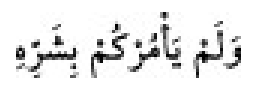
Muslim ibn Shu'ba relates:
Shafi’ said: [It concerns] sheep and goats that have young.
Abu Dawud says: I read in the book of Abdullah ibn Salim, in Hums, as follows: The Prophet (peace and blessings be upon him) said, “Three things are such that whoever does them tastes the sweetness of faith: saying the testimony that there is no deity worthy of worship except Allah, believing that He is alone. Voluntarily giving the zakat of his wealth with pleasure every year, not [giving from] the old, the diseased, or the defective. (Give your zakat from the middle quality of your possessions), for Allah has not asked you to give Him the best of your property, nor has He commanded you to give Him the defective.”)















Ubayy ibn Ka’b (may Allah be pleased with him) narrated:
The Messenger of Allah (peace and blessings upon him) appointed me as a tax collector. I encountered a man who, when he gathered his possessions for me, I found a two-year-old female camel that was due for zakat among his camels. I said to him, “Give this female camel as your zakat.” The owner of the property said, "She has no milk and cannot be ridden; what use is she? But take this young, large, and well-fed camel." I replied, “I cannot take something that you have not commanded me to do. The Messenger of Allah (peace and blessings upon him) is very close to you. If you wish to go to him, let us go together,” offering him the fine camel he proposed. "If he accepts it, then I will take it; if he rejects it, then I will not." The man said, “I will go,” and accompanied me on the journey, along with the camel he had offered. Eventually, we reached the Messenger of Allah (peace and blessings upon him). That man said to the Messenger of Allah (peace and blessings upon him), "O Messenger of Allah! Your tax collector came to me to take the zakat from my property. By Allah, neither you nor your tax collector has ever seen my property before. I gathered all my possessions for him. He told me that I must give a two-year-old female camel as zakat, while she has no milk and cannot be ridden. I offered him a young, large, and well-fed camel to take instead. He hesitated to accept it. Here is that camel." He said, "Take it, O Messenger of Allah!"
The Messenger of Allah (peace and blessings upon him) then said to him, “This camel is for you; it is not obligatory upon you. But if you give it as a voluntary act of kindness, Allah will reward you for it, and we accept your generosity.”
The man said, "Here is the camel! I brought it to you, O Messenger of Allah!" The Messenger of Allah (peace and blessings upon him) then ordered that the camel be accepted. And he invoked blessings upon the man regarding his property.
**Explanation:**
This hadith indicates that if the owner gives willingly, the finest of his possessions can be taken as zakat.







It is narrated from Ibn Abbas (may Allah be pleased with him) that:
The Messenger of Allah (peace and blessings upon him) said to Mu’adh bin Jabal when he was sending him as a governor to Yemen, “You are going to a people of the Book. Invite them to testify that there is no deity worthy of worship except Allah and that I am a messenger of Allah! If they accept this invitation of yours, then instruct them that Allah has imposed five prayers obligatory upon them at night and day. And if they obey you in that, then instruct them that Allah has imposed zakat upon their wealth, to be taken from the wealthy among them and given to the poor. And if they obey you in that, then refrain from taking the best of their property. And also refrain from the curse of the oppressed, for there is no barrier between the supplication of the oppressed and Allah’s (acceptance).”


Anas ibn Malik (may Allah be pleased with him) narrated:
The Messenger of Allah (peace and blessings upon him) said, “He who exceeds the limit in Zakat is like one who does not pay it.”