

SECTION ON ZAKĀT · 20 – THOSE WHO TRANSMITTED HALF A SĀʿ OF WHEAT




1619 – It is narrated from ʿAbdullāh ibn Abū Suʿayr (may Allah be pleased with him), who narrated from his father, that his father said: The Messenger of God (peace and blessings be upon him) said: “The charity of breaking the fast (ṣadaqat al-fiṭr) is one sāʿ of wheat for every two persons, whether young or old, free or slave, male or female. As for your wealthy ones, it is given as zakāt for Allah’s sake. As for our poor, Allah will return to them more than what they have given.” In Sulaimān’s narration, the wording “for the rich and the poor” is added.
EXPLANATION
If one sāʿ of wheat is given as fiṭra for two people, then half a sāʿ of wheat is the charity of breaking the fast (fiṭr) for one person. Burr: wheat; Gamh: wheat. This noble hadith is evidence that half a sāʿ of wheat suffices for the charity of breaking the fast (fiṭr). Also, since women are counted separately from men, it is not obligatory for a husband to pay the fiṭra of his wife. This is the view of the Ḥanafīs. According to al-Shāfiʿī, Mālik, and Aḥmad ibn Ḥanbal, the man pays the fiṭra for his wife.




1620 – It is narrated from ʿAbdullāh ibn Thālabah ibn Suʿayr (may Allah be pleased with him), who narrated from his father, that his father said: The Prophet (peace and blessings be upon him) delivered a sermon while standing. He commanded that for the charity of breaking the fast (ṣadaqat al-fiṭr), one sāʿ of dates or one sāʿ of barley be given for each person. In the ḥadīth narrated by ʿAlī, the phrase “he gives one sāʿ of burr or gamh (wheat) between two people” is added. Then the narrators agreed and said, “It is obligatory for every young or old, free or slave.”
EXPLANATION
According to Imām Abū Ḥanīfa, the charity of breaking the fast (fiṭr) is obligatory for those who possess the niṣāb (minimum amount of wealth). It is not obligatory for the poor.


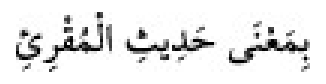
1621 – Abū Dāwūd says: Aḥmad ibn Ṣāliḥ relates: The Messenger of God (peace and blessings be upon him) addressed the people two days before the ʿĪd of Ramaḍān. Then the narrator conveyed the meaning of the ḥadīth of Muqrīʾ.








1622 – It is narrated from Ḥasan al-Baṣrī (may Allah be pleased with him) that he said: “At the end of a Ramaḍān, Ibn ʿAbbās was delivering a sermon on the pulpit in Baṣra. He said to them, ‘Give the charity of your fast.’ It was as if the people did not know this before. Then Ibn ʿAbbās continued, ‘Who among you is from the people of Madīnah? Come, teach your brothers the charity of fasting, for they do not know it.’ The Messenger of God (peace and blessings be upon him) made it obligatory to give one sāʿ of dates or barley, or half a sāʿ of wheat, for every free or slave, male or female, young or old. When ʿAlī (may Allah be pleased with him) came to Baṣra and saw that prices were low, he said, ‘Allah has bestowed abundance upon you; so give one sāʿ of everything.’ Ḥumayd said: Ḥasan al-Baṣrī (may Allah be pleased with him) was of the opinion that the charity of breaking the fast (fiṭr) was obligatory upon those who fast.” [470]