

Volume 4 – 36 – Dividing Lands into Parcels

According to the report of al-Kamah's father: The Messenger of Allah ﷺ has apportioned land for him in Hadramawt.

It was narrated on the authority of al-Kamah ibn Wail, with its chain of narration and a similar report.


Amr b. Hureys, may Allah be pleased with him, reported:
The Messenger of Allah, peace and blessings be upon him, drew a spot for me in Medina with his bow and said, “I will give you more than this, I will give you even more.”




According to numerous narrators, Rabi' ibn Abi Abdurrahman has transmitted that the Messenger of Allah, peace and blessings be upon him, granted Bilal bin Haris al-Muzani the mines of Qabaliyya from the districts of Fur. No tax other than zakat has been levied on these mines until this day.
COMMENTARY:
Qabaliyya: A place located near the sea, five miles from Medina.
Fur: A city situated between Mecca and Medina. According to this hadith, mines are subject to zakat. If the extracted mineral is equivalent to eighty grams of gold or two hundred dirhams in value, it is subject to zakat. This is the view of Imam Malik. According to Imam Abu Hanifa, mines are like treasures; one-fifth is taken from them, whether abundant or meager.









Kisyr ibn Abdullah ibn Awf al-Muzani, through his father, from his grandfather, relates:
The Messenger of Allah, peace and blessings be upon him, granted Bilal ibn Haris al-Muzani the mines of Qabaliyyah, with its valley and peak. Others relate it as “*jalasahū wa garrahū*,” using the quiescence of *lam* and *waw*.
He also gave him the arable portion from a place called Kud. However, he did not grant him any right of any Muslim therein. The Messenger of Allah, peace and blessings be upon him, wrote for him a document stating: “In the name of Allah, the Most Gracious, the Most Merciful. This is what Allah’s Messenger, Muhammad, granted to Bilal ibn Haris al-Muzani. He gave him the mines of Qabaliyyah, with its valley and peak. Others said, ‘*jalasahū wa garrahū*.’ He also gave him the arable portion from a place called Kud, but he did not grant any right therein to any Muslim.”









It is narrated from the grandfather of Kisr ibn Abdullah:
The Messenger of Allah, peace and blessings be upon him, gifted Bilal ibn Haris al-Muzani the valley of Kabaliyyah, including its highlands. The narrator, Ibn Nadr, added to this account that the Prophet, peace and blessings be upon him, also gifted him the land called Jars and the land called Zatun-Nusub. Then they agreed [that he was given] the fertile land from Mount Kuts. Bilal ibn Haris was not granted any Muslim’s right therein. The Messenger of Allah, peace and blessings be upon him, wrote to him: “This is the document from the Messenger of Allah, gifting to Bilal ibn Haris al-Muzani, without granting any Muslim's right therein.”
Abu Uways said: Sawr ibn Zayd related to me a similar account as that mentioned in the narration from the Messenger of Allah, peace and blessings be upon him. Ibn Nadr added the words: “Ubayy ibn Ka’b wrote it.”




Ebyaz bin Hamal (may Allah be pleased with him) narrated: An envoy came to the Messenger of Allah (peace and blessings upon him) requesting a *qita'* [a portion] of salt from a mine.
Ibn al-Muatawwil said: He meant the salt of Ma'rib. The Prophet (peace and blessings upon him) gave him a *qita’*. When he returned, someone present among those in the assembly asked him, "Do you know what was given to you?" He replied, “You only gave me a *qita'* that flows like water.”
The narrator said: (The Prophet) withdrew Ebyaz's right to operate in the salt mine. Then, Ebyaz requested a portion of a miswak tree grove from the Messenger of Allah (peace and blessings upon him). The Messenger of Allah (peace and blessings upon him) said, "I can give you areas that camels’ hooves do not reach." Ibn al-Muatawwil transmitted this part as “areas where the hooves of camels reach.” [26]
**Explanation:**
This honorable hadith is evidence that one may object to a ruling judge if he errs. As mentioned in the explanation of hadith number 3062, the salt mine given to Ebyaz bin Hamal was a mine with an easy extraction process, flowing like water. The Messenger of Allah (peace and blessings upon him) did not know that this mine flowed continuously. Upon learning this, he withdrew the right he gave to Ebyaz, because such a mine, which benefits the public, should not be assigned to one individual. Afterwards, Ebyaz requested a portion of an erak tree grove used for miswaks. The Messenger of Allah (peace and blessings upon him) stated that it would not be from ground where animals graze, as they would feed there.
*Iqta’*: The meaning of *iqta'* in these hadiths is: assigning a certain portion of state-owned vacant land to individuals. Vacant lands can be assigned to individuals without prejudice to the public benefit. Salt and sulfur, like other cost-free minerals that everyone can benefit from, cannot be assigned to just a few people. Similarly, areas underfoot where livestock such as sheep, goats, cattle, and camels graze are not suitable for assignment to individuals. Therefore, he said it would not be from ground where the hooves of camels tread.


Muḥammad ibn al-Ḥasan al-Maẓūmī, may Allah be pleased with him, reported:
It is related that he said: “The places which camels’ feet do not reach,” meaning
That the Messenger of Allah (peace and blessings upon him) intended by this statement to say that [the camel] eats the branches of the tree as far as its head reaches, and what lies above that is protected.





It is narrated from Byaz bin Hamal:
He asked the Messenger of Allah, ﷺ, about the legal ruling concerning groves of erak trees that are made into miswak. The Messenger of Allah, ﷺ, said, “There is no grove in erak.” Byaz said, “Of the erak tree in a place surrounded [by a fence]?” The Messenger of Allah, ﷺ, said, “There is no grove [in erak].” One of the narrators, Fara’j, said: By "a place surrounded" he meant an agricultural area enclosed by a wall.






















From Osman ibn Abi Hazim, from his father, from his grandfather Sahr, was reported that the Messenger of Allah ﷺ marched against the Banu Sakif for war. When Sahr heard this, he mounted his riding beast (with a company of cavalry) to aid the Prophet ﷺ. But he saw that the Prophet ﷺ had returned after conquering Taif. On that day, he vowed to Allah that he would not leave that fortress where the Sakifites were sheltering until they submitted to the judgment of the Messenger of Allah ﷺ. Indeed, Sahr did not cease fighting them until they accepted the judgment of the Messenger of Allah ﷺ. (When they inclined towards accepting the Prophet’s ﷺ judgment, Sahr wrote a letter to the Messenger of Allah ﷺ:)
“Regarding the matter, O Messenger of Allah, the Banu Sakif have accepted your judgment. Now I stand before them and they stand before me on horseback.”
The Messenger of Allah ﷺ (upon receiving the letter immediately ordered that the congregational prayer be performed, and he prayed ten times for Sahr’s tribe: “O Allah, bless their cavalry and their bows.”) After a while, the Banu Sakif came to the presence of the Prophet ﷺ. Mughira ibn Shu'ba spoke among them and said: "O Messenger of Allah, Sahr has taken my aunt captive. Yet my aunt has entered the religion that the Muslims have entered." Thereupon, the Messenger of Allah ﷺ summoned Sahr and said to him: “O Sahr, when a people enter into Islam, their blood and property become guaranteed.” Therefore, you release Mughira’s aunt to him.” Sahr released his aunt to him, and from the Messenger of Allah ﷺ he requested the water that the Banu Suleym had abandoned while fleeing Islam.
“O Messenger of Allah, dedicate this water to my service and the service of my people.”
The Messenger of Allah ﷺ said: “Yes (I dedicate this water to you),” and gave it to them. Thereupon, the Banu Suleym also became Muslim and came to Sahr, requesting that he return the water to them. When Sahr refused to give back the water, they went to the Messenger of Allah ﷺ and complained: "O Messenger of Allah, we have become Muslims and we came to Sahr to return our water to us, but he is unwilling.” The Messenger of Allah ﷺ then summoned Sahr and said:
“O Sahr, when a people enter into Islam, their blood and property become guaranteed. Therefore, you return the water to this people.”
Sahr replied: “Yes, O Messenger of Allah.”
I saw that at that time, the Messenger of Allah ﷺ’s face reddened out of shame because of Sahr returning the slave girl and the water.






It is narrated from Rabi’, the grandfather of Sebre bin Abdulaziz bin Rabi al-Juhani:
The Messenger of Allah ﷺ descended beneath a malakah tree in the place of the mosque in the land of Juhayna. He remained there for three days, then set out towards Tabuk. The people of Juhayna joined him in a spacious area. The Messenger of Allah ﷺ asked them, “Who are the people of Zül-Marw?” They said, "They are the Rifa’a clan from the tribe of Juhayna."
The Messenger of Allah ﷺ said: “I have given Zül-Marw to the Rifa’a clan.” They distributed Zül-Marw. Some of them sold their share. And some retained it and cultivated it.
(Ibn Wahb said): Then I asked Sebre's father, Abdulaziz, about this hadith, and he told me part of it, but not all of it.
EXPLANATION:
Rahba: Means a wide place.
Zül-Marw: Is the name of a village in Wadi al-Qura.
Wadi al-Qura: Is a valley between Sham and Medina, containing many villages.


Esma bintu Abu Bakr (may Allah be pleased with her) related:
The Messenger of Allah (peace and blessings upon him) gave Zubayr a date palm plantation.










Kaylate binti Mahreme (may Allah be pleased with her) related:
We came to the Messenger of Allah ﷺ. The envoy of Bakr ibn Wail, mentioning Hureys ibn Hassan, said, “My companion preceded me in faith, he and his tribe, pledging allegiance to the Messenger of Allah ﷺ for Islam. Then he said, ‘O Messenger of Allah, write a document regarding Dehna between us and Banu Tamim, so that no one from them, other than guests and neighbors, passes over to our side to Dehna.’”
The Messenger of Allah ﷺ (commanded one of his scribes) and said, “O son, write a deed for Hureys concerning Dehna.” When I saw that he was being ordered to give him Dehna, sadness overcame me because of its proximity to my homeland and home. I said, "O Messenger of Allah, this request was not made with justice from you; indeed, Dehna is in your presence a place where camels are tethered and sheep graze.” The women and children of the Banu Tamim are immediately behind it."
The Messenger of Allah ﷺ said, “O son, cease writing. This woman has spoken truthfully. A Muslim is the brother of another Muslim. (The water and pastureland in) Dehna suffices for both you and the people of Banu Tamim. They assist each other against those who stir up dissension [the devils].” [27]
**Note:**
Dehna: The name of a pastureland in the territory of Banu Tamim, with little water but abundant grass. Bakr ibn Wail had requested that it be given to them and documented by deed. The Messenger of Allah ﷺ initially wanted to give it, then refrained from doing so upon Kaylate’s reminder.


It is narrated from Asma bin Mudarrir (may Allah be pleased with him) that he said:
I came to the Messenger of Allah (peace and blessings be upon him) and gave allegiance [to him]. The Messenger of Allah (peace and blessings be upon him) said: “If one finds water which no Muslim has preceded him in, then that water belongs to him.”
Asma bin Mudarrir said: "Consequently, the people rushed out to mark [ownership of] unclaimed waters."
[Footnote:] *Yeteâdevne:* They raced.
*Yetehaddûn:* This means they competed to attain their desires.


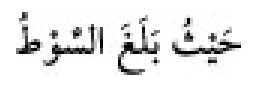
It is narrated from Ibn ‘Umar (may Allah be pleased with him) that the Messenger of Allah (peace and blessings be upon him) gave Zubayr the place where his horse ran. Zubayr (may Allah be pleased with him) raced his horse until it was exhausted, then he threw his whip. The Messenger of Allah (peace and blessings be upon him) said: “Give it to him from where his whip reached.”


Sa’id ibn Zayd, may Allah be pleased with him, narrated: The Messenger of Allah, peace and blessings be upon him, said: “Whoever revives dead land, it belongs to him. There is no right for the unjust claimant (one who plants a tree in another's land unjustly).”






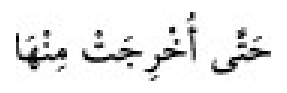
Yahya bin Urwa (may Allah be pleased with him) narrated from his father, who related that the Messenger of Allah (peace and blessings upon him) said: “Whoever cultivates dead land, it belongs to him.” Urwa mentioned the same hadith as before, and he said: Someone informed me that a person planted a tree on another’s land. These two individuals disputed before the Messenger of Allah (peace and blessings upon him). The Messenger of Allah (peace and blessings upon him) ruled in favor of the owner of the land, ordering the date palm owner to uproot his date palm from the land. The narrator said: I saw that tree being felled with axes; it was a date palm whose branches had grown out extensively. Ultimately, it was pulled up from the ground.



It was narrated, with a chain of transmission and meaning similar to the preceding hadith:
A man from the companions of the Messenger of Allah, peace be upon him, said:
I saw a man cutting off the root of a date palm tree while another man was harvesting dates from it.
It is strongly suspected that this man was Abu Sa’id al-Hudri.




It is narrated from Urve (may Allah be pleased with him) that he said:
I bear witness that the Messenger of Allah (peace and blessings upon him) decreed:
“The earth belongs to Allah, and His servants are His servants. Whoever cultivates a dead land, then he has more right to it.” This was brought to us regarding the prayers by the companions who transmitted from the Messenger of Allah (peace and blessings upon him).

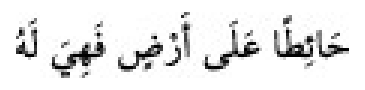
Semure (may Allah be pleased with him) narrated: The Messenger of Allah (peace and blessings upon him) said: "If someone surrounds a piece of land with a wall, then it belongs to him."


Hisham (may Allah be pleased with him) said: The meaning of the "unjust" vein mentioned in hadith number (3073) is that a person plants on another’s land and then claims ownership of it.
Malik said: The meaning of the “unjust” vein is every [item] unjustly taken, dug up, and planted.









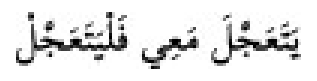
Abu Humayd as-Sa’idi, may Allah be pleased with him, narrated:
I accompanied the Messenger of Allah ﷺ on the campaign of Tabuk. When the Messenger of Allah ﷺ arrived at Wadi al-Qura, he encountered a woman standing in her orchard. The Messenger of Allah ﷺ said to his companions, “Estimate the yield of this orchard.”
The Messenger of Allah ﷺ himself estimated it as ten wasaqs. And he commanded the woman: "Memorize your produce from the orchard."
Then we set out and arrived at Tabuk. The king of ‘Ayla (John son of Rub’) presented the Messenger of Allah ﷺ with a white mule. The Messenger of Allah ﷺ clothed the king in a robe and dictated to him a letter instructing him (and his people) to sit in their coastal areas in exchange for the jizya they would pay.
Abu Humayd said: When we arrived at Wadi al-Qura, the Messenger of Allah ﷺ said to the woman: “How much fruit was there in your orchard?” The woman said: "The yield was ten wasaqs, as the Messenger of Allah ﷺ estimated." The Messenger of Allah ﷺ said: “I will hasten back to Medina. Whoever wishes to hasten with me, let him hasten.” [29]
EXPLANATION
The relevance of this hadith to the topic is that the woman mentioned had revived that orchard. The Messenger of Allah ﷺ left the orchard to her. For this reason, the hadith has been cited here.





According to a narration from Zaynab (the wife of the Prophet), may Allah be pleased with her:
She was combing and cleaning the hair of the Messenger of Allah, peace and blessings be upon him, and Osman ibn Affan’s wife and some other emigrant women were present. These women complained that their homes felt too small for them and that they would also be removed from them (upon the death of their husbands).
The Messenger of Allah, peace and blessings be upon him, commanded that the emigrated women be made heirs to their homes.
Then Abdullah ibn Mas’ud passed away, and his wife inherited his home in Medina.
EXPLANATION:
Permission was given for some houses to be built on vacant plots in Medina. Those who built houses and revived a neglected place became its owners.