Volume 3 – 100 – Visiting Graves


Abu Hurayrah, may Allah be pleased with him, narrated:
The Messenger of Allah, peace and blessings be upon him, said: “Whoever greets me with a greeting, Allah, the Exalted, does not return my soul to my body until He returns his greeting.”
COMMENTARY
Among those in its chain of narration is Abu Sahr, Humayd ibn Ziyad. Muslim collected it in his Sahih. Yahya bin Ma’in considered him sound once and weak another time.




Abū Hurayrah, may Allah be pleased with him, narrated that the Messenger of Allah, peace and blessings be upon him, said: “Do not turn your homes into graveyards. (Perform some of your prayers in them.) And do not make my grave a place of celebration or gathering. Rather, send blessings upon me, for indeed your blessings are conveyed to me wherever you may be.”






Narrated Rabia ibn-Hudayr (may Allah be pleased with him):
The narrator said, "I have never heard Talha bin Ubaydullah narrate any hadith except one." I asked, “What is that hadith?” Talha said, “He [the Prophet] pointed to the graves of the martyrs and said, ‘We set out with the Messenger of Allah (peace and blessings be upon him) and we went down from the black-stoned place on the walls of Medina. When we looked down, we saw graves in the bend of the valley.’ We asked, ‘O Messenger of Allah, are these the graves of our brothers?’ The Messenger of Allah (peace and blessings be upon him) said, ‘These are the graves of my companions.’ And when we reached the graves of the martyrs, he said, ‘These are the graves of our brothers.’” [76]
—
*Glossary:*
*Harra*: Refers to a place with black stones.
*Waqim*: Means a fortress or castle.
*Mahniya*: Refers to the bend or curve of a valley.


Abdullah ibn Umar (may Allah be pleased with him) narrated:
The Messenger of Allah (peace and blessings upon him) dismounted his camel at Batha in Zülhuleifa and performed prayer there. (Nafi said:) Abdullah ibn Umar would do likewise.




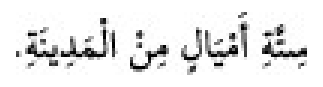
Malik (may Allah be pleased with him) narrated:
It is not appropriate for anyone returning from Medina to pass through Muarrat without performing a prayer, as much as possible. For I am informed that the Messenger of Allah (peace and blessings be upon him) spent some time there at night’s end.
Abu Dawud said: I heard Muhammad ibn Ishaq al-Madani say: Muarras is six miles (twelve thousand paces) from Medina.
**Note:** The subsequent bracketed numbers and references to other collections and commentaries are explanatory notes and not part of the direct translation of Malik's narration.
[27]. Bukhari, Book of Pilgrimage, Chapter on Whether the People of Complaint Should Spend the Night, Concerning the Pilgrimage, no. 461/3; Muslim Book of Pilgrimage, no. 1315.
[28]. Bukhari, Book of Prayer, Regarding Prayer in Mina, no. 53; Muslim, Book of Prayer, no. 694; Nasa’i, Book of Irregularities in the Prayer, Concerning Prayer in Mina, no. 1450.
[29]. Bukhari, Book of Irregularities in the Prayer, Regarding Prayer in Mina, no. 53/2; Muslim, Book of Prayers of a Traveler, Concerning Shortening the Prayer in Mina, no. 696; Tirmidhi, Book of Pilgrimage, Regarding Shortening the Prayer in Mina, no. 882; Nasa’i, Book of Shortened Prayer, Regarding Prayer in Mina, no. 1446.
[30]. Ibn Majah, Book of Rites (Manasik), Chapter on From Where One Throws at Aqabah Stone, no. 3031.
[31]. Muslim, Book of Pilgrimage, Concerning the Recommendation to Throw at Aqabah Stone, no. 1297; Nasa’i, Book of Pilgrimage, Regarding Mounting [a Camel] Towards the Jamarat (stones), no. 3064.
[32]. Muslim, Book of Pilgrimage, Concerning the Recommendation of Making a Stand at the Jamarat, no. 1299; Tirmidhi, Book of Pilgrimage, Regarding Throwing on the Day of Nahr (sacrifice), no. 894; Nasa’i, Book of Pilgrimage, Regarding the Time of Throwing at Aqabah Stone, no. 221; Ibn Majah, Book of Rites (Manasik), Regarding Throwing at the Jamarat During the Days of Tashriq, no. 3053.
[33]. Bukhari, Book of Pilgrimage, Regarding Throwing at the Jamarat, no. 462/3.
[34]. Bukhari, Book of Pilgrimage, Regarding Throwing at the Jamarat from the Belly of Wadi (ravine), no. 463/3 – 464; Muslim, Book of Pilgrimage, no. 1296; Nasa’i, Book of Pilgrimage, How One Throws at the Jamarat, no. 901; Ibn Majah,
[35]. Muwatta’, Book of Pilgrimage, Chapter on Dispensation, Regarding Throwing, no. 408/1-409; Tirmidhi, Book of Pilgrimage, Regarding Permission to Observe [the ritual] so as not to throw, no. 904; Nasa’i, Book of Pilgrimage, Regarding Throwing for the Observant, no. 3071; Ibn Majah, Book of Rites (Manasik), Regarding Delaying the Throwing of the Jamarat, no. 3036.
[36]. Nasa’i, Book of Pilgrimage, Chapter on the Number of Stands, no. 3080.
[37]. Tirmidhi, Book of Pilgrimage, Chapter on Building [the stands] and Shortening, no. 913; Bukhari, Book of Campaigns (Maghazi), no. 448/3, Book of Pilgrimage, Regarding Building and Shortening, no. 447/3; Muslim, Book of Pilgrimage, Regarding the Preference of Building over Shortening, no. 1304.
[38]. Bukhari, Book of Campaigns (Maghazi), Book of Pilgrimage, Regarding Building and Shortening at the Time of the Eclipse, no. 448; Muslim, Book of Pilgrimage, Regarding the Preference of Building over Shortening, no. 1304; Tirmidhi, Book of Pilgrimage, Regarding Building and Shortening, no. 913.
[39]. Bukhari, Book of Ablutions (Wudu), Chapter on the Water that Causes the Purity to Flow, no. 228/1; Muslim, Book of Pilgrimage, Regarding the Sunnah on the Day of Nahr (sacrifice) to throw, no. 1305; Tirmidhi, Book of Pilgrimage, Regarding Which Side of the Head One Begins Building On, no. 912.
[40]. Bukhari, Book of Pilgrimage, Chapter on Gold Before Building, no. 212/2; Nasa’i, Book of Pilgrimage, Regarding Throwing After the Water, no. 3069; Ibn Majah, Book of Rites (Manasik), Chapter on Whoever Begins a Rite Before, no. 3050; Muslim, Book of Pilgrimage, Regarding One Who Builds Before Nahr, no. 1307.
[41]. Bukhari, Book of Umrah, Chapter on He Who Performs Umrah Before Hajj, no. 2/3.
[42]. Nasa’i, Book of Pilgrimage, Chapter on Umrah in Ramadan, no. 939; Tirmidhi, Book of Pilgrimage, Chapter on Umrah in Ramadan, no. 939; Ibn Majah, Book of Rites (Manasik), Book of Umrah, no. 2993.
[43]. Ibn Majah, Book of Pilgrimage, Chapter on Umrah in Ramadan, no. 2993.
[44]. Bukhari, Book of Campaigns (Maghazi), Chapter on the Number the Prophet [peace be upon him] Performed Umrah, no. 478 / 2; Muslim, Book of Pilgrimage, Regarding the Statement of the Number of Umrahs of the Prophet [peace be upon him], no. 1255; Tirmidhi, Book of Pilgrimage, Chapter on Umrah in Rajab, no. 936 – 937.
[45]. Tirmidhi, Book of Pilgrimage, Chapter on How Many Umrahs Did the Prophet [peace be upon him] Perform, no. 478 /2 ; Ibn Majah, Book of Pilgrimage, Regarding How Many Umrahs Did the Prophet [peace be upon him] Perform, no. 3003.
[46]. Bukhari, Book of Campaigns (Maghazi), Book of the Campaign of Hudaybiyyah, no. 478 /3; Muslim, Book of Pilgrimage, Regarding the Statement of the Number of Umrahs of the Prophet [peace be upon him], N. 1253; Tirmidhi, Book of Pilgrimage, Chapter on How Many Hajj Did the Prophet [peace be upon him] Perform, no. 815.
[47]. Bukhari, Book of Umrah, Chapter on Umrah from Tan’im, no. 4/3; Tirmidhi, Book of Pilgrimage, Chapter on Umrah from al-Jiranah, no. 934; Ibn Majah, Book of Pilgrimage, no. 2999.
[48]. Tirmidhi, Book of Pilgrimage, Chapter on Umrah from al-Jiraneh, no. 935; Nasa’i, Book of Pilgrimage, Regarding Entering Mecca at Night, no. 2866.
[49]. Bukhari, Book of Campaigns (Maghazi), Book of the Truce of Hudaybiyyah; Muslim, Book of Jihad, Regarding the Truce of Hudaybiyyah, no. 1783; Bukhari narrated a similar account as a marginal note.
[50]. Ibn Majah, Book of Rites (Manasik), Chapter on Visiting the House, no. 3060.
[51]. Muslim, Book of Pilgrimage, Chapter on the Obligation of Tawaf al-Wada’ (farewell circumambulation), no. 1327; Nasa’i,
[52]. Ahmed b. Hanbel: Musnad, no. 38/6; Ibn Majah, Book of Rites (Manasik), Chapter on the One Who Travels to the Heart [of the city], no. 4012; Tirmidhi, Book of Pilgrimage, Chapter on Regarding the Expression, no. 391; Bukhari, Book of Pilgrimage, Chapter on Visiting on the Day of Nahr, no. 453; Muslim, Book of Pilgrimage, Chapter on the Obligation of Tawaf al-Wada’, no. 1211; Nasa’i, Book of Menstruation (Hayz), Chapter on The Woman's Bathing After the Expression, no. 391; Imam Malik, Book of Pilgrimage, Chapter on the Expression, no. 412 – 413.
[53]. Bukhari, Book of Pilgrimage, Chapter on the One Who is Accounted (Muhassab), no. 471/3; Muslim, Book of Pilgrimage, Concerning the Recommendation of Descending at al-Muhassab, no. 1311; Tirmidhi, Book of Pilgrimage, Regarding He Who Descends from Abta, no. 923; Nasa’i, Ibn Majah, Book of Pilgrimage, Regarding Descent to al-Muhassab, no. 3067.
[54]. Muslim, Book of Pilgrimage, Concerning the Recommendation of Descending at al-Muhassab, no. 1313.
[55]. Bukhari, Book of Pilgrimage, no. 310; Muslim, Book of Pilgrimage, no. 1275.
[56]. Bukhari, Book of Pilgrimage, Muslim Book of Pilgrimage, no. 1275.
[57]. Bukhari, Book of Nudity (Nuzur), no. 454/3; Muslim, Book of Pilgrimage, Regarding One Who Builds a Heart on Nahr, no. 1306; Tirmidhi, Book of Pilgrimage, Regarding He Who Builds a Heart That Sacrifices, no. 916; Ibn Majah, Book of Rites (Manasik), Regarding One Who Begins a Rite Before, no. 3051.
[58]. Nasa’i, Book of Pilgrimage, Chapter on Where the Rak'at of Tawaf is Performed, no. 2958; Ibn Majah, Book of Rites (Manasik), Chapters – Two Rak'ahs at the End of Tawaf, no. 2958.
[59]. Bukhari, Book of Funerals (Janā’iz), no. 76; Muslim, Book of Pilgrimage, Regarding the Sanctity of Mecca and its Game, no. 1355; Nasa’i, Book of Pilgrimage, Chapter on the Sanctity of Mecca, no. 2877; Ibn Majah, Book of Pilgrimage, Regarding the Excellence of Mecca, no. 3109.
[60]. Muslim, Book of Pilgrimage, Chapter on the Sanctification of Mecca, no. 1335.
[61]. Tirmidhi, Book of Hajj, Chapter on Mina, no. 881; Ibn Majah, Book of Rites (Manasik), Chapter on Descent to Mina, no. 3006.
[62]. Bukhari, Book of Major Narrations (Tarikh al-Kabir)
[65] . Muslim, Kitāb al-Hajj, Chapter on the Obligation of Sacrifice at Mina, Hadith no. 1316; Ahmad ibn Hanbal, Musnad, Hadith no. 2946
[66] . Bukhari, Kitāb al-‘Umra, Hadith no. 87/5; Muslim, Kitāb al-’Ikama, Book of Recitation in the Night Prayer, Hadith no. 1352; Tirmidhi, Kitāb al-Hajj, Book 103, Hadith no. 949; Nasa'i, Hadith no. 1455; Ibn Majah, Kitāb al-’Ikama, Book 76, Hadith no. 1073
[67] . Bukhari, Kitāb al-Hajj, Chapter on Illuminating the House and its Surroundings, Book of the Farewell Pilgrimage, Hadith no. 371/3; Muslim, Book on Entering the Ka'ba, Hadith no. 1329; Malik, Muwatta’, Kitāb al-Hajj, Chapter on Praying at the House, Hadith no. 398/1; Tirmidhi, Kitāb al-Hajj, Book 39, Hadith no. 874; Nasa'i, Kitāb al-Masajid, Chapter on Praying in the Ka'ba, Hadith no. 33/2
[68] . Bukhari, Kitāb al-Maghazi, Hadith no. 375/3
[69] . Tirmidhi, Kitāb al-Hajj, Book on the Excellence of Tawaf, Hadith no. 876; Nasa'i, Kitāb al-Hajj, Chapter on Entering the Ka'ba, Hadith no. 873; Ibn Majah, Kitāb al-Hajj, Chapter on Entering the Ka'ba, Hadith no. 3063
[70] . Tirmidhi, Kitāb al-Hajj, Chapter on Entering the Ka'ba, Hadith no. 873; Ibn Majah, Kitāb al-Hajj, Chapter on Entering the Ka'ba, Hadith no. 3063
[71] . Muslim, Kitāb al-Hajj, Hadith no. 1397; Nasa'i, Kitāb al-Masajid, Hadith no. 701; Ibn Majah, Kitāb al-’Ikama, Chapter on Praying in the Masjid of Al-Aqsa, Hadith no. 14049
[72] . Bukhari, Kitāb Fazail al-Madina, Book 1; Muslim, Kitāb al-Hajj, Chapter on the Excellence of Medina, Hadith no. 1370; Tirmidhi, Kitāb Abwab al-Wala’ wa al-Hibba, Chapter on Those Who Turn Away from Others, Hadith no. 2128; Ibn Majah, Ahmad ibn Hanbal, Musnad, Hadith no. 126/1
[73] . Ahmad ibn Hanbal narrated this hadith in his Musnad with number 1460.
[74] . Ahmad ibn Hanbal; Musnad, Hadith no. 1443
[75] . Bukhari, Kitāb Fazail al-Salat fi Bab Masjid Quba, Hadith no. 76/2; Muslim, Kitāb al-Hajj, Chapter on the Excellence of the Masjid of Quba, Hadith no. 1399; Nasa'i, Kitāb al-Masajid, Chapter on the Masjid of Quba, Hadith no. 699
[76] . Ahmad ibn Hanbal, Musnad, Hadith no. 1387
[77] . Bukhari, Kitāb al-Hajj, Chapter on Irk, Hadith no. 166/2; Nasa'i, Kitāb al-Hajj, Hadith no. 2662; Muslim, Kitāb al-Hajj, Hadith no. 1375
[1]. The time for the standing at Arafat begins on the Day of Arafah after midday. This is evidenced by the hadith narrated from Ibn Umar.
[2]. Nasa'i, Kitāb al-Hajj, Chapter on the Sermon on the Day of Arafah, Hadith no. 3011; Bukhari, Kitāb Tarikh al-Kabir, Hadith no. 137-138
[3]. Tirmidhi, Kitāb al-Hajj, Chapter on Standing at Arafat and Supplication, Hadith no. 883; Nasa'i, Kitāb al-Hajj, Chapter on Raising the Hands in Supplication, Hadith no. 3017; Ibn Majah, Chapter on the Standing at Arafat, Hadith no. 3011; Jami’ al-Usul, Hadith no. 1522
[4]. Jami' ul-Usul, Hadith no. 1539; Bukhari, Hadith no. 417; Muslim, Kitāb al-Hajj, Book on the Recommendation of Expediting the Hajj, Hadith no. 1282; Nasa'i, Hadith no. 3022; Darimi, Hadith no. 60; Ahmad ibn Hanbal, Hadith no. 211
[5]. Muwatta’, Kitāb al-Hajj, Chapter on the Prayer at Muzdalifah, Hadith no. 400/1; Nasa'i, Kitāb al-Hajj, Chapter on Descending after Departing from Arafah, Hadith no. 3028; Kitāb al-Mawaqit, Hadith no. 610; Ibn Majah, Kitāb al-Hajj, Chapter on Descending after Departing from Arafah, Hadith no. 3028; Kitāb al-Mawaqit, Hadith no. 610; Ibn Majah, Kitāb al-Hajj, Chapter on Descending between Arafat, Hadith no. 3019; Bukhari, Kitāb Wudu’, Chapter on the Perfection of Ablution, Hadith no. 211; Kitāb al-Hajj, Chapter on Departing from Arafat, Hadith no. 1280a
[6]. Tirmidhi, Kitāb al-Hajj, Book 54, Hadith no. 885
[7]. Muwatta’, Kitāb al-Hajj, Hadith no. 392; Bukhari, Kitāb al-Maghazi, Chapter on the Farewell Pilgrimage, Hadith no. 413-414/2; Kitāb al-Hajj, Chapter on the Seizing (of the Jamarat); Kitāb al-Jihad, Chapter on Hastening the Pace; Muslim, Kitāb al-Hajj, Chapter on Departing from Arafat, Hadith no. 1286; Nasa'i, Kitāb al-Hajj, Chapter on How to Travel from Arafah, Hadith no. 3026; Ibn Majah, Kitāb al-Hajj, Chapter on Departing from Arafah, Hadith no. 3017
[8]. Bukhari, Kitāb Wudu’, Hadith no. 211/1, Kitāb al-Hajj, Chapter on Combining the Two Prayers, Hadith no. 1280; Muslim, Kitāb al-Hajj; Nasa'i, Hadith no. 610 – 3028; Jami’ ul-Usul, Hadith no. 1544
[9]. Bukhari, Kitāb al-Hajj, Chapter on Those Who Combine [Prayers], Hadith no. 201/2; Muslim, Kitāb Salat, Hadith no. 703, Kitāb al-Hajj, Chapter on Departing from, Hadith no. 1286; Nasa'i, Kitāb al-Hajj, Chapter on Combining the Two Prayers, Hadith no. 3033
[10]. Muslim, Kitāb al-Hajj, Chapter on Departing from Arafat, Hadith no. 1286; Tirmidhi, Kitāb al-Hajj, Book 54, Hadith no. 887; Nasa'i, Kitāb al-Hajj, Chapter on Combining the Two Prayers, Hadith no. 3033
[11]. Muslim, Kitāb al-Hajj, Chapter on Departing from Arafat, Hadith no. 1286; Tirmidhi, Kitāb al-Hajj, Book 54, Hadith no. 887; Nasa'i, Kitāb al-Hajj, Chapter on Combining the Two Prayers at Muzdalifah, Hadith no. 3033
[12]. Tirmidhi, Kitāb al-Hajj, Chapter on All of Arafah is a Place of Standing, Hadith no. 885; Ibn Majah, Kitāb al-Manasik, Chapter on the Standing at Arafat, Hadith no. 3010 Jami’ ul-Usul, Hadith no. 1523
[13]. Ahmad ibn Hanbal, Musnad: Hadith no. 1455; Jami’ al-Usul, Hadith no. 1522; Muslim, Hadith no. 1218; Ibn Majah, Hadith no. 3048
[14]. Bukhari, Kitāb al-Hajj, Chapter on Those Who Hasten Their Family's Departure, Hadith no. 424/3; Kitāb Fazail al-Ashab al-Nabiyyi sallallahu aleyhi wa sellem, Chapter on the Days of Ignorance; Tirmidhi, Kitāb al-Hajj, Chapter on Departing from Jamarat, Hadith no. 896; Nasa'i, Kitāb al-Hajj, Chapter on the Time of Departure, Hadith no. 3050; Ibn Majah, Kitāb al-Hajj, Chapter on Those Who Hasten to Throw Stones at the Jamarat, Hadith no. 3022; Darimi, Kitāb al-Hajj, Chapter on the Time of Departing from Muzdalifah, Hadith no. 60/2; Ahmad ibn Hanbal, Musnad, Hadith no. 14-29/1
[15]. Bukhari, Kitāb al-Hajj, Chapter on Those Who Expedite Their Family's Departure at Night, Hadith no. 421/3; Muslim, Kitāb al-Hajj, Chapter on the Recommendation of Increasing the Delay of Women, Hadith no. 1291; Tirmidhi, Kitāb al-Hajj, Chapter on Expediting the Departure of Women and Children at Night, Hadith no. 892 – 893; Nasa'i, Kitāb al-Hajj, Chapter on Permission to Do So for Women, Hadith no. 30666; Ibn Majah, Kitāb al-Hajj, Chapter on Those Who Hasten from Jamarat to Throw Stones at the Jamarat, Hadith no. 3025
[16]. Jami’ ul-Usul, Hadith no. 1548; Tirmidhi, Hac, Book 58, Hadith no. 892; Nasa'i, Kitāb al-Hajj, Chapter on Prohibition from Throwing the Stone of Aqaba, Hadith no. 3067
[17]. Nasa'i, Kitāb al-Hajj, Chapter on Permission to Do So for Women, Hadith no. 3068; Ibn Majah, Kitāb al-Manasik, Book on Those Who Hasten from Jamarat to Throw Stones at the Jamarat, Hadith no. 3027
[18]. Nasa'i, Kitāb al-Hajj, Chapter on Permission for the Weak, Hadith no. 3053; Bukhari, Kitāb Wudu’, Hadith no. 211/1, Kitāb al-Hajj, Chapter on Combining the Two Prayers, Hadith no. 1280; Muslim, Kitāb al-Hajj; Nasa'i, Hadith no. 610 – 3028; Jami’ ul-Usul, Hadith no. 1553
[19]. Tirmidhi, Kitāb al-Hajj, Book 54, Hadith no. 885; Jami’ ul-Usul, Hadith no. 1543; Nasa'i, Kitāb al-Hajj, Chapter on Departing from Arafat, Hadith no. 3026
Okay, here is the translation of the provided text, aiming for faithfulness to the original Arabic phrasing and structure as much as possible within English grammar:
[21]. Ibn Maja, Book of Hajj, Chapter on Gathering at a Designated Place, Hadith No. 3023.
[22]. Buhari, Book of Manners, Limits, Diyat, Book of Expeditions, Book of Hajj, Chapter on the Sermon, Muslim Book of Faith, Hadith No. 66; Jami’ al-Usul, Hadith No. 1765.
[23]. Bukhari, Book of Unification, Expeditions, Interpretation, Creation of Souls, Hadith No. 2; Muslim, Book of Oaths, Hadith No. 29; Ahmad ibn Hanbal, Musnad, Hadith No. 69.
[24]. Tirmidhi, Book of Hajj, Chapter on the One Who Attains Leadership While Gathering, Hadith No. 889; Nasa’i, Book of Hajj, Chapter on the One Who Misses the Morning Prayer, Hadith No. 3047; Ibn Maja, Book of Hajj, Chapter on Those Who Arrive at Arafat with Hearts Filled with Reverence, Hadith No. 3015; Darimi, Book of Hajj, Chapter on Those Who Complete the Pilgrimage, Hadith No. 59/2.
[25]. Tirmidhi, Book of Hajj, Chapter on the One Who Attains Leadership While Gathering, Hadith No. 891; Nasa’i, Book of Hajj, Chapter on the One Who Misses the Morning Prayer, Hadith No. 3043; Ibn Maja, Book of Hajj, Chapter on Those Who Arrive at Arafat with Hearts Filled with Dawn Reverence, Hadith No. 3016; Darimi, Book of Hajj, Chapter on That Which Completes the Pilgrimage, Hadith No. 59/2; Ahmad ibn Hanbal, Musnad, Hadith Nos. 261-262.
[26]. Nasa’i, Book of Hajj, Chapter on What is Mentioned Concerning Mina, Hadith No. 2999.
[27]. Bukhari, Book of Hajj, Chapter on Whether Those Who Are Sick Should Spend the Night, Sick Pilgrims, Hadith No. 461/3; Muslim, Book of Hajj, Hadith No. 1315.
[28]. Bukhari, Book of Hajj, Chapter on Prayer in Mina, Hadith No. 53; Muslim, Book of Prayers, Hadith No. 694; Nasa’i, Book of Shortening the Prayer in Mina, Hadith No. 1450.
[29]. Bukhari, Book of Shortening the Prayer, Chapter on Prayer in Mina, Hadith No. 53/2; Muslim, Book of Prayers for Travelers, Chapter on Shortening the Prayer in Mina, Hadith No. 696; Tirmidhi, Book of Hajj, Chapter on Shortening the Prayer in Mina, Hadith No. 882; Nasa’i, Book of Shortening the Prayer, Chapter on Prayer in Mina, Hadith No. 1446.
[30]. Ibn Maja, Book of Rites, Chapter on From Where One Throws at the Pillar of Jamarat al-Aqaba, Hadith No. 3031.
[31]. Muslim, Book of Hajj, Chapter on the Recommendation to Throw at Jamarat al-Aqaba, Hadith No. 1297; Nasa’i, Book of Hajj, Chapter on Mounting [a Camel] Towards the Pillars, Hadith No. 3064.
[32]. Muslim, Book of Hajj, Chapter on the Recommendation to Make a Dwelling by the Pillars, Hadith No. 1299; Tirmidhi, Book of Hajj, Chapter on Throwing on the Day of Nahr, Hadith No. 894; Nasa’i, Book of Hajj, Chapter on the Time for Throwing at Jamarat al-Aqaba, Hadith No. 221; Ibn Maja, Book of Rites, Chapter on Throwing at the Pillars During the Days of Tashriq, Hadith No. 3053.
[33]. Bukhari, Book of Hajj, Chapter on Throwing at the Jamarat, Hadith No. 462/3.
[34]. Bukhari, Book of Hajj, Chapter on Throwing at the Jamarat from Within Mina Valley, Hadith Nos. 463/3-464; Muslim, Book of Hajj, Hadith No. 1296; Nasa’i, Book of Hajj, Chapter on How One Throws at the Jamarat, Hadith No. 901; Ibn Maja, [Hadith incomplete in source].
[35]. Muwatta’, Book of Hajj, Chapter on Relaxation, Regarding Throwing, Hadith Nos. 408/1-409; Tirmidhi, Book of Hajj, Chapter on Relaxation for Avoiding Throwing, Hadith No. 904; Nasa’i, Book of Hajj, Chapter on Throwing with Relaxation, Hadith No. 3071; Ibn Maja, Book of Rites, Chapter on Delaying the Throwing of the Jamarat, Hadith No. 3036.
[36]. Nasa’i, Book of Hajj, Chapter on the Number of Pillars, Hadith No. 3080.
[37]. Tirmidhi, Book of Hajj, Chapter on Building and Shortening, Hadith No. 913; Bukhari, Book of Expeditions, Hadith No. 448/3, Book of Hajj, Chapter on Building and Shortening, Hadith No. 447/3; Muslim, Book of Hajj, Chapter on Preferring Building over Shortening, Hadith No. 1304.
[38]. Bukhari, Book of Expeditions, Book of Hajj, Chapter on Building and Shortening at the Time of Illumination, Hadith No. 448; Muslim, Book of Hajj, Chapter on Preferring Building over Shortening, Hadith No. 1304; Tirmidhi, Book of Hajj, Chapter on Building and Shortening, Hadith No. 913.
[39]. Bukhari, Book of Impurity, Chapter on the Water That Ascends with the Urine, Hadith No. 228/1; Muslim, Book of Hajj, Chapter on the Sunna on the Day of Nahr to Throw, Hadith No. 1305; Tirmidhi, Book of Hajj, Chapter on Which Side of the Head One Begins in Building, Hadith No. 912.
[40]. Bukhari, Book of Hajj, Chapter on Adorning Before Building, Hadith No. 212/2; Nasa’i, Book of Hajj, Chapter on Throwing After Water, Hadith No. 3069; Ibn Maja, Book of Rites, Chapter on He Who Adorns Before, Hadith No. 3050; Muslim, Book of Hajj, Chapter on One Who Builds Before the Day of Nahr, Hadith No. 1307.
[41]. Bukhari, Book of Umra, Chapter on One Who Performs Umra Before Hajj, Hadith No. 2/3.
[42]. Nasa’i, Book of Hajj, Chapter on Umra in Ramadan, Hadith No. 939; Tirmidhi, Book of Hajj, Chapter on Umra in Ramadan, Hadith No. 939; Ibn Maja, Book of Rites, Book of Umra, Hadith No. 2993.
[43]. Ibn Maja, Book of Hajj, Chapter on Umra in Ramadan, Hadith No. 2993.
[44]. Bukhari, Book of Expeditions, Chapter on How Many Umras the Prophet (peace and blessings be upon him) Performed, Hadith No. 478 / 2; Muslim, Book of Hajj, Chapter on Clarifying the Number of the Prophet’s Umras (peace and blessings be upon him), Hadith No. 1255; Tirmidhi, Book of Hajj, Chapter on How Many Umras the Prophet (peace and blessings be upon him) Performed, Hadith No. 936 – 937.
[45]. Tirmidhi, Book of Hajj, Chapter on How Many Umras the Prophet (peace and blessings be upon him) Performed, Hadith No. 478 /2 ; Ibn Maja, Book of Hajj, Chapter on How Many Umras the Prophet (peace and blessings be upon him) Performed, Hadith No. 3003.
[46]. Bukhari, Book of Expeditions, Book of the Hudaybiyya Treaty, Hadith No. 478 /3; Muslim, Book of Jihad, Chapter on The Hudaybiyya Treaty, Hadith No. 1783; Bukhari relates a similar narration as a marginal note.
[47]. Bukhari, Book of Umra, Chapter on the Umra of Tan’im, Hadith No. 4/3; Tirmidhi, Book of Hajj, Chapter on The Umra from Tan’im, Hadith No. 934; Ibn Maja, Book of Hajj, Hadith No. 2999.
[48]. Tirmidhi, Book of Hajj, Chapter on The Umra from al-Jiranah, Hadith No. 935; Nasa’i, Book of Hajj, Chapter on Entering Mecca at Night, Hadith No. 2866.
[49]. Ibn Maja, Book of Hajj, Chapter on Visiting the House, Hadith No. 3060.
[50]. Muslim, Book of Hajj, Chapter on The Obligation of Tawaf of Farewell, Hadith No. 1327; Nasa’i, [Hadith incomplete in source].
[51]. Ahmad ibn Hanbal: Musnad, Hadith No. 38/6; Ibn Maja, Book of Rites, Chapter on Those Who Depart with Hearts Filled with Reverence, Hadith No. 4012; Tirmidhi, Book of Hajj, Chapter on Regarding Departure, Hadith No. 391; Bukhari, Book of Hajj, Chapter on Visiting on the Day of Nahr, Hadith No. 453; Muslim, Book of Hajj, Chapter on The Obligation of Tawaf of Farewell, Hadith No. 1211; Nasa’i, Book of Menstruation, Chapter on Women's Bleeding After Departure, Hadith No. 391; Imam Malik, Book of Hajj, Chapter on Departure, Hadith Nos. 412-413.
[52]. Bukhari, Book of Hajj, Chapter on The One Who is Accounted, Hadith No. 471/3; Muslim, Book of Hajj, Chapter on the Recommendation of Descending by the Muhassab, Hadith No. 1311; Tirmidhi, Book of Hajj, Chapter on He Who Descends from al-Abta, Hadith No. 923; Nasa’i, Ibn Maja, Book of Hajj, Chapter on Descending from the Muhassab, Hadith No. 3067.
[53]. Muslim, Book of Hajj, Chapter on the Recommendation of Descending by the Muhassab, Hadith No. 1313.
[54]. Bukhari, Book of Hajj, Hadith No. 45; Ibn Maja, Book of Hajj, Hadith No. 26; Ahmad ibn Hanbal; Musnad, Hadith No. 237/2.
I have attempted to maintain the original structure and terminology as much as possible while ensuring clarity in English. Let me know if you need any adjustments or further clarification!
[56]. Bukhari, Book of Hajj, Chapter on the Descent of the Prophet, may peace be upon him, Mecca, 180/2; Muslim, Book of Hajj, Chapter on Preferring the Descent with the Congregation, 1314.
[57]. Bukhari, Book of Hajj, no. 310; Muslim, Book of Hajj, no. 1275.
[58]. Bukhari, Book of Hajj; Muslim, Book of Hajj, no. 1275.
[59]. Bukhari, Book of Gifts, no. 454/3; Muslim, Book of Hajj, Chapter on the One Who Creates a Heart for Slaughtering, no. 1306; Tirmidhi, Book of Hajj, Chapter on He Who Creates a Heart that Sacrifices, no. 916; Ibn-i Maja, Book of Hajj, Chapter on He Who Followed a Preceding Rite, no. 3051.
[60]. Nasa’i, Book of Hajj, Chapter on Where the Rakat of Tawaf are Prayed, no. 2958; Ibn-i Maja, Book of Hajj, Chapter on the Two Rakats of Beginning the Tawaf, no. 2958.
[61]. Bukhari, Book of Funerals, no. 76; Muslim, Book of Hajj, Chapter on the Sanctity of Mecca and its Game, no. 1355; Nasa’i, Book of Hajj, Chapter on the Sanctity of Mecca, no. 2877; Ibn-i Maja, Book of Hajj, Chapter on the Excellence of Mecca, no. 3109.
[62]. Muslim, Book of Hajj, Chapter on the Prohibition of Mecca, no. 1335.
[63]. Tirmidhi, Book of Hajj, Chapter on Mina, no. 881; Ibn-i Maja, Book of Rites, Chapter on Descent at Mina, no. 3006.
[64]. Bukhari, Book of History, Major.
[65]. Muslim, Book of Hajj, Chapter on the Obligation of Miballat in Mina, no. 1316; Ahmed b. Hanbal, Musnad, no. 2946.
[66]. Bukhari, Book of Umra, no. 87/5; Muslim, Book of Observance of Prayer, Chapter on Recitation in the Night Prayer, no. 1352; Tirmidhi, Book of Hajj, Chapter on 103, no. 949; Nasa’i, no. 1455; Ibn-i Maja, Book of Observance of Prayer, Chapter on 76, no. 1073.
[67]. Bukhari, Book of Hajj, Chapter on the Covering of the House and Expeditions, Chapter on the Farewell Pilgrimage, no. 371/3; Muslim, Chapter on Entering the Ka’bah, no. 1329; Malik, Muwatta, Book of Hajj, Chapter on Praying in the House, no. 398/1; Tirmidhi, Book of Hajj, Chapter on 39, no. 874; Nasa’i, Book of Mosques, Chapter on Praying in the Ka’bah, no. 33/2.
[68]. Bukhari, Book of Expeditions, no. 375/3.
[69]. Tirmidhi, Book of Hajj, Chapter on Excellence of Tawaf, no. 876; Nasa’i, Book of Hajj, Chapter on Entering the Ka’bah, no. 873; Ibn-i Maja, Book of Rites, Chapter on Entering the Ka’bah, no. 3063.
[70]. Tirmidhi, Book of Hajj, Chapter on Entering the Ka’bah, no. 873; Ibn-i Maja, Book of Rites, Chapter on Entering the Ka’bah, no. 3063.
[71]. Muslim, Book of Hajj, no. 1397; Nasa’i, Book of Mosques, no. 701; Ibn-i Maja, Book of Observance of Prayer, Chapter on Praying in the Al-Aqsa Mosque, no. 14049.
[72]. Bukhari, Book of Excellence of Medina, no. 1; Muslim, Book of Hajj, Chapter on Excellence of Medina, no. 1370; Tirmidhi, Book of Origins of Deviation and Innovation, Chapter on He Who Turns Away from Others, no. 2128; Ibn-i Maja, Ahmed b. Hanbal, Musnad, no. 126/1.
[73]. Ahmed bin Hanbal narrated this hadith in his Musnad with number 1460.
[74]. Ahmed b. Hanbal; Musnad, no. 1443.
[75]. Bukhari, Book of Excellence of Prayer in the Masjid al-Quba, no. 76/2; Muslim, Book of Hajj, Chapter on Excellence of the Masjid al-Quba, no. 1399; Nasa’i, Book of Mosques, Chapter on the Masjid al-Quba, no. 699.
[76]. Ahmed b. Hanbal, Musnad, no. 1387.
[77]. Bukhari, Book of Hajj, Chapter on Zatt Irk, no. 166/2; Nasa’i, Book of Hajj, no. 2662; Muslim, Book of Hajj, no. 1375.
“I will depart when the time comes,” he replied. When Ibn-i Umar intended to dismount, they said, “The sun has not reached its zenith yet.”
Ibn-i Umar said: "(A little while later) Has it reached its zenith?" They replied, "No, it has not." The narrator says that when they said, “The sun has reached its zenith,” Ibn-i Umar proceeded to the place of standing. [1]
It is narrated that he saw the Messenger of Allah, may peace be upon him, standing at Arafat on a red camel and delivering a sermon. [2]
I am the messenger sent by the Messenger of Allah, may peace be upon him. He commands you to perform your standing in the places where you are stationed. You are following an established practice from your forefather Abraham. [3]
I have not seen anyone running with raised front feet of animals until they reach Mina. [4]
I said: O Messenger of Allah, the time for prayer has come. The Messenger of Allah, may peace be upon him, replied, “The prayer is later (in Muzdalifah).” He mounted his camel and went to Muzdalifah, performed the evening prayer, and the people dismounted their camels and did not untie their loads until he performed the night prayer, then they untied them. Muhammad bin Kasir added: I asked, "How did you proceed when you dawned on the day of sacrifice?" There was Fadil present in the company of the Messenger of Allah, may peace be upon him. He said, “I walked with the people of Quraysh to Mina, among those who were ahead.” [5]
The Messenger of Allah, may peace be upon him, mounted Usama bin Zayd on his camel. He was proceeding with a moderate pace. People were striking the sides of their camels and racing them. The Messenger of Allah, may peace be upon him, without turning to them, said, “O people, proceed in a measured way.” When the sun set and it was time to return from Arafat (to Muzdalifah). [6]
I was sitting, and Usama bin Zayd was asked about how the Messenger of Allah, may peace be upon him, walked when returning from Arafat on the Farewell Pilgrimage. Usama bin Zayd said: He walked between a slow and fast pace. When there was an open space, he would walk faster. Hisham said that Nass (the mentioned walking) is faster than Onak (the mentioned walking).
He said, “The prayer is later (in Muzdalifah).” He mounted his camel. When he arrived in Muzdalifah, he dismounted from his camel, performed a complete ablution, gave the adhan, and performed the evening prayer. Then each person had their camel settle where they would stay. The adhan was given for the night prayer, and he performed it. He did not perform any sunnah prayers between the evening and night prayers. [8]
The Messenger of Allah, may peace be upon him, combined the evening and night prayers in Muzdalifah and performed them together. [9]
We returned with Ibn-i Umar from Arafat. When we arrived at Muzdalifah, he prayed for us two rakats with one adhan for the evening and two rakats for the night prayer. Ibn-i Umar said when he finished praying: The Messenger of Allah, may peace be upon him, performed it for us in this manner. [10]
The Messenger of Allah, may peace be upon him, never prayed any prayer except at its proper time.
I have not seen him combine them, except for the time when he combined the evening and night prayers.
The Messenger of Allah, peace and blessings be upon him, combined the evening and night prayers with deferred combination, and on the following day, he performed the dawn prayer before its time. [11]
“This is Guzah, it is a halting place. It is a place for combining two prayers, every side of it is a halting place. I slaughtered my sacrifice here. Every part of Mina is a place to slaughter sacrifices. Slaughter your sacrifices in your tents (lodgings).” [12]
The Messenger of Allah, peace and blessings be upon him, said, “Every part of Arafat is a halting place. Every part of Mina is a place for sacrificing. Every part of Muzdalifah is a halting place. The wide roads of Mecca are both paths and places to slaughter sacrifices.” [13]
The Messenger of Allah, peace and blessings be upon him, descended to (Mina) before sunrise, opposing them. [14]
On the night of Muzdalifah, I was among those sent ahead by the people of the Messenger of Allah, peace and blessings be upon him, who were weak. [15]
Abu Dawud said: “Lath” means to strike without causing pain. [16]
The Messenger of Allah, peace and blessings be upon him, would send forth the weak among his people in the darkness of night and command them – that is, he forbade them from throwing stones until sunrise. [17]
On the day of sacrifice, the Messenger of Allah, peace and blessings be upon him, commanded Umm Salama to throw the pebbles at the Jamarat before dawn, then Umm Salama descended (to Mina), and it was a day when the Messenger of Allah, peace and blessings be upon him, was with Umm Salama. [18]
He said, “We used to do it like that in the era of prosperity.” [19]
The Messenger of Allah, peace and blessings be upon him, descended from Muzdalifah slowly, commanded his companions to throw pebbles the size of chickpeas, and quickened the pace of his camel in the narrow valley. [20]
In his Farewell Pilgrimage (Mina), the Messenger of Allah, peace and blessings be upon him, stood between the Jamarat and asked, “What day is this?” The companions said, "It is a feast day." The Messenger of Allah, peace and blessings be upon him, replied, “This is the Day of Hajj Akbar.” [21]
Abu Bakr, may Allah be pleased with him, appointed me to announce among those sent forth to proclaim that no polytheist would perform pilgrimage after this year, that no one would circumambulate the Ka’bah naked, and that the Day of Sacrifice is the Day of Hajj Akbar. And Hajj Akbar is (hajj) performed with its conditions.” [22]
It was narrated in a report consistent in meaning with the preceding hadith. [23]
Abu Dawud said: Mihran and Sufyan also transmitted it in this manner, repeating the phrase “Hajj” twice. Yahya bin Said al-Qattan transmitted from Sufyan, reciting the word "Hajj" once. [24]
Referring to Muzdalifah, I came to the Messenger of Allah, peace and blessings be upon him, at the halting place and said, “O Messenger of Allah, I have come from Mount Tayif, my means are weary. I have exhausted myself. By God, I have not left any sand dune on which I did not halt; is my pilgrimage complete?” The Messenger of Allah, peace and blessings be upon him, replied, "Whoever reaches us (on the morning of Eid) and halts in Arafat before that, whether at night or during the day, his pilgrimage is complete, and he shaves or cuts his hair.” [25]
The Messenger of Allah, peace and blessings be upon him, delivered a sermon to us in Mina. Our hearing was so sharp that we heard what he said while we were in our tents. He began teaching the companions the actions of Hajj. At this time, he raised the tips of his index fingers to his ears to make his voice reach further, then he said, “Throw pebbles the size of a fist.” Then he commanded the Muhajirun, and they were stationed in front of the mosque. He commanded the Ansar, and they were stationed behind the mosque. Then others descended and took their places. [26]
Abbas, may Allah be pleased with him, asked the Messenger of Allah, peace and blessings be upon him, for permission to stay in Mecca at night for the task of distributing Zamzam water during the Mina nights. The Messenger of Allah, peace and blessings be upon him, gave him permission. [27]
Uthman (bin Affan), may Allah be pleased with him, still performed four rak’ahs of the obligatory prayers in Mina. Abdullah (bin Masud) narrates: I prayed two rak’ahs with the Messenger of Allah, peace and blessings be upon him; two rak’ahs with Abu Bakr, may Allah be pleased with him; and two rak’ahs with Umar, may Allah be pleased with him. Hafiz bin Ghiyas added: “I also prayed two rak’ahs with him in the early years of Uthman's caliphate.” Uthman, may Allah be pleased with him, completed his final years. Then Abu Muawiyah added after that. Then you parted ways. I wish for every four rak’ahs I pray to be accepted as two rak’ahs. A’mesh said: Muawiya bin Qura reported from his teachers that Abdullah bin Masud prayed four rak’ahs. They said to him, “You opposed Uthman, may Allah be pleased with him, and then you yourself prayed four rak’ahs.” Ibn Masud replied, "Opposition is blameworthy." [28]
1965 – Harisa bin Wahb bin al-Khuzai, may Allah be pleased with him, whose mother was married to Umar. Ubaydullah was born from him. He said: I prayed with the Messenger of Allah, peace and blessings be upon him, in Mina during the Farewell Pilgrimage. The congregation was large enough. He made us pray two rak’ahs. [29]
“O people, do not kill one another; when you throw stones at the Jamarat, throw pebbles the size of chickpeas.” [30]
I saw the Messenger of Allah, peace and blessings be upon him, throwing stones from his camel on the day of sacrifice, saying: “Take my mannerisms as your practice (learn from me). For I do not know whether I will ever perform another pilgrimage after this one.” [31]
I saw the Messenger of Allah, peace and blessings be upon him, throwing stones on the first day of Eid while riding his camel in the afternoon, and on other days after midday.
You are an expert English translator for classical Islamic hadith texts. Translate into English faithfully. Return ONLY the translation.
He answered, “Do as you please, there is no hardship.” [59]
“This hadith was narrated by Ibn-i Cureyj from Kesir. Kesir related to me on the authority of his father. Kesir said to me, ‘I did not hear it from my father, but I heard it from my grandfather through one of our family members.’” [60]
He wanted me to write down a sermon he had heard from the Messenger of Allah, peace and blessings be upon him. [61]
The Messenger of Allah, peace and blessings be upon him, said, “Even the grasses of the sacred precincts of Mecca cannot be plucked.” [62]
“There is no harm in that. But the place where those coming before Mina will let their camels rest is a designated spot.” [63]
The Messenger of Allah, peace and blessings be upon him, said, "Hoarding foodstuffs within the sacred limits is transgression." [64]
We have neither stinginess nor need. But one day the Messenger of Allah, peace and blessings be upon him, entered upon us while he was riding his camel, and Usama bin Zayd was with him. The Messenger of Allah, peace and blessings be upon him, asked for something to drink. Nabiz (date juice) was brought, he drank from it, and gave the remainder to Usama bin Zayd, who drank. Then the Messenger of Allah, peace and blessings be upon him, said, “You have done well; act in this manner thereafter.” Thus we do not wish to change what the Messenger of Allah, peace and blessings be upon him, has said. [65]
According to a report from Abdurrahman bin Humeyd (may Allah be pleased with him), Omar bin Abdulaziz asked Saib bin Yazid if he had heard anything regarding residing in Mecca. Saib replied: “Ibn al-Hadrami informed me that he heard the Messenger of Allah, peace and blessings be upon him, say: ‘The emigrants have a right to perform one farewell tawaf in Mecca and remain there for three days.’” [66]
A narration concerning the meaning of Kanabi’s hadith (no. 2023) was related. In this narration, he said, “I forgot to ask the Messenger of Allah, peace and blessings be upon him, how many rak'ahs he prayed at the Ka'bah.” [67]
Ibn Abbas said: Then he entered the Ka'bah, made takbir at its corners, and then exited. He did not pray in the Ka'bah. [68]
“I greatly desired to enter the Ka’bah and pray within it. The Messenger of Allah, peace and blessings be upon him, took me by the hand and led me into the Hijra, saying: ‘Whenever you wish to enter the Ka'bah, pray in the Hijra; indeed, the Hijra is a part of the Ka'bah. Your tribe, the Quraysh, shortened the building when they constructed it, and left the Hijra outside.’” [69]
The Messenger of Allah, peace and blessings be upon him, exited from beside me with joy, then returned to me looking sad, and said: “I have entered the Ka'bah. If I had known what I know now, I would not have entered it, for I fear that I have caused hardship for my community.” [70]
The Messenger of Allah, peace and blessings be upon him, said: “(One may travel) only to these three mosques for the sake of hoping for abundant reward: The Sacred Mosque, this mosque of mine, and the Al-Aqsa Mosque.” [71]
We wrote nothing from the Messenger of Allah, peace and blessings be upon him, except what is in the Qur’an and this scroll. The Messenger of Allah, peace and blessings be upon him, said: “The land between Medina and Salb Mountain is sacred. Whoever introduces an innovation in religion or harbors an innovator therein, may the curse of Allah, His angels, and all people be upon him; neither his obligatory nor voluntary prayers will be accepted. The aman (security) of the Muslims is one; even those who are lowest among them act according to it. Whoever conceals a right belonging to a Muslim or breaks a covenant, may the curse of Allah, His angels, and all people be upon him; neither his obligatory nor voluntary prayers will be accepted. Whoever takes a tribe as patrons without the permission of their leaders, may the curse of Allah, His angels, and all people be upon him; neither his obligatory nor voluntary prayers will be accepted.” [72]
Sa’d bin Abi Waqqas said to them: “The Messenger of Allah, peace and blessings be upon him, made this sacred territory inviolable, and said: ‘Whoever hunts in this sacred land should have his garment stripped off.’ I cannot return a gift that the Messenger of Allah, peace and blessings be upon him, gave me. But if you wish, I will pay for the garment.” [73]
Sa’d (bin Abi Waqqas) found Medinans cutting wood from the trees of Medina. He took their possessions and said to their masters: “I heard the Messenger of Allah, peace and blessings be upon him, forbid anything being cut from the trees of Medina, and he said: ‘Whoever cuts a tree from the trees of Medina, his garment belongs to whoever strips it off.’” [74]
The Messenger of Allah, peace and blessings be upon him, used to go to Kuba on foot and riding. Ibn Numayr added: “He would pray two rak'ahs.” [75]
We ascended the black stone area of Medina’s walls, and when we descended, we saw graves in the bend of the valley. We said, "O Messenger of Allah, are these the graves of our brothers?" The Messenger of Allah, peace and blessings be upon him, replied: “These are the graves of our companions.” When we reached the graves of the martyrs, he said: “These are the graves of our brothers.” [76]
The Messenger of Allah, peace and blessings be upon him, stopped his camel at Batha in Zuhlileifa and prayed there. (Nafi says) Abdullah bin Omar also used to do so. [77]