

CHAPTER 32 – WHAT A PILGRIM MAY WEAR





Salim from his father has narrated:
A man asked the Messenger of Allah, peace be upon him, about which garments an individual in ihram should abstain from wearing.
The Messenger of Allah, peace be upon him, said: “He abstains from the shirt, the *burnus*, the trousers, the *sarik*, the *wers* and any garment dyed with saffron. He is not permitted to wear socks unless he finds no means of obtaining *nusuk*. But if one does not find *nusuk*, he should cut off the tops of the socks from the ankles downwards and then wear them.” [576]
EXPLANATION
This hadith serves as evidence that everything covering the head and face is prohibited for a person in ihram, whether those items are habitually worn like the *sarik* or occasionally worn like the *burnus*. It also indicates the prohibition of using perfume for someone in ihram. Wasting property is considered extravagance at other times, but for those entering into ihram, cutting off the tops of socks when they cannot find *nusuk* does not constitute extravagance.
According to Abu Hanifa, Malik, Sufyan al-Thawri, Shafi’i and Ishaq, socks may be cut in a time of necessity.
Ahmed bin Hanbal and Ata (may Allah be pleased with them) say that the socks should not be cut.
There is no objection to women wearing socks without cutting them, for their ihram involves only leaving their faces and hands uncovered.
The *burnus* mentioned in the hadith is something that covers from head to toe. The towel-like cloak used in bathhouses is also called a *burnus*.
*Wers* is a yellow herb with which they dye [cloth].
Saffron is a flower from which perfume is made.
Abu Dawud says: Hatim bin Ayub and Yahya bin Ayub Musa bin Ukba narrated it from Nafi in the manner that Leys related it.
Musa bin Tarik, Musa bin Ukba, narrated it to Ibn Umar in a suspended chain of narration.
Abdullah bin Umar and Malik Ayyub also narrated it in a suspended chain of narration from Ibrahim bin Sa’id al-Madani from Nafi from Ibn Umar who said that the Messenger of Allah, peace be upon him, said: “A woman in ihram should not cover her face with a veil nor put on gloves.”
Again, Abu Dawud says:
Ibrahim bin Sa’id al-Madani is a shaykh among the people of Medina, but he has narrated very few hadiths.

Malik narrated from Nafi’, who narrated from Ibn Umar, relating it with the same meaning.


From Nafi’, who transmitted from Ibn Umar with a similar meaning, adding: “The woman in ihram should not veil her face, nor put on gloves.”


Umar ibn al-Khattab (may Allah be pleased with him) narrated:
The Messenger of Allah (peace and blessings upon him) said: “A woman in ihram should not cover her face with a veil, nor put on gloves.”






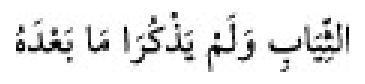
Narrated by Abdullah bin Umar (may Allah be pleased with him):
The Messenger of Allah (peace and blessings be upon him) forbade women in ihram from wearing gloves on their hands, veils over their faces, and garments dyed with wasfajani or saffron. And he said: After the ihram, adorn yourselves with whatever you wish of garments dyed with usfur, every color of silk, ornaments, trousers, shirts, or lower garments.
Abu Dawud says:
They narrated this hadith from Ibn Ishaq, from Nafi’, from Abd bin Suleiman and Muhammad bin Salama, and from Muhammad bin Ishaq, mentioning up to the words “and he forbade garments dyed with wasfajani or saffron,” but they did not mention the rest.
EXPLANATION:
Nikab: A veil worn over the face.
Muasfar: This means dyed with usfur.



Nafi from Ibn Umar, may Allah be pleased with him, said: (Ibn Umar) felt cold and told me, “Throw a garment over me.” I threw a cloak upon him. Then Ibn Umar said, “Did you cover me with this? Indeed, the Messenger of Allah, peace and blessings be upon him, forbade the person in ihram from wearing it.”




I heard the Messenger of Allah ﷺ say: "For one who cannot find a ihram sheet (peştamal), wearing an uncollared lower garment (mest) is permissible; and for one who cannot find footwear (nalin/tokya), wearing a mest is permissible."
Abu Dawud says: This is a hadith from the people of Mecca. Its reference point in Basra is Jabir ibn Zayd, his singularity in this hadith being the mention of the word *Sarawil*. He did not mention cutting the collar of the lower garment. [579]
EXPLANATION
*Izār*: It means trousers. However, here it refers to the ihram cloth used from the navel downwards. This hadith is evidence that pilgrims who cannot find an *izar* may wear trousers to cover their lower body from the navel down. According to Imam al-Azam and Malik, one may not wear trousers but may tear them and tie them around the lower body like a *peştamal*. According to Imam Shafi’i, Ahmad ibn Hanbal, Ata, and Ishaq, it is permissible to wear them without tearing.
Similarly regarding the *mest*, Imam al-Azam says that those who cannot find footwear cut the upper part of the *mest* above the ankle and use it in place of footwear. Since the hadith does not explicitly mention cutting the upper part of the *mest*, Ahmad ibn Hanbal, Ata, and Ikrimah say that it can be worn without being cut. (Mealim al-Sunan vol. 2, p. 352)




Aisha (may Allah be pleased with her) related:
We were in ihram and traveled to Mecca with the Messenger of Allah (peace and blessings upon him). Our foreheads would become yellowed from a fragrance called *sük*, and whenever one of us would sweat, this fragrant substance would flow down their face. The Messenger of Allah (peace and blessings upon him) would see it but did not forbid it.
COMMENTARY:
*Sük*: A type of perfume made from ambergris. (Lexicon translation).
*Tezammut*: Applying a medicated bandage; here, it refers to wrapping the forehead with a bandage smeared with *sük* fragrance.




According to the narration of Salim bin Abdullah (may Allah be pleased with him), Abdullah bin Umar (may Allah be pleased with him) would cut the collar of an ihram woman’s trousers. Then, Safiyya bint-i Abu Ubayd reported this to him. She, in turn, was informed by Aisha (may Allah be pleased with her) who said, “The Messenger of Allah (peace and blessings upon him) permitted ihram women to wear collared trousers.” Consequently, Ibn Umar (may Allah be pleased with him) abandoned this practice.