
Drinks Section · 6 – Hadiths Concerning Ed-Dâzî, Which Causes Effervescence



Malik ibn Abu Meryem, may Allah be pleased with him, related:
Abdurrahman ibn Ghanem came to us and we engaged in a discussion concerning *tila* wine. He narrated that Abu Malik al-Ash’ari informed him, who heard the Messenger of Allah, peace and blessings be upon him, say:
“Some people from my community will change the name of wine, but they will certainly drink it.”
Note: *Tila*: Wine was boiled until it thickened to one-third its original volume and was then called *tila*.




Abu Mansur al-Haris ibn Mansur, may Allah be pleased with him, said:
A question was posed to Sufyan as-Sawa’i regarding the consumption of grains that sour grape juice.
Sufyan said: The Messenger of Allah, peace and blessings be upon him, said:
“Some people from my community will change the name of wine, but they will certainly drink it.”
Abu Dawud said: Sufyan as-Sawa’i said: Dazij (the grains that cause grape juice to ferment) is the intoxicant of the rebellious.
EXPLANATION
The name of the intoxicant now changes – wine, raki, liqueur, cognac, champagne, whiskey, and beer – and so on. No matter how much the name of the intoxicant changes, it remains an intoxicant. The change of its name does not render it lawful.


According to the narration of Ibn Umar and Ibn Abbas, may Allah be pleased with them both, they stated: “We witnessed that the Messenger of Allah, peace and blessings be upon him, forbade from hollowed gourds, earthenware pots made of earth, vessels coated internally with pitch, and hollowed trees (used for making syrup).”
**Explanation:**
*Dübba:* This means gourd. There are water gourds used to hold water and drink from.
*Hantem:* This refers to a pot or jug made of clay.
*Müzeffet:* This denotes a vessel whose interior is polished with pitch.
*Nakir:* This signifies a hollowed wooden container or a barrel made of wood. The reason for the prohibition regarding setting syrup in these containers is that the syrups set within them quickly become sour and rapidly ferment into alcohol. Although the wording of the hadith might suggest forbidding their use even for water, the primary intention is to prevent syrup from being set in them, as other hadiths permit placing non-intoxicating substances in such vessels, indicating this is the intended meaning. [377]







Sa’id ibn Jubayr, may Allah be pleased with him, narrated: I heard Abdullah ibn Umar say: The Messenger of Allah, peace and blessings be upon him, has prohibited the drink made in earthen vessels. (I left immediately out of fear after hearing Abdullah ibn Umar say that the Messenger of Allah, peace and blessings be upon him, had prohibited the drink made in earthen vessels) and I went to Ibn Abbas. I said to him: Did you not hear what Abdullah ibn Umar said? Ibn Abbas asked: What is it? I said: He said that the Messenger of Allah, peace and blessings be upon him, has prohibited drinking the drink made in earthen vessels.
(Ibn Abbas said: Abdullah ibn Umar spoke truthfully; the Messenger of Allah, peace and blessings be upon him, has prohibited the drink made in earthen vessels.) Then I asked: What does ‘*jar*’ mean? Ibn Abbas replied: It means anything made of clay.











It is narrated from Abu Jarmra, may Allah be pleased with him, that he said: I heard Ibn Abbas say: A delegation from the tribe of Abd al-Ghais came to the Messenger of Allah, peace and blessings be upon him, and they said: “O Messenger of Allah! We are from the tribe of Rabia. The polytheists of the Mudar tribe stand as a barrier between us and you. We do not find an opportunity to come to you except during the sacred months. Command us with something that we may follow and instruct those who are left behind, who could not come here, to follow it too.”
The Messenger of Allah, peace and blessings be upon him, said: “I command you with four things and forbid you from four things.
1- Belief in Allah, bearing witness that there is no deity worthy of worship except Him. The narrator gestured with his thumb and index finger to indicate that these two are equal. The narrator, Musaddad, related: It begins with belief in Allah. Then he explained it to them. Belief in Allah is bearing witness that there is no deity worthy of worship except Him, and that Muhammad, peace and blessings be upon him, is the Messenger of Allah.
2- Performing prayer.
3- Paying Zakat.
4- I command you to distribute one fifth of what you take as spoils to the poor, and I forbid you from [drinking from] vessels made of gourd (containing wine), earthenware vessels (containing wine), vessels coated with pitch, and vessels lined with ashes after being dried and burned.”
The narrator, Ibn Ubayd, related instead of “al-Mukayyar” (the pitch-coated) in the text, "an-nakir" (vessels carved from date palm trunks).
Musaddad narrated “an-nakir” and “al-mukayyer,” but he did not narrate “al-Muzaffat.”



Abu Hurayrah (may Allah be pleased with him) narrated: The Messenger of Allah (peace and blessings upon him) said to the delegation from the Banu Abd al-Qays: “I forbid you from drinking from vessels that have been tarred like a wooden barrel, from earthenware jars, and from gourds used for sharab (fermented grape juice), and from vessels with additions and truncated qirab. But drink from leather water skins and then seal their mouths.”


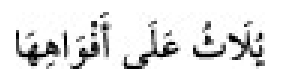
From Ibn 'Abbas, may Allah be pleased with him: Regarding the story of the Abd al-Qays delegation, it was narrated that the members of the delegation said, "O Prophet of Allah, which vessel should we drink from?" The Prophet ﷺ said, “Acquire a skin bag that can be tied at the mouth.”





It is narrated from Abu Kamas Zayd bin Ali, may Allah be pleased with him:
That I was among the delegation of Abd al-Qays who came to the Messenger of Allah, peace and blessings be upon him, and a man, whom Awf thought was Kays bin Numān, related that:
The Messenger of Allah, peace and blessings be upon him, said: “Do not drink from earthenware jars, vessels coated with pitch, gourds, or clay pots. Except for the skin container (wineskin) which can be tied with a rope; if the wineskin becomes strong (sour), break its sourness with water. And if you are unable to break its sourness, then pour it out.”






It is related from Ibn ‘Abbas, may Allah be pleased with him, that the delegation of ‘Abd al-Qays said: “O Messenger of Allah, from which vessel should we drink the *sharab*?” The Messenger of Allah, peace and blessings be upon him, said: "Do not drink from *sharab* established in a gourd sealed with pitch, nor in jars. Drink from *sharab* established in a skin bag.”
The delegation said: “O Messenger of Allah, what should we do if the *sharab* in the skin bag becomes potent?” The Messenger of Allah, peace and blessings be upon him, said: "Pour water into it."
The delegation repeated the question several times, saying: "(What should we do if) the water does not break its potency?" The Messenger of Allah, peace and blessings be upon him, said: “On the third or fourth repetition, He commanded them: (pour it out).” Then he said: "Indeed, the Most High, the Almighty, has forbidden to me intoxicants, games of chance, and drums.”
The Messenger of Allah, peace and blessings be upon him, said: "Every intoxicant is forbidden."
The narrator Sufyan said: I asked Ali bin Bazim what *kuba* means. He replied: “It is a drum.”


Ali (may Allah be pleased with him) narrated:
The Messenger of Allah (peace and blessings upon him) forbade us from Kabak, jars, large earthenware vessels, and drinks made from barley water.
Note: Barley water drink is a drink made from barley water, which we call beer today.





Ibn al-Buraida, may Allah be pleased with him, narrated from his father that the Messenger of Allah, peace and blessings be upon him, said: “I forbade you from three things, and I command you to do three things. I had forbidden you from visiting graves, but now visit them, for in visiting graves is a reminder of the afterlife. I had forbidden you from putting drinks into vessels other than leather water skins, so now you may drink from whatever vessel you wish, as long as it does not contain something that intoxicates. I had forbidden you from eating meat from sacrifices after three days, so now eat it after three days and benefit from it during your journeys.”


Jabir ibn Abdullah (may Allah be pleased with him) narrated:
The Messenger of Allah (peace and blessings upon him) forbade people from certain gates.
Jabir said that the Ansar (Helpers) said, “We certainly need a gate.” The Messenger of Allah (peace and blessings upon him) said, “If you need a gate, then there is no objection to this matter, on condition that it not be used for [carrying] intoxicants.”



Abdullah ibn Amr, may Allah be pleased with him, reported:
The Messenger of Allah, peace and blessings be upon him, mentioned vessels, naming the leather bag, the earthenware jar, the tarred vessel, and the wooden barrel. Then a bedouin said, “We have none of these.” The Messenger of Allah, peace and blessings be upon him, said, “Then use them for what is permissible.” [383]

Sharīk, may Allah be pleased with him, narrated on the authority that is consistent with the preceding hadith. The Messenger of Allah, peace and blessings be upon him, said: "Beware of things that intoxicate."


Jabir (may Allah be pleased with him) narrated: "A skin bag (tulma) was set up for shara (clarified butter) for the Messenger of Allah (peace and blessings be upon him). When they did not find a tulma, it was set up in an earthenware jar."