

LEASE SECTION · 57 – SELEF (SELEM) CONTRACT



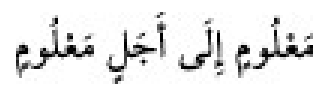
It is narrated from Ibn Abbas, may Allah be pleased with him, that the Messenger of Allah, peace and blessings be upon him, when he came to Medina, the people of Medina were engaging in trade on dates for one year, two years, or three years, using the method of *selef*. Thereupon the Messenger of Allah, peace and blessings be upon him, said: “Let him who engages in *selem* concerning dates do so with a specified measure, a specified weight, and until a specified time.” [258]
COMMENTARY
*Selef*: In the lexicon of the Iraqis, *selem* is the term used by the people of Medina. *Selef* and *selem* refer to giving money in advance for grain harvested at harvest time, or giving money in advance for dates during their season. This is the name given to trade transactions where payment is made upfront in exchange for a deferred obligation.





According to the narration of Abdullah ibn Mujahid:
Abdullah ibn Shaddad and Abu Burda disputed regarding “selef” (advancing goods). Consequently, they sent me to Abdullah ibn Abu Aufa to inquire about the matter. I asked him about it, and Abdullah ibn Abu Aufa said:
“During the time of the Messenger of Allah, peace be upon him, and during the caliphates of Abu Bakr and Umar, we practiced selef with wheat, barley, dates, and raisins by paying in advance.”
The narration of Ibn Kathir contains the following addition:
“We would practice selef as a group, while they did not possess that commodity.”
Then both narrators (Hafs ibn Umar and Ibn Kathir) agreed upon the narrator’s statement:
“I asked Ibn Isma’, and he reported in the same manner as Abdullah ibn Aufa.”


From Abdullah ibn Abi al-Mujalid:
The narrator, Abdurrahman, relates from Ibn Abi al-Mujalid:
– In the narration of the preceding hadith: “We would perform i’tikaf with a group of people, and they said, ‘There is no provision to be taken among them.’”



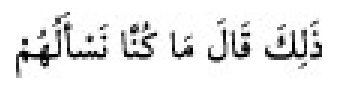
3466 – From Abdullah ibn Abu Aufa al-Aslami, may Allah be pleased with him:
– While we were with the Messenger of Allah, peace and blessings be upon him, some fellahin from the lands of Syria would come to us. We would give them advance payment (selem) in exchange for wheat and olive oil, with a fixed price and date.
To Abdullah ibn Abu Aufa it was said:
“Do you ask them about the person who possesses these goods?”
Abdullah ibn Abu Aufa replied: “We did not ask them.”
EXPLANATION
*Enbat*: The plural of *Nabat*. They are a people who, despite being originally Arab, have lost their Arab identity. They are known for their extensive well-digging and plowing work. We call them *fellahin* among us – meaning farmers and agriculturalists.
All the conditions required for trade are also present in a *selem* transaction. In addition to the general conditions of trade, *selem* has the following conditions:
1. The payment must be made in advance.
2. The goods must be delivered on credit.
3. The measure (scale) of the purchased commodity must be specified.
4. Its weight must be specified.
5. The month and day for delivery of the goods must be determined.
6. How much per measure or kilogram will be taken must be established at the time of contract.
7. It must be a type of commodity whose delivery is possible when the time comes.