

MEDICAL SECTION · 19 – HOW TO PERFORM EFSUN (RUQYA)



3890 – Narrated from ʿAbd al-ʿAzīz ibn Suhayb (may Allah be pleased with him), Anas (may Allah be pleased with him) said to Thābit:
Shall I not perform efsun (ruqya, incantation for healing) on you with the efsun of the Messenger of God (peace and blessings be upon him)?
Thābit said, “Certainly.” Anas said: The Messenger of God (peace and blessings be upon him)
said: “O Lord of mankind, O Allah, Remover of hardship, grant healing,
for You are the Healer. There is no healing except Your healing. Grant such healing that leaves behind no illness.” [496]




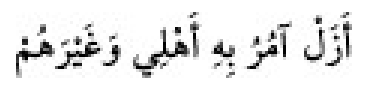
3891 – From ʿUthmān ibn Abī’l-ʿĀṣ (may Allah be pleased with him): He came to the Messenger of God (peace and blessings be upon him). ʿUthmān said: I have an illness that is about to destroy me. He said: The Messenger of God (peace and blessings be upon him) said:
“Rub it with your right hand seven times, and say: ‘I seek refuge in the might and power of Allah from the evil of what I find and fear.’” ʿUthmān said: I did this, and Allah, the Mighty and Majestic, removed the pain I had. Since that day, I have recommended these supplications (dua) to my family and others. [497]





3892 – Narrated from Abū’d-Dardāʾ (may Allah be pleased with him): He said, I heard the Messenger of God (peace and blessings be upon him) say: “If any of you is troubled by something, or if his brother is troubled, let him say: ‘Our Lord is Allah, whose decree encompasses the heavens. Your name is sanctified, Your command is in the heaven and the earth. As Your mercy is in the heaven, so make Your mercy in the earth. Forgive us our sins and our faults. You are the Lord of the good (prophets and angels). Send down from Your mercy a mercy and from Your healing a healing upon this pain.’” [498]




3893 – From ʿAmr ibn Shuʿayb’s grandfather: The Messenger of God (peace and blessings be upon him) used to teach the Companions (ṣaḥāba) the following words to seek deliverance from fear: “I seek refuge in the perfect words of Allah from His anger, from the evil of His servants, from the evil suggestions of the devils, and from their presence.”
ʿAbdullah ibn ʿAmr would teach this to his children who could understand, and for those who could not, he would write it and hang it on them. [499]




3894 – Narrated from Yazīd ibn Abī ʿUbayd (may Allah be pleased with him): He said: I saw a sword wound on the shin of Salama. I asked, what is this? Salama said: It is a wound that struck me during the battle of Khaybar. People said, “Salama has been killed.” The Messenger of God (peace and blessings be upon him) was called. He blew on me three times. Since then, I have not felt any discomfort until this moment. [500]



3895 – Narrated from ʿĀʾisha (may Allah be pleased with her): When someone became ill, the Messenger of God (peace and blessings be upon him) would draw a line on the ground with his saliva. The narrator also drew a line on the ground with his saliva to demonstrate this. Then he would say:
“The earth of our land, with the saliva of some of us, by the permission of our Lord, brings healing to our sick.” [501]







3896 – From the uncle of Khārija ibn Ṣalt al-Tamīmī (Ilāka ibn Ṣiḥār al-Salītī) (may Allah be pleased with him): He came to the Messenger of God (peace and blessings be upon him) and became Muslim, then left his presence. On his return, he passed by a people who had a madman bound in chains. The family of the madman said: We have been told that the one you have accompanied (the Prophet) brings good. Do you have anything with you to treat this madman? I performed efsun (ruqya) on him with Sūrat al-Fātiḥa. The madman was cured. They gave me a hundred sheep. I went to the Messenger of God (peace and blessings be upon him) and informed him of what I had done. The Messenger of God (peace and blessings be upon him) asked, “Did you recite anything other than this?”
Musaddad narrated in another place: Did you say anything else? I said, No. The Messenger of God (peace and blessings be upon him) said, “Take what they gave you. By Allah, there are many who eat from what they receive for false efsun (ruqya), but you have eaten from what you received for a true efsun.” [502]




3897 – Narrated from the uncle of Khārija ibn Ṣalt (Ilāka) (may Allah be pleased with him): Ilāka passed by a people and said: I performed efsun (ruqya) on the madman by reciting Sūrat al-Fātiḥa morning and evening for three days. At the end of each recitation, he would gather his saliva and spit on the madman. (After three days) the madman was as if released from bondage. They gave something to Ilāka. He went to the Messenger of God (peace and blessings be upon him), and Ilāka related the rest of his words in the meaning of the hadith narrated previously by Musaddad.





3898 – Narrated from Abū Ṣāliḥ, the father of Suhayl (may Allah be pleased with him): He said: I heard a man from the tribe of Aslam say: I was sitting with the Messenger of God (peace and blessings be upon him) when a man from among his Companions (ṣaḥāba) came and said: O Messenger of Allah, I was poisoned last night and could not sleep until morning. The Messenger of God (peace and blessings be upon him) said: “What poisoned you?” He replied: A scorpion. The Messenger of God (peace and blessings be upon him) said: “If, when you reached the evening, you had said, ‘I seek refuge in the perfect words of Allah from the evil of what He has created,’ nothing would have harmed you, by Allah’s permission.” [503]



3899 – Narrated from Abū Hurayra (may Allah be pleased with him): He said: A man who had been stung by a scorpion would be brought to the Messenger of God (peace and blessings be upon him). The narrator said: The Messenger of God (peace and blessings be upon him) said: “If this man had said, ‘I seek refuge in the perfect words of Allah from the evil of what He has created,’ he would not have been stung, or it would not have harmed him.”










3900 – Narrated from Abū Saʿīd al-Khudrī (may Allah be pleased with him):
A group from the Companions (ṣaḥāba) of the Messenger of God (peace and blessings be upon him) set out on a journey. They stopped by a tribe of the Arabs. One of them said: Our tribal chief has been poisoned. Is there anyone among you who has something that could benefit our companion? One of the group said: Yes, by Allah, I perform efsun (ruqya), but we asked you to host us and you refused. I will not perform efsun unless you give me a fee. They agreed to give him a flock of sheep. He went to the tribal chief and recited Sūrat al-Fātiḥa over him, blowing with each recitation. With each blow, the patient was as if released from bondage. The narrator said: They gave them the entire flock as agreed. The group said: Divide the flock among yourselves. The one who performed the efsun said: No, do not divide it. Let us go to the Messenger of God (peace and blessings be upon him) and ask him what we should do. In the morning, they went to the Messenger of God (peace and blessings be upon him) and told him what had happened. The Messenger of God (peace and blessings be upon him) said: “How did you know that al-Fātiḥa is a cure? You did well to accept the flock. Divide it among yourselves, and allocate a share for me as well.” [504]








3901 – Narrated from Khārija (may Allah be pleased with him), from his uncle Ilāka (may Allah be pleased with him):
We went to the Messenger of God (peace and blessings be upon him), then to a tribe of the Arabs. The people of the tribe said: We have heard that you have come from the presence of this man (the Prophet) with good. We have a madman bound hand and foot. Do you have any medicine or efsun (ruqya) for him?
Ilāka said: We replied, Yes. They brought a madman bound. He said: For three days, morning and evening, I recited al-Fātiḥa over him, and at the end of each recitation, I gathered my saliva and spat on him. As a result, he was as if released from bondage. They gave me a fee for this recitation. I said, I will not take it without asking the Messenger of God (peace and blessings be upon him). The Messenger of God (peace and blessings be upon him) said: “Take it and eat. By my life, there are many who perform false efsun and eat from it. By Allah, you will have eaten from what you received for a true efsun.”



3902 – From ʿĀʾisha (may Allah be pleased with her), the wife of the Messenger of God (peace and blessings be upon him):
When the Messenger of God (peace and blessings be upon him) was ill, he would recite Sūrat al-Falaq and Sūrat al-Nās and blow (over himself). When his pain became severe, I would recite over him and wipe him with his own hand, seeking its blessing. [505]