

CASE FILES · 2 – THE JUDGE MAY BE WRONG IN HIS RULING





Ibn al-Buraida, may Allah be pleased with him, narrated on the authority of his father that the Messenger of Allah, peace and blessings be upon him, said: “Judges are three: one in Paradise, and two in Hellfire.” He explained: “The judge in Paradise is he who knows the truth and judges accordingly. The judge who knows the truth but acts unjustly in judgment is in Hellfire. And the judge who rules among people with ignorance is also in Hellfire.” [316]
Abu Dawud said: The hadith narrated by Ibn al-Buraida concerning the three types of judges is the most authentic narration on this topic.



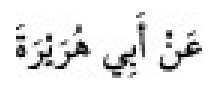
Amr ibn ‘As (may Allah be pleased with him) narrated: The Messenger of Allah (peace and blessings upon him) said: “When a judge makes a judgment exercising ijtihad and he is correct, he receives two rewards. When a judge makes a judgment exercising ijtihad and he errs in it, he receives one reward.” The narrator, Yazid, said: I informed Abu Bakr ibn Hazm about this. He said: Abu Salama told me on the authority of Abu Hurayra.



On the authority of Abu Huraira (may Allah be pleased with him), it was narrated that the Messenger of Allah (peace and blessings upon him) said: “Whoever desires to rule over Muslims and attains his desire, then justice overcomes his injustice, for him is Paradise. Whoever’s injustice overcomes his justice, then the Fire is for him.”



It is narrated from Ibn ‘Abbas – may Allah be pleased with him – that he said: From the verse “But whoever does not judge by what Allah has revealed, then they are indeed among the disbelievers” until the verse “then they are indeed among the transgressors,” these three verses descended specifically concerning the Banu Qurayza and Banu Nadir Jews. (Surah Al-Ma’idah, 44-45-46-47)