

ITK (AZAT) CHAPTER · 9 – THE SALE OF A WELL-MANNERED SLAVE


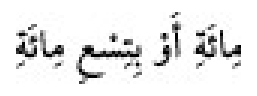
Jabir ibn Abdullah (may Allah be pleased with him) narrated: A man freed a slave with the stipulation that he would remain a slave until his master’s death. The man possessed no other property. The Messenger of Allah (peace and blessings upon him) ordered him to sell the slave with the stipulated condition. The slave was sold for seven or nine hundred dirhams.


Jabir ibn Abdullah (may Allah be pleased with him) narrated: One who distributes [charity] is more deserving of his own wealth than anyone else. In a preceding narration, Jabir added: God does not need it either.






Jabir (may Allah be pleased with him) narrated:
A man from the Ansar, called Abu Mazkur, emancipated a slave of his, designated as *mudabbir* (meaning he declared him free after his death). He possessed no other property besides this slave. The Messenger of Allah (peace and blessings upon him) summoned him and said: "Who will purchase this *mudabbir* slave?" Nuaym bin Abdullah bin Neham purchased him for eight hundred dirhams. The Messenger of Allah (peace and blessings upon him) gave the money to Abu Mazkur. Then the Messenger of Allah (peace and blessings upon him) said: “When one of you is impoverished, he should begin with himself (with generosity), and if there is anything left over from him, he should spend it on his family members; and if there is something left over from his family, he should spend it on his relatives.” Or he said: "Spend it on those related by kinship," and if there is anything left over, “spend it to the right and to the left (on the poor of the neighborhood, then on the distant poor)."