BEVERAGES SECTION · 22 – SEALING CONTAINERS HOLDING FOOD OR BEVERAGE



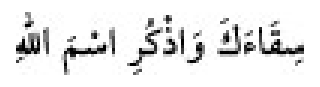
Jābir (may Allah be pleased with him) narrated: The Messenger of Allah (peace and blessings upon him) said: “(When entering your home,) say Bismillah and close your door. For Shaytan cannot open a door that has been closed with Bismillah. Say Bismillah when extinguishing your lamp. (Again) Say Bismillah and cover the mouth of your vessels, even if it is with a piece of wood laid across. Say Bismillah and cover the mouth of the water container.” [405]



Câbir ibn ‘Abdullah (may Allah be pleased with him) narrated: Part of the aforementioned report was related, though incomplete, from the Messenger of Allah (peace and blessings upon him), who said: “Indeed, Satan cannot open a locked door, nor can he untie the knot of doors. He cannot open a sealed vessel. If you do not recite [the opening words of the Qur’an – *bismillah*], mice will set fire to the homes of people.”


It is narrated from Jabir ibn Abdullah, may Allah be pleased with him, as a report transmitted on the authority of the Messenger of Allah, peace and blessings be upon him: “When the darkness of night begins to descend, gather your children (to yourselves), do not leave them [outside].”
Musaddad reported this sentence as "when evening comes." Because there are times for the jinn when they spread out and seize (wandering) children, and these times begin at those hours.



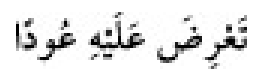

Jabir (may Allah be pleased with him) narrated:
We were in the company of the Messenger of Allah ﷺ when he asked for water. A man from among the congregation said, "O Messenger of Allah, would it not be permissible to offer you a drink?" The Messenger of Allah ﷺ replied, “Yes, certainly.” Then the man ran out and brought a cup containing sherbet. (Seeing that the cup was brought with its mouth open) the Messenger of Allah ﷺ said to him: “Would you have covered it with a piece of wood laid horizontally across it?”
Abu Dawud said: Al-Asma’i said, "Would you have placed it horizontally?"


It is narrated from Aishah (may Allah be pleased with her) that sweet water was brought to the Messenger of Allah (peace and blessings be upon him) from Būt al-Sukyā.
Kutayib among the narrators said: Būt al-Sukyā is a well located two days' journey from Medina.
[Note: The following text consists of references to other hadith collections and commentaries, which are not part of the translation itself.]
[376]. Tirmidhi, Book of Beverages, no. 1867
[377]. Muslim, Book of Beverages, no. 1997; Nasa’i, Book of Beverages, no. 5646
[378]. Muslim, Book of Beverages, no. 47; Nasa’i, Book of Beverages, no. 5622
[379]. Bukhari, Book of Faith, no. 1/21; Muslim, Book of Faith, no. 17; Nasa’i,
Book of Faith, no. 5034; Tirmidhi, Book of Faith, no. 1741
[380]. Muslim, Book of Beverages, no. 33; Nasa’i, Book of Beverages, no. 5649
[381]. Muslim, Book of Rites (Sacrifices), no. 1977; Nasa’i, Book of Beverages, no. 5656;
Tirmidhi, no. 1870; Ibn Majah, no. 3405
[382]. Bukhari, Book of Beverages, Chapter on the Prophet's Permission, no. 7/137; Tirmidhi,
Book of Beverages, no. 1871
[383]. Bukhari, Book of Beverages, no. 7/139; Muslim, Book of Beverages, no. 2000
[384]. Muslim, Book of Beverages, no. 1999; Nasa’i, Book of Beverages, no. 5650; Ibn Majah,
Book of Beverages, no. 3400
[385]. Muslim, Book of Beverages, no. 1986; Ibn Majah, Book of Beverages, no. 3395;
Nasa’i, Book of Beverages, no. 5564; Tirmidhi, Book of Beverages, no. 1877
[386]. Muslim, no. 1988; Nasa’i, Book of Beverages, no. 5563; Ibn Majah, Book of
Beverages, no. 3397
[387]. Nasa’i, Book of Beverages, no. 5549
[388]. Nasa’i, Book of Beverages, Chapter on what is permissible to drink, no. 3738
[389]. Muslim, Book of Beverages, no. 1005; Tirmidhi, Book of Beverages, no. 1872
[390]. Muslim, Book of Beverages, no. 2004; Nasa’i, Book of Beverages, Chapter on what is
permissible to drink from grapes, no. 5741; Ibn Majah, Book of Beverages, no. 3399
[391]. Bukhari, Book of Interpretation of the Surah Tahrima, no. 6/194; Muslim, Book of Divorce,
no. 1474; Nasa’i, Book of Divorce, no. 3450
[392]. Bukhari, Book of Beverages, no. 7/139; Muslim, Book of Divorce, no. 21; Tirmidhi, Book of
Food, no. 1832; Ibn Majah, Book of Food, no. 3323
[393]. Nasa’i, no. 5613; Ibn Majah, Book of Beverages, no. 3409
[394]. Muslim, Book of Beverages, no. 2024; Tirmidhi, Book of Beverages, no. 1880; Ibn Majah,
Book of Beverages, no. 3424
[395]. Bukhari, Book of Beverages, Chapter on Drinking While Standing, no. 7/143
[396]. Bukhari, Book of Beverages, no. 7/14; Tirmidhi, Book of Food, no. 1826;
Ibn Majah, Book of Beverages, no. 3421; Nasa’i, Book of Gifts, no. 4453
[397]. Muslim, Book of Beverages, no. 2023; Tirmidhi, no. 1891; Ibn Majah, Book of
Beverages, no. 3418
[398]. Tirmidhi, Book of Beverages, no. 1892
[399]. Bukhari, Book of Beverages, Chapter on Drinking in Gold Vessels, no. 7/146;
Muslim, Book of Attire, no. 2067; Tirmidhi, Book of Beverages, no. 1879; Ibn Majah,
Book of Beverages, no. 3414
[400]. Bukhari, Book of Beverages, no. 7/144; Ibn Majah, Book of Beverages, no. 3432
[401]. Muslim, Book of Mosques, no. 681; Tirmidhi, Book of Beverages, no. 1895;
Ibn Majah, Book of Beverages, no. 3434
[402]. Muslim, Book of Beverages, no. 2203; Tirmidhi, Book of Beverages, no. 1885
[403]. Bukhari, Book of Beverages, no. 7/146; Tirmidhi, Book of Beverages, no. 1889; Ibn Majah,
Book of Beverages, no. 3428
[404]. Muslim, Book of Beverages, no. 2042; Tirmidhi Kitab of Supplications, no. 3571
[405]. Bukhari, Book of Beverages, no. 7/145; Muslim, Book of Beverages, no. 2012
[406]. Bukhari, Book of Beverages, no. 7/141; Muslim, Book of Beverages, no. 200
That which covers the sin is wine. There are three things that I wished that the Messenger of Allah, peace and blessings be upon him, would have clarified to us before his death so that we could refer to them in our judgements. They are: inheritance from a grandfather, the status of one who has neither parents nor offspring, and some types of riba (usury). [365]
When the prohibition of wine was revealed, he supplicated, "O Lord, send us a clarification regarding wine that would cure our ailment." Then the verse “O you who believe! There are certainly signs beneficial to you in what has been permitted to you, but there is also sin therein; verily Allah knows.” (2:219) was revealed. Omar (may Allah be pleased with him) was summoned and this verse was recited to him. He supplicated again, "O Lord, send us a clarification regarding wine that would cure our ailment." Then the verse “O you who believe! Do not approach prayer in a state of intoxication until you know what you are saying.” (4:43) was revealed. The Mu’adhin then called out for prayer and the muezzin would say, "Attention, those intoxicated should not approach prayer." Omar (may Allah be pleased with him) was summoned and this verse was recited to him. He supplicated again, “O Lord, send us a clarification regarding wine that would cure our ailment.” Then the verses of Surah Al-Ma’idah were revealed: “You who believe! Intoxicants, gambling, [sacred] dice, [and] arrows for seeking fortune with divination are all uncleanness from Satan's doing. Avoid them so that you may be successful. Satan only wants to incite enmity and hatred among you, and to keep you off from the remembrance of Allah and prayer. Will you then not cease?” (5:90-91). Omar (may Allah be pleased with him) said, “We have ceased, O Lord.” [366]
A man from amongst the Ansar invited him and Abdurrahman bin Auf before wine was prohibited and gave them wine to drink. When Ali (may Allah be pleased with him) led them in prayer at night, he recited Surah Al-Kafirun (and mixed up the recitation) due to the effect of the wine. Then the verse “O you who believe! Do not approach prayer in a state of intoxication until you know what you are saying.” (4:43) was revealed.
[367]
“May Allah curse wine, the one who drinks it, the one who pours it, the one who sells it, the one who buys it, the one who transports it for sale, the one who brings it in, and the one for whom it is brought.” [368]
“Wine is made from grapes. Wine is made from dates. Wine is made from honey. Wine is also made from barley.” [369]
“Every intoxicant comes from the fruit of these two trees: dates and grapes.” [370]
“Everything that intoxicates is wine, and everything that intoxicates is forbidden. Whoever…”
If someone drinks wine and continues drinking until he dies, he will not be able to drink [from the wine of] Paradise. [371]
The Prophet (peace be upon him) replied, “It is the pus and corruption that comes from the body of the people of Hell.” He then said, "Whoever gives a child intoxicants without distinguishing between what is lawful and unlawful has his body washed with the pus and corruption flowing from the bodies of the people of Hell – may Allah be exalted – truthfully." [372]
3681 – It was narrated from Jabir bin Abdullah (may Allah be pleased with him) that the Prophet (peace be upon him) said, "Even a little of anything that intoxicates is forbidden.” [373]
It was asked to the Prophet (peace be upon him) about *batih* made from dates. The Prophet (peace be upon him) replied, “Every intoxicant is forbidden.” [374]
Then the Prophet (peace be upon him) said, "Inform your people that everything that intoxicates is forbidden." [375]
“Everything that intoxicates is forbidden. Even a *firak* amount of something that intoxicates is forbidden, even if it is just a handful.” [376]
*Nakir* means a wooden trough or a wooden barrel. The prohibition against setting up *sira* in these troughs and barrels is because the *sira* set up in them sours quickly and becomes intoxicating. Although the wording of the hadith may imply a prohibition on using these vessels even for water, the intended purpose is to prevent *sira* from being set up in them, as the hadith that permits placing non-intoxicating things in them indicates this intention. [377]
– I asked, "What does *jar* mean?" Ibn Abbas said, “It means every vessel made of clay.” [378]
He narrated the words *musaddad an-nakir wa al-mukayyar*, but he did not narrate the word *al-muzaffat*. [379]
“We forbid you from using vessels made of wooden barrels, tarred vessels, earthenware, and vessels used for setting up *sira* with additions and a cut-off top (*kirba*). But drink from leather water skins and tie their mouths.” [380]
“I forbade you from three things, and I now command you to do them. I had forbidden you from visiting graves, but now visit them, for in visiting graves is a reminder of the Hereafter. I had forbidden you from putting drinks in vessels other than leather tulus (skins), but now you may drink from every vessel. However, do not drink anything that intoxicates. I had forbidden you from eating meat after three days, but now eat it after three days and benefit from it during your journeys.” [381]
When the Prophet (peace be upon him) forbade certain vessels, Jabir said: The people of al-Ansar said, “We definitely need a *kirba*.” The Prophet (peace be upon him) said, "If you need a *kirba*, then there is no harm in that – provided you do not put anything intoxicating in it." [382]
The Prophet (peace be upon him) mentioned vessels such as the gourd, earthenware, tarred vessels, and wooden barrels. Then a Bedouin said, “We don’t have any other vessels.” The Prophet (peace be upon him) said, "Then use them for lawful things." [383]
*Sira* was being set up in a leather *tulma* for the Prophet (peace be upon him). When they could not find a *tulma*, they would set up *sira* in clay jars. [384]
It is understood that the prohibition of mixing dates and raisins, dried dates and fresh dates has two reasons: 1 – The poverty of the companions. 2 – Because when the juices of these two fruits are mixed together, they become sharp and cause intoxication. [385]
The Prophet (peace be upon him) forbade mixing dried dates with raisins, dried dates with fresh dates, newly sprouted date palm shoots with ripe fresh dates, and said, “Prepare each of these separately as *sira* and pickles.” [386]
3705 – It is narrated on the authority of a companion of the Prophet (peace be upon him) that the Prophet (peace be upon him) forbade setting up *sira* together with date palm shoots and dates, dried dates and dates. [387]
The Prophet (peace be upon him) said, “Dry it.” We said, "What should we do with the dried dates?" He said, “Extract its juice in the morning for breakfast and drink it in the evening. Extract its juice in the evening and drink it in the morning. But store it in a leather vessel; do not store it in large earthenware jars, because if it is pressed for too long, it will turn into vinegar.” [388]
The Prophet (peace be upon him) used to have *sira* (a sweet drink) prepared in a *kirba* with an upper opening. It was prepared in the evening and drunk at breakfast. It was prepared in the morning and drunk at dinner. [389]
Abu Dawud said: Regarding the meaning of giving it to servants, the first thing that comes to mind is (the spoilage of the *sira* – if it has not spoiled, he would give it to them; otherwise, he would pour it out). [390]
He heard Ubayd bin Umayr say: I heard the Prophet (peace be upon him)’s wife Aisha (may Allah be pleased with her) narrate that the Prophet (peace be upon him) used to stay at the house of Zaynab bint Jahsh and drink a date syrup there. Hafsa and I made an agreement. The Prophet (peace be upon him) would say, “I smell the scent of *ma’afir* in your house,” whichever of us he visited. The Prophet (peace be upon him) then visited one of them (Hafsa), and she said to the Prophet (peace be upon him), "I smell the scent of *ma’afir* from your mouth." The Prophet (peace be upon him) replied, “I drank date syrup in the house of my wife Zaynab bint Jahsh. I will never do that again.”
391. Regarding the revelation of verses from Surah Al-Tahrim, beginning with "If both of you repent to Allah…" until "…their hearts have become astray." This occurred due to the Prophet’s consumption of honeyed milk, which led to verses concerning his wives being revealed.
392. The cooperation between Lady Aisha and Lady Hafsa stemmed from a natural inclination for women to feel jealous of their co-wives. However, their actions were not intended as disrespect towards the Prophet but rather aimed at ensuring he spent more time with each of them.
393. I knew that the Prophet was fasting. I began observing a day when I could give him a drink of sherbet prepared in a gourd vessel. Then I brought it to him, and I saw that it had foamed and swelled. The Prophet said, "Pour it into the garden! It is the drink of those who do not believe in Allah and the Hereafter."
394. The Prophet forbade drinking water standing up.
395. Ali (may Allah be pleased with him) requested some water and drank it while standing. Then he said: “Some people disapprove of this, whereas I saw the Messenger of Allah (peace and blessings of Allah be upon him) doing exactly what you see me doing.”
396. The Prophet forbade from drinking from an opaque vessel, riding a beast that eats filth, and eating an animal hunted for sport.
397. The Prophet forbade folding the edges of gourds.
398. During the battle of Uhud, the Prophet requested a leather water container and commanded: “Fold its edges over.” Then he drank from it.
399. Huzayfa (may Allah be pleased with him) was in al-Madain. He asked for water, and a man from the people of the city brought him a silver cup. Huzayfa threw the cup at that man and said: “I only threw it at you because you refuse to abandon this practice, even though I forbade you from it earlier.” Indeed, the Prophet (peace and blessings of Allah be upon him) forbade silk and satin, and drinking from gold and silver vessels, saying: "These are for people other than you in the Hereafter."
400. A man from the companions of the Prophet (peace and blessings of Allah be upon him) entered the home of a man from the Ansar. The Prophet said: “If you have water that has been standing overnight, we will drink it; otherwise, we will sip.” The man from the Ansar said: "I have water that has been standing overnight."
401. The Prophet (peace and blessings of Allah be upon him) said: “The one who distributes water to a community should drink last among them.”
402. The Prophet (peace and blessings of Allah be upon him) when drinking water, would inhale three times and say: "Inhaling like this is easier, sweeter, lighter, and more beneficial for health."
403. The Prophet forbade blowing into the vessel from which water is drunk.
404. My father brought the Prophet (peace and blessings of Allah be upon him) to his home and entertained him. My father brought him a dish of food called "hays." Then he brought him sherbet. The Prophet drank the sherbet and offered it to those on his right. He then ate seven dates, placing the pits between his thumb and forefinger. When the Prophet stood up, my father also stood up, grasped the reins of his camel, and said: “Pray for me.” The Prophet said: "O Lord, bless what You have provided them as sustenance, forgive them, and have mercy on them."
405. Jabir (may Allah be pleased with him) narrated that the Messenger of Allah (peace and blessings of Allah be upon him) said: "(When you enter your home,) say Bismillah and close your door. For Shaytan cannot open a door closed by Bismillah. Say Bismillah when extinguishing your lamp. And also say Bismillah when covering your vessels with a piece of wood, even if it is laid horizontally. And say Bismillah when covering the mouth of your water container."
406. Abu Dawud said: Al-Asma’i said, “You should have laid it horizontally.”