

SCIENCE BOOK · 3 – RECORDING SCIENCE IN WRITING





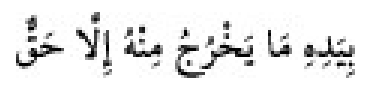
Abdullah ibn Amr, may Allah be pleased with him, related:
I used to write down everything I heard and wished to memorize from the Messenger of Allah, peace and blessings be upon him. The Quraysh forbade me from doing so, saying, "Will you write down everything you hear? Indeed, the Messenger of Allah, peace and blessings be upon him, is a human being; he speaks in moments of anger and in moments of joy." So I stopped writing for a while, and I mentioned this to the Messenger of Allah, peace and blessings be upon him. The Messenger of Allah, peace and blessings be upon him, pointed his finger to his mouth and said: "(O Abdullah), write, I swear by Him in whose hand is my soul, that nothing but the truth comes out of this mouth.”



It is narrated from ‘Abd al-Muṭalib ibn ‘Abdullah ibn Hantab (may Allah be pleased with him) that he said:
Zayd ibn Sabit entered upon Mu‘awiyah. Zayd was asked about a hadith, and Mu‘awiyah ordered a man to write it down. Zayd ibn Sabit responded to him, “The Messenger of Allah (peace and blessings be upon him) forbade us from writing anything of his sayings.” Thereupon, Mu‘awiyah erased what he had ordered written with his own hand.
COMMENTARY
The prohibition of writing hadith occurred in the early days. This was particularly so to distinguish hadith from the Qur’an. Later, the Messenger of Allah (peace and blessings be upon him) said, “Let those among you who have knowledge transmit it to those who do not.” Not everyone could retain what they heard in their memory. To one who claimed he could not memorize anything, he commanded, "Benefit from your right hand," advising him to write it down. For Abu Shah, who requested that a sermon the Messenger of Allah (peace and blessings be upon him) recited be written down, he said, “Give Abu Shah a writing of the sermon.” He also had writings made regarding matters of charity and diya (blood money). These examples indicate that writing hadith is permissible.

Abū Saʻīd al-Hudrī (may Allah be pleased with him) narrated: “We used to write nothing but the testimony of faith and verses from the Qur’an in the era of prosperity.” [351]
**Explanation:** The hadith narrated by Muslim states, "Do not write down anything you hear from me except what is in the Qur'an; and whoever has written anything other than the Qur'an should erase it." These narrations pertain to the early period. Once the revelation of the Qur’an was completed and the possibility of mixing hadith with verses ceased, permission was given to write [hadith].




Abū Hurayrah, may Allah be pleased with him, narrated:
The Messenger of Allah, peace and blessings be upon him, stood up when Mecca was conquered. The narrator mentions that the Messenger of Allah, peace and blessings be upon him, recited a speech concerning the conquest.
(Abū Hurayrah said:) A man originally from Yemen, who was called Abū Shāh, said:
"O Messenger of Allah, write this down for me." Upon that, the Messenger of Allah, peace and blessings be upon him, commanded, “Write the speech to Abū Shāh.”


Walid, may Allah be pleased with him, said: I asked Abu Amr (Awza'i), "Do the companions not write down hadith?" Abu Amr replied: “They wrote down the sermon that (Abu Shah) heard from the Messenger of Allah, peace and blessings be upon him, on that day.”