
His kunya was Abū ʿAlī. He became famous as Vizier Ibn Muqla. In the early part of his life, his circumstances were weak and he possessed little wealth. Then, over time, he rose to the vizierate and served as vizier to three caliphs: al-Muqtadir, al-Qāhir, and al-Rāḍī. He was also dismissed from the vizierate three times.
In the latter part of his life, his hand and tongue were cut off and he was imprisoned. He would drink water using his left hand and his teeth. He would bring the vessel to his mouth with his left hand, hold the edge of the water vessel with his teeth, and thus be able to drink. Despite his hand being severed, he was able to write with his right hand. He wrote just like a person whose hand was whole. His handwriting was very beautiful and firm. Indeed, he became famous for the regularity of his script. During his vizierate, a palace was built for him. At the time when the foundation of the palace was to be laid, he brought a group of astrologers to the construction site. The astrologers recommended that the foundation be laid at a certain time. Again, following their advice, the palace walls began to be built between the two night prayers. Shortly after the construction of the palace was completed, the palace was ruined and reduced to rubble. Indeed, we have mentioned this situation in earlier sections and have also spoken of the inscriptions written upon the walls of the ruined palace.
Vizier Ibn Muqla had a truly large garden. This garden, which contained several nurseries, was entirely enclosed with a silk mesh. In the garden were doves, parrots, nightingales, peacocks, canaries, and many other kinds of birds. Also, on his land there were gazelles, wild cattle, ostriches, and many other animals. This garden and his properties lost their beauty, brilliance, and value in a short time and were lost. This is the law that Allah applies to the deluded ignorant who incline toward the transient abode of the world and to pride. When Ibn Muqla built his palace and garden and filled them with abundant worldly goods, a poet recited the following poem about this matter:
"Say to Ibn Muqla: Do not be hasty, be patient, you are in vain and empty dreams.
You are building a palace by laboring and striving with the stones of people's houses, but this palace will be seized and destroyed after a few days.
You continue to prefer the fortune of the star of Mercury for this palace,
Yet, as with the misfortune of King Bahrām, many misfortunes may also befall you.
The Qur'an and Ptolemy have never come together regarding securing matters and loyalty to covenants."
Finally, Ibn Muqla was dismissed from the vizierate of Baghdad, his house was destroyed. The trees in his garden were uprooted. His hand was cut off, then his tongue was severed, and he was fined 1,000,000 dinars. After this, he was thrown alone into prison. Although he had grown old, his body had weakened, he had lost some of his limbs, and he was afflicted with hardship, there was no one with him to serve him. So much so that, in order to drink, he would draw water himself from a deep well. He would hold the rope of the bucket with his left hand, bring it to his mouth, and hold the edge of the bucket with his mouth and drink. After having tasted a life of comfort, he endured much hardship and difficulty.
Regarding the cutting of his hand, he recited the following poem:
"I did not tire of life, but I trusted in their oaths. Yet see, my right hand was cut off.
I gave my world and bought my religion from them, but in the end they;
After depriving me of my religion, they also deprived me of their world.
I strove as much as I could to preserve their lives, but;
See, they did not protect me.
After the right hand is gone, there is no pleasure in life.
O life; my right hand is cut off, so may you be cut off as well."
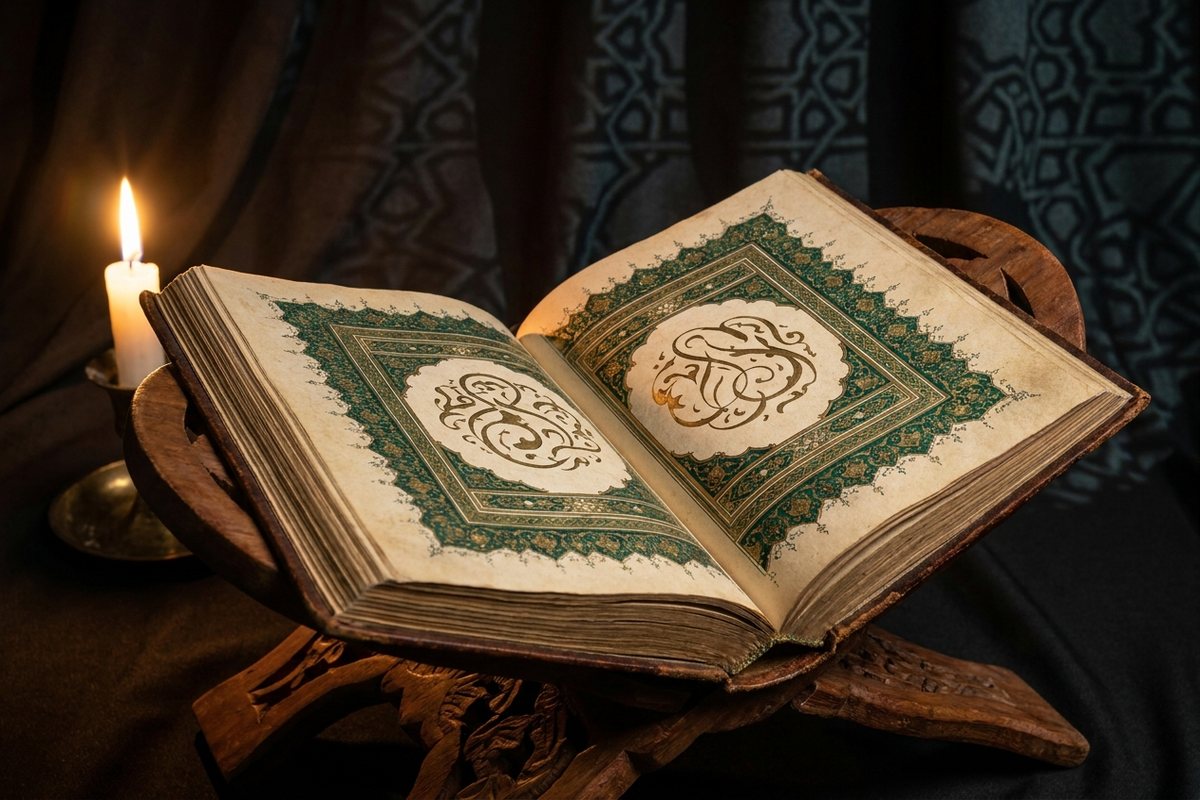
He wept much because of the cutting of his hand and would say: "With my right hand I wrote the Qur'an twice, and again with my right hand I served the caliph. But then, just as the hands of thieves are cut off, my hand was cut off." After saying this, he would recite the following poem:
"O human! Weep, considering that after a part of your body dies, the rest will also die.
For after a part dies, the death of the remainder is near."
Vizier Ibn Muqla—may Allah forgive him—died imprisoned in the sultan's palace and was buried there. Later, his son Abū'l-Ḥusayn requested that his father be transferred to his own house. They opened the grave, took out the body, and his son took him and buried him in his own house. Then, his wife, known as Dīnārīya, wished to take him to her own house and bury him there. This request was accepted. Ibn Muqla was taken out of his grave a second time and taken to his wife's house and buried there. Thus, he was buried for the third time. He died at the age of fifty-six.